Five Hours of Silence: Seattle’s Mayor Apologizes for the Information Blackout After the Festival Shooting
The Seattle mayor apology arrived Thursday afternoon in a recorded video posted to social media, and it was more direct than most statements of its kind.
Information could and should have gone out much faster, Katie Wilson said.
The subject was the roughly five-hour gap between gunfire erupting at the Bite of Seattle festival on Sunday evening and the city’s first and only press briefing that night — a delay that has consumed local politics all week and contributed to the resignation of the police chief the same day.
What Went Unsaid, and For How Long
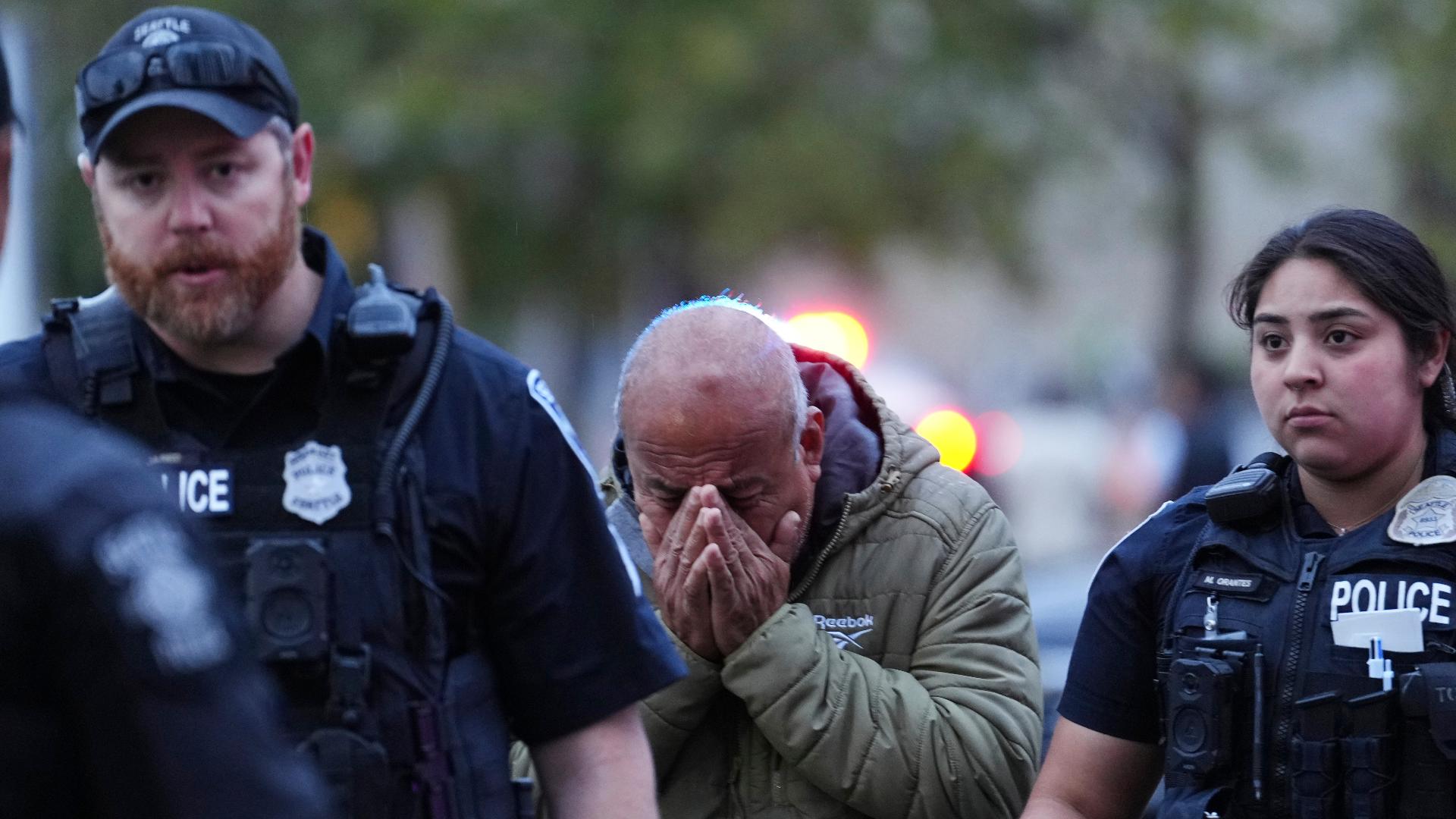
Shooting began around six o’clock on the northwest side of the Armory at Seattle Center, on the final day of a three-day festival that had drawn enormous crowds. Three people were killed and several wounded, including a toddler.
The press conference began just before eleven.
In the intervening hours, the public was not told several things that a person deciding whether to leave the area, look for a family member, or avoid the neighbourhood would reasonably want to know: whether the Seattle Center campus was secure, whether anyone had been detained, and whether the attack had targeted the festival itself.
Wilson said an after-action review of the city’s communications found real gaps, and that information should have gone out through social media, the emergency alert system, the police department’s blotter, or a briefing held away from the scene.
The Seattle Alert system was not used.
The Mayor’s Own Account
The most notable line in her statement was an admission about her own awareness at the time.
She said she did not fully understand, in the moment, how little information had reached the public or the press since the incident began. Had she known, she said, she would have pushed for an immediate briefing rather than waiting for a formal press conference to be assembled.
That framing places the failure in the coordination between her office and the police department rather than in any single decision — a miscommunication, in her telling, that produced a vacuum nobody realised was there.
The Error
The one substantive update that did emerge in that window came from the mayor’s office blog, posted somewhere between 8:30 and 9 p.m. It stated that two suspects had been detained.
That was wrong. Only one person was in custody, and the post was later corrected.
City officials have cited that error as part of the reason for caution afterward, arguing they were balancing speed against accuracy while rumours circulated.
The “Dignitaries” Problem
The detail that turned public frustration into public anger arrived at 10:30 p.m., when a police spokesperson told waiting reporters the briefing was being delayed again so that dignitaries could be present.
That exchange, captured on video, spread quickly. It appeared to suggest that a city with an unresolved public safety situation had held its first public update so that elected officials could stand at the podium.
Wilson denied at the time that any official’s office had requested a delay, saying that once it became clear the police department was ready to brief, she, Governor Bob Ferguson and Representative Pramila Jayapal moved rapidly to Seattle Center.
The Governor’s Version
Ferguson’s office pushed back firmly and released text messages under a public records request.
According to that account, the governor was in contact with Wilson by 7:41 p.m. and offered to be at the campus by nine. City officials, including the police department, emphasised during calls at 8 p.m. and 9 p.m. that Seattle Center remained an active scene and that elected officials should stay away. It was agreed at that point that officials would hold their event the following morning.
At approximately 10:10 p.m., the governor’s office says, he learned the mayor was heading to Seattle Center for a media availability. He left immediately and arrived around 10:30. The press event started at eleven.
His communications director stated that these were the only text messages exchanged between the two that evening, and that the governor’s office had no involvement in what the police department communicated to the public — adding that they assumed timely communication was happening.
The governor’s office also noted the ordinary expectation that elected officials speak publicly at an appropriate point to describe coordinated efforts, offer condolences and thank responders.
What Remains Contested
One thread has not been resolved. A source within the police department told a local broadcaster that officers wanted to hold a media briefing earlier in the evening and were told by the mayor’s office to wait for dignitaries to arrive.
That is a single anonymous account, and it directly contradicts the mayor’s public statement. It has not been independently confirmed, and Wilson has maintained her denial.
Readers should hold that particular claim loosely. What is documented — the blog error, the unused alert system, the 10:30 remark about dignitaries, the timeline of calls — is damaging enough without it.
The Apology’s Most Interesting Sentence
Wilson used part of her statement to redirect blame away from Ferguson and Jayapal, who had absorbed much of the initial public criticism.
The frustration aimed at officials arriving that evening was understandable, she said, and it was frustration that had been accumulating for hours.
That is a fairly precise diagnosis. The anger was never really about two politicians turning up at ten-thirty. It was about the four and a half hours before that, when a city of 750,000 people had no official account of what had happened in one of its most visited public spaces.
Why It Mattered Operationally
The delay was not merely a matter of public relations.
Evidence at the scene indicated multiple weapons were fired, and investigators have been working to identify at least one person still outstanding. Residents and visitors in the surrounding area had no way of knowing that, or of knowing whether the campus had been cleared.
Emergency communications exist precisely for that interval — the period when facts are incomplete but people still have decisions to make about their own safety. Saying what is known, saying plainly what is not, and correcting the record as it develops is the standard practice.
What Happens Now
Wilson said processes and protocols are being put in place to ensure this does not recur, and that her office will work with the police department to accelerate public communication in future incidents.
Hours after the apology, she accepted the resignation of Police Chief Shon Barnes, appointing Deputy Chief Andre Sayles as interim chief. Barnes’s attorneys said the mayor had requested his resignation the previous evening.
Whether the communications failure and the leadership change are the same story or two overlapping ones is a question the city is now arguing about — councilmembers, community organisations and the police union have all objected to the timing.
The investigation into the shooting itself remains open.
Author
-
Lucienne Albrecht is Luxe Chronicle’s wealth and lifestyle editor, celebrated for her elegant perspective on finance, legacy, and global luxury culture. With a flair for blending sophistication with insight, she brings a distinctly feminine voice to the world of high society and wealth.