Patriot missile technology has become the latest sticking point between Washington and Kyiv after President Donald Trump publicly reversed course on a pledge he had made only days earlier. Speaking to reporters at a cabinet meeting held at Camp David, he said sharing the know-how behind the interceptor was, in his words, a hard thing to give away.
The gathering had been promoted by the White House as a change of scenery, the first cabinet session of Trump’s second term convened at the presidential retreat rather than in Washington. It ended up serving a different purpose entirely, becoming the setting in which the president dismantled his own commitment in front of a room of journalists.
A Promise Made, Then Unmade
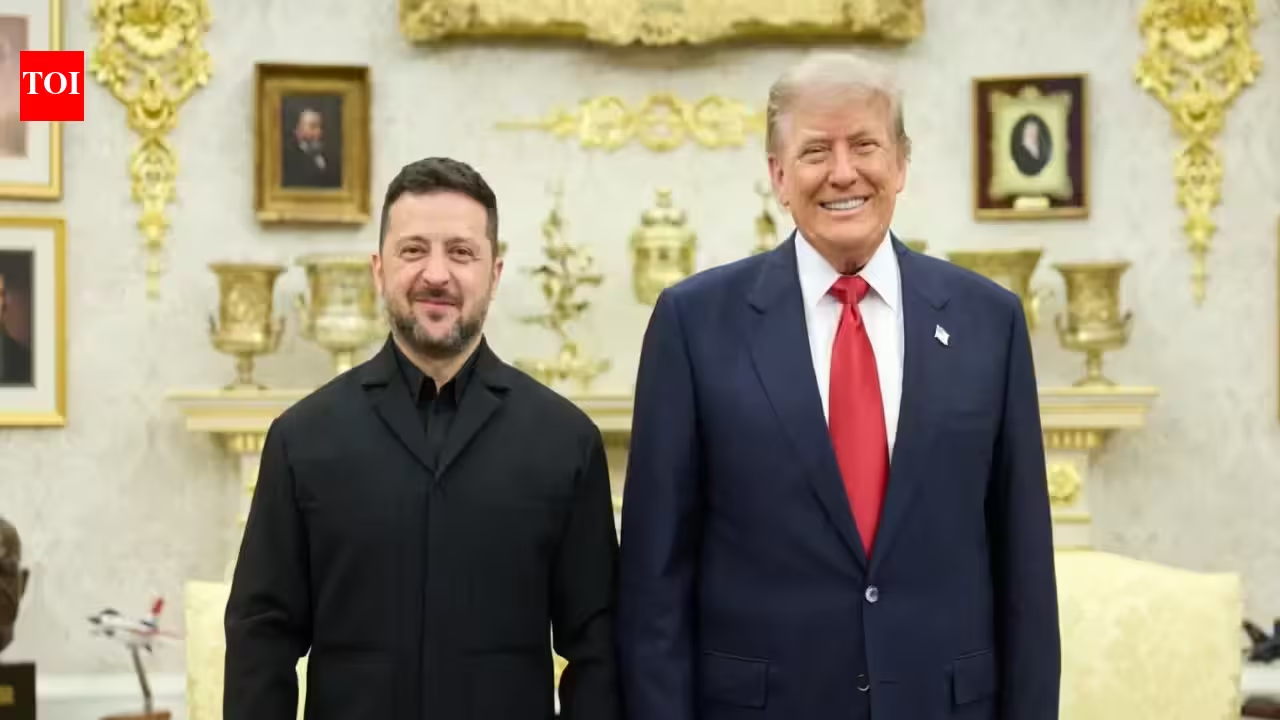
The idea of licensing Ukraine to build Patriot interceptors on its own soil had surfaced at a NATO summit in Turkey earlier this month. Volodymyr Zelenskyy left his White House meeting on Tuesday describing the discussion as productive, suggesting Kyiv believed real movement was underway.
Asked directly on Friday whether he was prepared to grant that licence, Trump offered no such assurance. He stated that no agreement had been reached, that conversations were ongoing, and that transferring technology of this calibre was not a simple decision.
His reasoning went beyond commercial caution. He raised the possibility that a country receiving advanced weapons capability today could become an adversary later, framing it as a risk any supplier has to weigh.
The President’s Case for Holding Back
Trump described the interceptor’s performance in characteristically informal terms, citing a speed of 8,600 miles an hour and remarking that anything above sixty already feels quick. He recounted an episode in which five incoming missiles aimed at Jordan were knocked down one after another, punctuating the sequence with sound effects rather than technical detail.
No other nation, he said, possesses that capability. His conclusion was that the United States would expand production at home, constructing multiple new facilities for both Patriot and Tomahawk systems, with Ukraine excluded from that arrangement for the time being.
What This Means for Ukraine
Kyiv has spent much of the past year pressing on two fronts. It wants more interceptors delivered, and it wants the industrial capacity to build its own so that its air defences are not permanently dependent on decisions made in Washington.
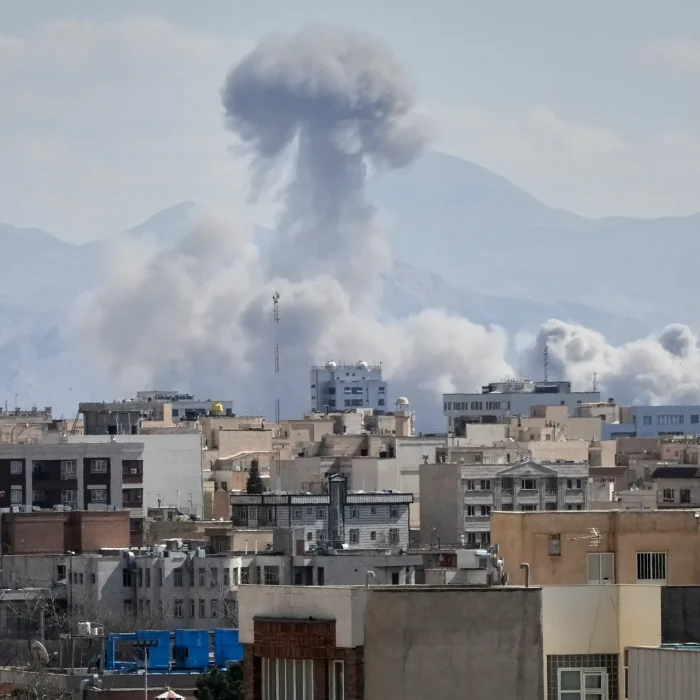
The timing of the reversal is particularly awkward because global supply is already stretched thin. The extended American confrontation with Iran has consumed enormous quantities of both Patriot and Tomahawk munitions, tightening a market that was constrained to begin with.
The Numbers Behind the Shortage
Analysis from the Center for Strategic and International Studies indicates that roughly two-thirds of the Defense Department’s Patriot interceptor stock has been expended. That figure helps explain a flurry of recent procurement activity:
A multiyear contract worth 58.62 billion dollars awarded to Lockheed Martin for PAC-3 MSE production
A separate White House request to Congress seeking tens of billions in emergency funding
Viewed against that backdrop, the reluctance to license production abroad reads less as strategy and more as a reflection of how depleted American reserves have become.
Iran Talk at the Same Table
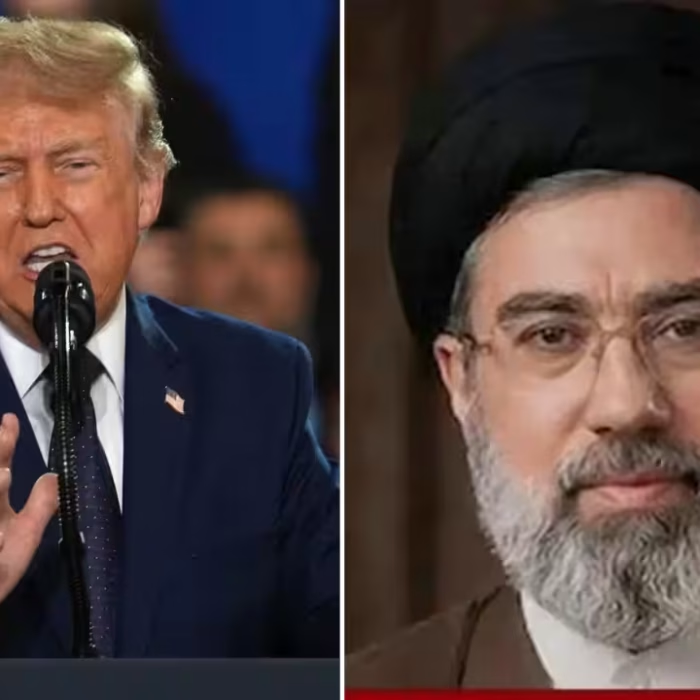
The president also addressed the ongoing campaign against Iran, warning that Washington would strike hard if negotiations collapsed. He characterised Iranian military capability as effectively gutted, saying the country has neither a functioning navy nor meaningful anti-aircraft defences.
He drew comparisons with Vietnam, Afghanistan and Korea, arguing that each of those conflicts dragged on for years while his administration had accomplished more in a fraction of the time. The five-month campaign has drawn sustained criticism, and the objectives he has publicly stated for it have shifted more than once.
The Gaza Announcement and Its Unanswered Questions
Friday’s meeting followed a day after Trump announced what he called a historic arrangement under which Hamas would disarm and Israeli forces would pull back from Gaza. Israel has not publicly confirmed that any such deal exists.
The question that has frozen these negotiations for months is sequencing. Does disarmament precede withdrawal, or the reverse? Pressed on exactly that point, Trump declined to commit to either order. He said only that an understanding existed with Israel and that Israeli officials were pleased with it.
Asked whether the arrangement would survive contact with reality, he offered little beyond a general observation that the people involved are complicated and difficult, wonderful in some instances and less so in others.
The Obstacles He Did Not Mention
Several substantial complications went unaddressed. Among them:
An outstanding arrest warrant issued by the International Criminal Court for Israeli Prime Minister Benjamin Netanyahu
An unresolved case at the International Court of Justice alleging genocide in Gaza
Arms restrictions imposed by multiple governments over the conduct of the war
Opposition within Netanyahu’s own governing coalition to any withdrawal that precedes full disarmament
An Israeli official has stated that no pullback from the so-called Yellow Line will occur until Hamas has completely disarmed. That position sits directly against the ambiguity Trump left in place.
Where Things Stand
For Kyiv, the practical outcome of the Camp David session is that a promising avenue toward self-sufficiency in air defence has narrowed again. For observers of the Gaza announcement, the absence of detail on sequencing leaves the core dispute exactly where it was.
What emerged most clearly from the meeting was the president’s stated preference for keeping Patriot missile technology firmly under American control, expanding domestic production rather than licensing it abroad. Whether that position holds through the next round of negotiations with Zelenskyy remains an open question, given how quickly the previous one changed.
Author
-
Lucienne Albrecht is Luxe Chronicle’s wealth and lifestyle editor, celebrated for her elegant perspective on finance, legacy, and global luxury culture. With a flair for blending sophistication with insight, she brings a distinctly feminine voice to the world of high society and wealth.