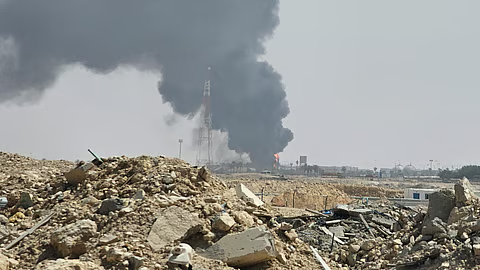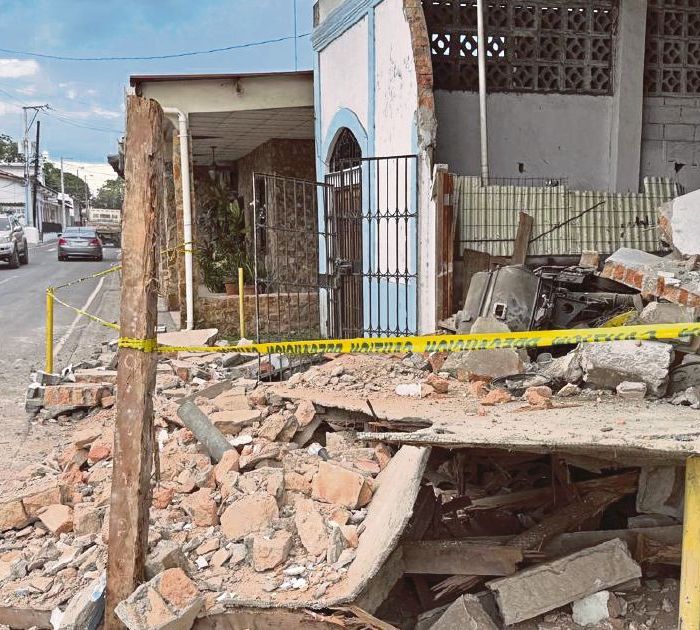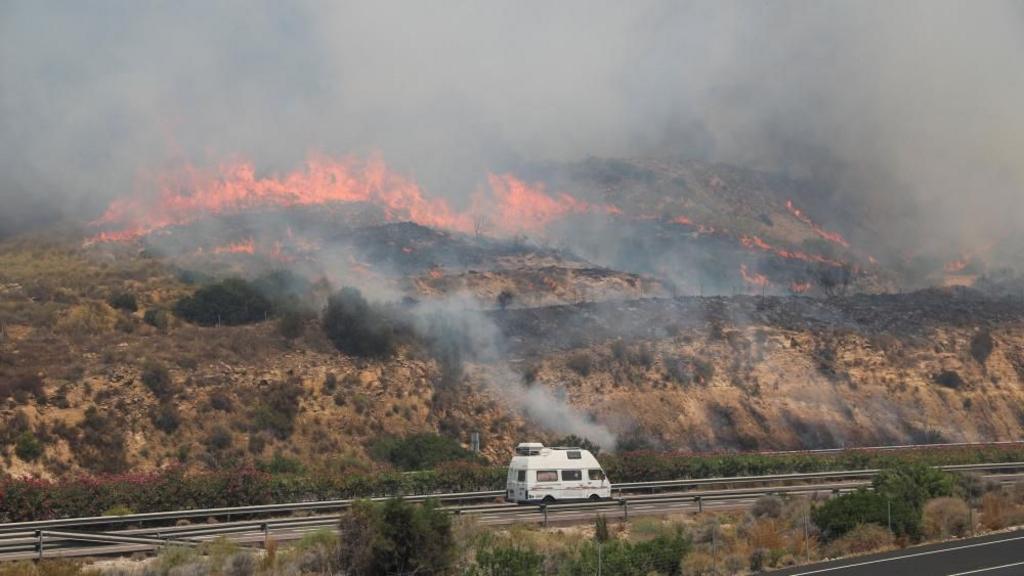
At least twelve people are dead and twenty-three remain unaccounted for after a Spain wildfire tore through the Almería region — a blaze local officials are calling the most devastating they have ever faced.
Four of the victims were found trapped inside a car.
Peter, a holidaymaker staying near Los Gallardos, described watching it approach.
The sky, he told the BBC, grew steadily darker. The glow of the fire sat on the horizon. He called the experience “surreal” — the word people reach for when something arrives that the mind cannot yet process as real.
What Happened
The fire burned around Los Gallardos, in Almería, southern Spain.
The bodies of the victims were recovered near the small village of Bédar, just outside the town.
Hundreds of residents have been evacuated. Hundreds of emergency responders remain deployed, working to bring the blaze fully under control.
Andalusia’s health and emergencies minister, Antonio Sanz, did not understate the scale.
He described it as the most devastating fire the region has ever experienced.
The British Victims
Sanz indicated that the majority of those killed — possibly all of them — may have been foreign nationals.
Four victims were found trapped inside a vehicle. Sanz said they are believed to be of British origin, citing a detail that is grimly specific: the car had a steering wheel on the right-hand side.
Downing Street confirmed that the UK Foreign Office is in contact with the relevant Spanish authorities over what it described as concerning reports of British casualties.
Still Not Contained
The situation remains precarious rather than resolved.
The mayor of nearby Antas told Spanish media the fire is “more or less” under control — a phrase that carries an obvious caveat.
He added it directly: if the wind picks up again, things could get complicated.
That is the nature of wildfire. Containment is not victory. It is a temporary state that depends entirely on conditions no one controls.
The Cause Under Investigation
A Civil Guard investigation is examining whether the blaze was sparked by a fallen power line.
Electricity company Endesa has disputed that account, rejecting the suggestion that its infrastructure was responsible.
That inquiry remains open, and its findings will carry significant weight — legally and politically.
The Wider Context: A Continent on Fire
This fire did not emerge in isolation.
A sustained heatwave with temperatures hovering around 40C — 104F — has gripped southern Europe this summer, creating conditions in which a single spark can become a catastrophe within hours.
Firefighters have been battling major incidents across the region:
- France
- Portugal
- Spain
Thousands of people have been forced from their homes across these countries.
The pattern is now familiar enough that it has stopped being surprising, which is arguably the more alarming development.
Why These Fires Kill
The Almería deaths illustrate something important about how wildfire fatalities actually occur.
People do not usually die because they underestimated a fire. They die because the fire moved faster than any reasonable person expected.
Four people in a car. That detail tells the story. They were not standing still. They were trying to leave. The fire outran them.
Wind-driven wildfires in dry terrain can advance at speeds that make evacuation windows collapse from hours into minutes. A road that was clear when someone set out is impassable by the time they reach it.
The Missing
Twenty-three people remain unaccounted for.
That number may fall as evacuees are located and confirmed safe — displacement often produces temporary confusion about who is where.
But it may also rise as the death toll is finalized. Search teams cannot fully assess burned areas until conditions permit safe entry.
Until then, twenty-three families are waiting.
What Happens Next
The immediate priority is extinguishing the fire completely and preventing reignition, particularly if winds return.
After that come the harder questions:
- What caused the ignition, and could it have been prevented?
- Were evacuation warnings issued in time, and did they reach everyone?
- Are the region’s emergency systems adequate for the conditions Europe now faces routinely?
For now, Peter’s word stands as the most honest description available. Surreal — a sky that darkened without warning, a glow in the distance, and a holiday that became something else entirely.
Author