Rubio Says Iran’s Behavior Must Shift as Trump Pauses Strikes Amid Deal Talk
The phrase Rubio Iran regime change carries a specific meaning in the secretary of state’s telling, and it is not the one most people assume. Speaking to Fox News on Saturday, Marco Rubio drew a careful line between toppling a government and forcing it to abandon its regional ambitions.
His formulation was direct: there may not be a regime change, but the regime itself has to change.
The Distinction He Is Drawing
Rubio’s target is Iranian foreign policy rather than Iranian governance. He argued that Tehran’s drive to export its revolution across the region must end, and that the only mechanism capable of producing that shift is raising the cost until the government can no longer afford to continue.
That framing sidesteps the politically fraught language of overthrow while still demanding a fundamental reorientation. Whether a government can be pressured into abandoning what it considers a core purpose, without being replaced, is the open question underneath the entire argument.
Speaking with interviewer Lara Trump, Rubio reiterated that President Donald Trump remains unmoved on the central issue: Iran must never obtain nuclear weapons.
Why He Thinks This Time Is Different
Rubio contended that the Iranian leadership has never encountered an American president like Trump, characterizing him as someone who follows through with action rather than statements.
He described a pattern he says persisted for two or three decades, in which not only the United States but the international community broadly permitted Iran to deceive, break agreements and maneuver counterparts into deals under false pretenses.
The implicit argument is that consequences, applied consistently, alter behavior in a way that negotiation alone never did.
The Military Picture
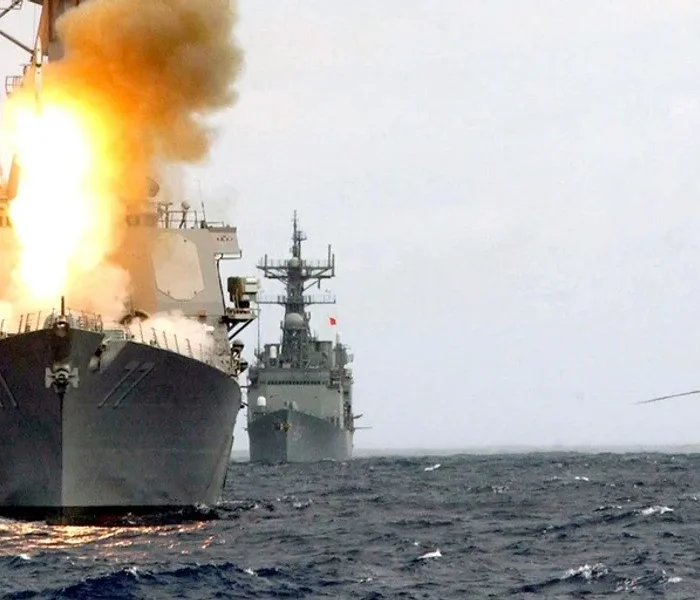
According to Rubio, the American campaigns in the region have stripped Iran of the conventional missile shield it once relied upon for deterrence.
He acknowledged that Iranian missile and drone capabilities remain intact, but argued the overall balance between the two countries has shifted substantially.
That shift, in his account, explains the current diplomatic opening. He said it is the sole reason Iran now appears willing, and in some instances eager, to negotiate on denuclearization and on the strait. The United States, he argued, is approaching those talks from strength rather than weakness.
Trump Calls for a Pause
Later Saturday, Trump posted on Truth Social calling for a halt to strikes on Iran, indicating that an agreement may be close at hand.
He stated that Israel supports the decision, and framed the desired outcome as the full reopening of the Strait of Hormuz.
That waterway matters enormously beyond the immediate conflict. A significant share of global seaborne oil moves through it, and disruption there registers in energy markets worldwide within hours.
Turning to Ukraine
Asked about the war between Russia and Ukraine, Rubio positioned the United States as uniquely capable of producing an outcome.
He argued that no other country and no other leader can bring the Russian and Ukrainian sides to the table to begin discussing how the conflict ends.
He pointed to shifting conditions on the ground, including improvements in Ukraine’s military capacity over recent months, alongside Russia’s growing entanglement with Iran.
On that second point, his tone was notably restrained. He characterized Russia as an irritant rather than an obstacle as American strikes against Iran continued, adding that nothing any other nation is doing meaningfully impedes American objectives.
That assessment arrives after Ukrainian President Volodymyr Zelensky accused Russia of supplying Iran with satellite surveillance imagery of Gulf states, along with additional intelligence and military support.
The gap between Zelensky’s characterization and Rubio’s dismissal is worth noting. One describes active operational assistance to an adversary; the other describes background noise.
The Cuba Segment
The conversation also turned to Cuba and the threat Rubio associates with its government, including the case of a former American ambassador who worked as a Cuban agent.
Rubio said the individual penetrated the highest levels of the Defense Intelligence Agency and described the episode as among the most significant intelligence failures in American history.
That case has long served as a reference point for arguments about counterintelligence vulnerabilities, and Rubio’s invocation of it signals continued attention to Havana despite the administration’s focus elsewhere.
A Lighter Close
The interview shifted register toward the end, with Rubio speaking about his roles as a husband and father and touching on his interest in college football.
Those segments serve an obvious purpose in political television, humanizing an official who spends most airtime discussing military campaigns and nuclear programs.
What to Watch
Several threads will determine whether Rubio’s confidence proves justified.
The first is whether the pause in strikes holds and produces an actual agreement rather than a temporary lull. Announced imminent deals have a mixed track record in this arena.
The second is the specific content of any denuclearization arrangement. Verification mechanisms, enrichment limits and duration will determine whether it resembles a durable settlement or a pause in a longer confrontation.
The third is the Strait of Hormuz. Full reopening would represent a concrete, measurable outcome, unlike the more abstract question of whether Iranian regional ambitions have genuinely moderated.
And the fourth is whether Rubio’s central premise holds. He has staked the argument on the idea that sufficient pressure changes conduct without changing leadership. The coming weeks will offer the first real evidence either way.
Author
-
Lucienne Albrecht is Luxe Chronicle’s wealth and lifestyle editor, celebrated for her elegant perspective on finance, legacy, and global luxury culture. With a flair for blending sophistication with insight, she brings a distinctly feminine voice to the world of high society and wealth.