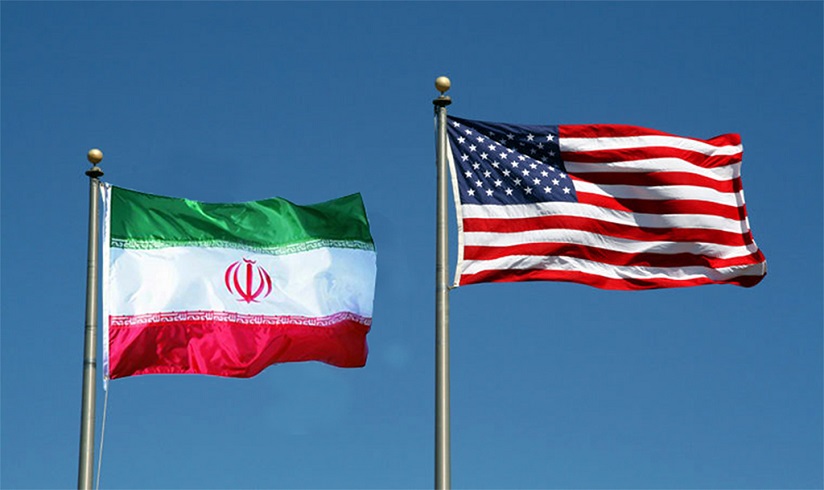
The US Iran conflict entered another confused and dangerous stretch this week, with Washington and Tehran offering flatly contradictory accounts of whether they are even talking to each other. Add a cargo ship struck by a projectile, a contested shipping corridor, and simultaneous crises elsewhere in the region, and the picture that emerges is one of diplomacy running well behind events.
Two Governments, Two Versions of Reality
The most striking feature of Monday’s developments was the gap between what each side said was happening.
President Trump predicted a deal was close at hand. Iranian officials responded by stating that no talks with Washington were underway at all.
Trump’s reaction was sharp. He characterised Iranian officials as unbelievably duplicitous, arguing they had privately sought negotiations to bring the war to an end while publicly denying any discussions were scheduled.
Whether the disconnect reflects genuine confusion, deliberate positioning, or back-channel contacts that neither side wants to acknowledge remains unclear — but the public contradiction itself has become an obstacle to progress.
The Strait of Hormuz Remains the Flashpoint
No issue in the current standoff carries more weight than control of the Strait of Hormuz, the narrow passage through which a substantial share of the world’s seaborne oil moves.
Iranian Foreign Minister Abbas Araghchi offered one note of progress, saying negotiations between Tehran and Oman over management of the waterway had reached their final stages.
But senior Iranian military adviser Mohsen Rezaee took a harder line in response to Trump’s suggestion that the strait would soon reopen completely. Rezaee stated that Iran would not permit any shipping route through the strait other than the one the Islamic Republic itself designates.
He also levelled a specific accusation regarding an earlier agreement, saying the United States had accepted Iranian arrangements for the strait under the Islamabad memorandum of understanding before violating it — and that Washington had not only breached the agreement but launched attacks without first taking the dispute to the designated resolution panel.
A Ship Struck Off Oman
The abstract dispute over the strait produced a concrete casualty.
The United Kingdom Maritime Trade Operations reported an incident roughly 20 nautical miles northeast of Al Khasab, Oman, after a cargo vessel transmitted over VHF channel 16 that it had been hit by an unknown projectile.
Subsequent reporting identified the ship as the Minoan Pioneer, a Liberia-flagged dry bulk carrier. According to Reuters, the crew abandoned the vessel after the impact, and at least one seafarer was reported missing. British maritime risk firm Vanguard confirmed the vessel had been struck, though the circumstances remain unestablished.
For commercial shipping, incidents of this kind carry consequences well beyond a single hull. Insurance premiums rise, crews grow reluctant to transit, and vessels reroute — decisions that ripple through global supply chains within days.
Oil Markets Hold Steady, For Now
Crude prices remained broadly stable after posting their sharpest single-day decline in a week.
The drop followed Trump’s characterisation of negotiations as Iran’s last chance, paired with his stated expectation that the Strait of Hormuz would fully reopen.
Markets appear to be pricing in the possibility of a settlement rather than reacting to the accumulating incidents on the water — a wager that could unwind quickly if shipping disruptions escalate.
Mediators Working the Middle
Regional actors are attempting to build a channel where direct contact has broken down.
Qatar confirmed on Tuesday that diplomatic efforts to defuse tensions were continuing. Foreign Ministry spokesperson Majed al-Ansari said Qatar, Pakistan and Oman were coordinating to facilitate dialogue and pass draft proposals between Washington and Tehran in pursuit of a negotiated outcome.
That three-country arrangement is notable. Each brings something different — Oman its long history as an intermediary with Tehran, Qatar its relationships across multiple capitals, and Pakistan its own regional standing.
Talks in Rome on a Separate Track
Elsewhere, a different negotiation reached its seventh round.
Lebanese and Israeli delegations convened in Rome on Tuesday for direct talks under US sponsorship, according to Lebanon’s National News Agency. The discussions centre on implementing the US-mediated framework agreement the two sides signed in June.
The current round follows six earlier meetings — five in Washington and one held in Rome on June 14 — which produced the framework signed on June 26.
Direct negotiations between Beirut and Tel Aviv represent a meaningful departure from historical practice, and the sustained cadence of meetings suggests both sides see value in keeping the channel open despite broader regional turmoil.
Growing Pressure Over Gaza
A separate diplomatic front hardened on Tuesday as Jordan condemned continued Israeli military operations in Gaza.
Amman joined Qatar, Egypt and Türkiye in accusing Israel of violating the ceasefire. Jordan’s Foreign Ministry described the attacks as a flagrant breach of both international law and international humanitarian law.
The ministry also repeated calls for unrestricted and sustained humanitarian access into Gaza, urging all parties to protect civilians, medical facilities and aid workers as conditions in the enclave continue to worsen.
The alignment of four regional governments in issuing similar condemnations signals a coordinated diplomatic posture rather than isolated statements.
Reading the Broader Picture
Several threads are worth tracking as this unfolds:
- The credibility gap. When two governments cannot agree on whether they are talking, mediators have little to build on.
- Maritime risk. Each incident near the strait raises the probability of an escalation neither side intends.
- Parallel negotiations. The Rome talks demonstrate that some channels remain functional even as others stall.
- Regional alignment. Coordinated positions on Gaza reflect diplomatic pressure that may eventually bear on the wider conflict.
- Market complacency. Steady oil prices suggest traders expect resolution — an assumption that could reverse abruptly.
What Comes Next
The immediate questions are narrow but consequential. Will the Oman-Iran arrangement on the strait be finalised, and will Washington accept it? Can Qatar, Pakistan and Oman convert draft proposals into an actual meeting? And will maritime incidents remain isolated, or become a pattern?
For now, the region sits in an uncomfortable position: too much violence for anyone to call this diplomacy, too much diplomatic activity to call it settled war. That ambiguity is itself the most dangerous feature of the moment — it leaves considerable room for miscalculation, and very little margin for it.
Author
-
Lucienne Albrecht is Luxe Chronicle’s wealth and lifestyle editor, celebrated for her elegant perspective on finance, legacy, and global luxury culture. With a flair for blending sophistication with insight, she brings a distinctly feminine voice to the world of high society and wealth.