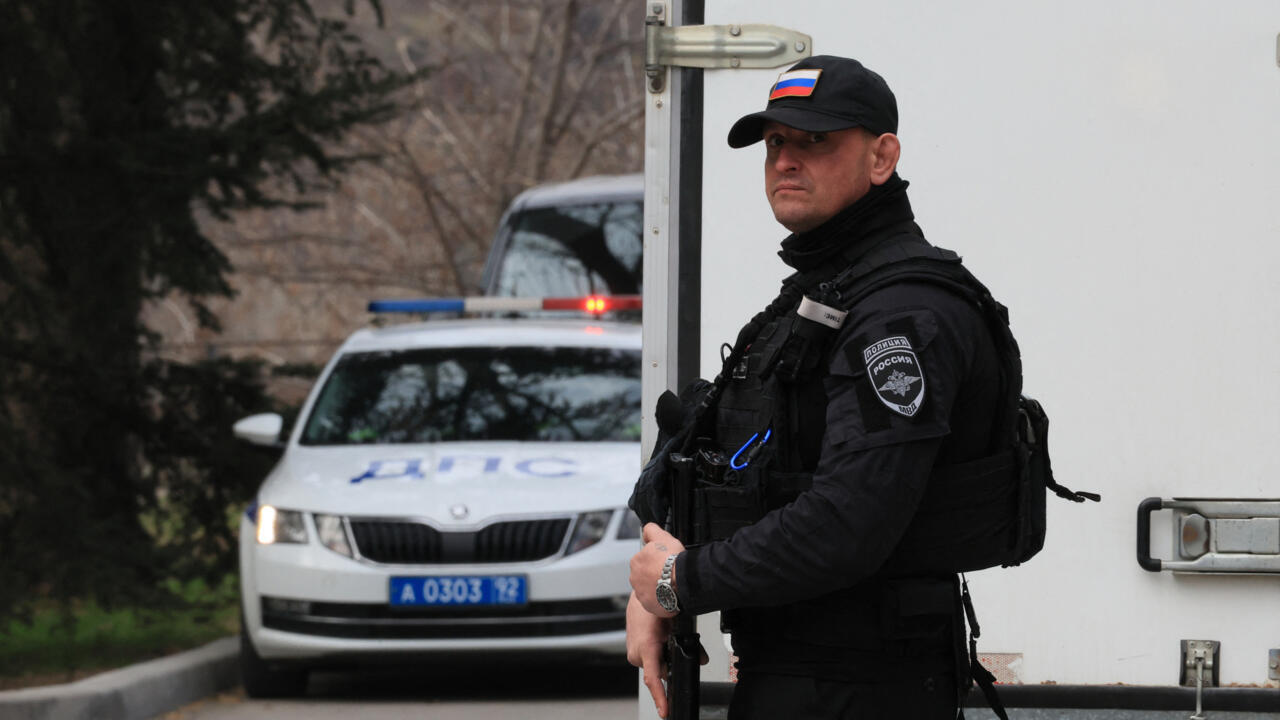
A Crimea shooting Russian soldier incident has left four people dead and four others wounded in the temporarily occupied peninsula, after a serviceman turned his weapon first on his own unit and then on residents of a nearby village.
The account came from Mikhail Razvozhayev, the Russian-installed governor of Sevastopol, who reported the details of the attack.
How the Attack Unfolded
The shooting appears to have progressed in two distinct stages.
It began within the military itself. The soldier opened fire on his fellow servicemen, killing one and leaving another wounded.
He then moved to the village of Khmelnytske, situated southeast of Sevastopol, where he shot and killed civilians who had no connection to the initial confrontation.
The Victims
According to the most recent information available, three village residents died in the second phase of the attack:
- A man aged 71
- A man aged 59
- A woman aged 64
Three additional civilians sustained injuries. Combined with the soldier killed and wounded in the first incident, the total stands at four dead and four injured.
The ages of those killed are notable. All three villagers were elderly or approaching it — people who would have had no capacity to flee or respond, and who were almost certainly going about ordinary business when the shooting began.
The Gunman Is in Custody
The serviceman has been detained. No motive has been disclosed.
That absence of explanation leaves the central question of the incident unanswered. Whether the shooting stemmed from a personal dispute within the unit, a mental health crisis, intoxication, or something else entirely remains unknown publicly.
Why Incidents Like This Occur
Insider attacks within military formations are not unique to any one army, but certain conditions make them more likely — and several are present in prolonged conflicts.
- Continuous access to weapons. Soldiers carry loaded firearms as a matter of routine, removing the gap between impulse and capability that exists in civilian settings.
- Psychological strain. Extended deployment, combat exposure and isolation from family accumulate over time.
- Unresolved interpersonal conflict. Disputes within units can escalate in environments where escape from a difficult situation is impossible.
- Substance use. Alcohol has been a recurring factor in reported incidents involving Russian forces.
- Limited mental health support. Where seeking help is stigmatised or unavailable, warning signs go unaddressed.
Which of these applied here — if any — has not been established.
The Position of Civilians in Occupied Territory
The villagers of Khmelnytske occupy a particularly difficult position, and this incident illustrates why.
Residents of occupied areas live alongside armed forces over which they have no influence and from which they have no meaningful protection. They cannot approach independent authorities, cannot rely on impartial investigation, and have limited ability to relocate.
When violence originates from within the occupying force rather than from the front line, the people living there have essentially no recourse.
What Is Known and What Isn’t
The available information comes through a single channel — the statement from the Russian-installed governor — and reflects only what officials chose to release.
Established: Four people were killed, four were injured, the attacker was a serving soldier, and he has been detained.
Unresolved: The motive, the sequence of events in detail, whether any warning signs preceded the attack, and what disciplinary or legal process will follow.
Investigations of this kind in occupied territory rarely produce public findings that can be independently verified. Whether meaningful accountability follows is a separate question from whether a prosecution is announced.
A Familiar Category of Wartime Death
Not every death in wartime results from combat. Prolonged conflict produces a steady undercurrent of violence that has nothing to do with strategy or engagement — accidents, disputes, breakdowns and attacks like this one.
These deaths tend to receive less attention because they fit no narrative. There is no front line to point to, no strategic objective to analyse, no clear adversary in the conventional sense.
But for a family in Khmelnytske, the distinction is meaningless. Three elderly neighbours are dead, killed in their own village by someone who was supposed to be stationed there.
The Broader Context
Crimea has been under Russian occupation since 2014, and the peninsula has grown increasingly militarised throughout the wider war with Ukraine. Large numbers of military personnel are stationed among a civilian population that continues to live, work and age in place.
That proximity carries risks beyond the obvious ones of missile strikes and drone attacks. It means the daily lives of civilians are permanently entangled with the internal condition of an armed force — its discipline, its morale, and the individual state of mind of every person carrying a rifle.
On this occasion, that entanglement proved fatal for three people who had nothing to do with the war being fought around them.
Author