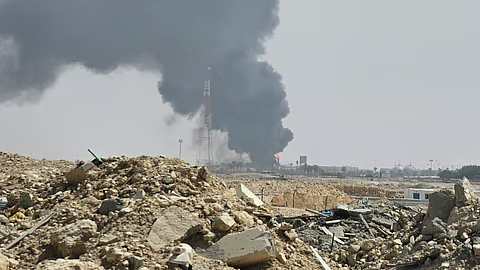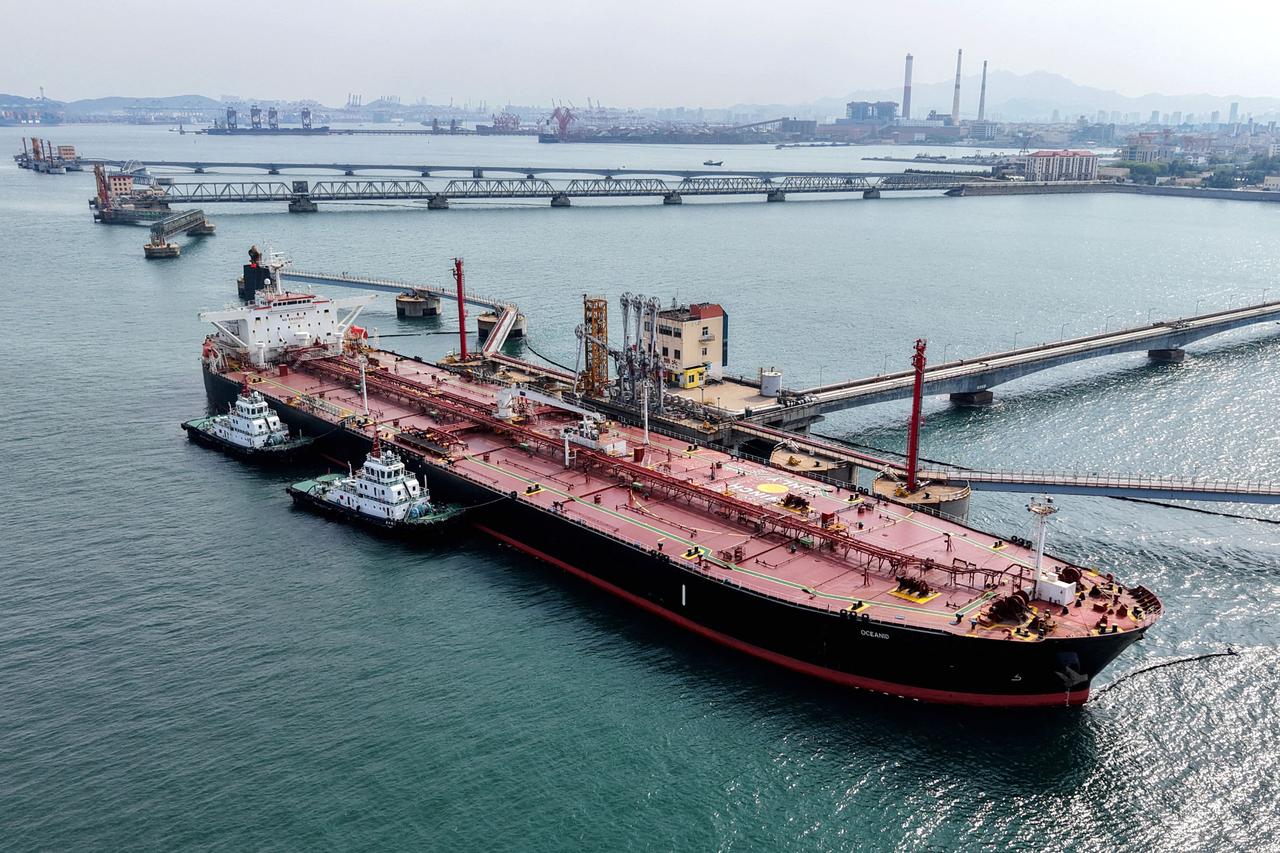
Oil prices fall on Iran deal news as global markets responded with renewed optimism on Monday. American officials announced that the United States and Iran had reached a tentative peace agreement that could potentially reopen the Strait of Hormuz, a vital waterway responsible for around one-fifth of the world’s oil supply. The development triggered sharp declines in crude prices, gains in international stock markets, and a fresh sense of cautious hope across the global economy. However, with final approval still uncertain, investors and analysts remain watchful as developments continue to unfold.
A Tentative Step Toward Peace
The announcement came as a major development in months of geopolitical tension. According to U.S. officials, both nations have agreed in principle to a peace deal, with the reopening of the Strait of Hormuz being one of the centerpieces of the proposed agreement. This strategically important waterway has long served as a critical artery for global oil and natural gas trade.
Still, the path to a finalized deal is far from straightforward. President Donald Trump made it clear on Monday that any agreement must be both meaningful and beneficial. If those conditions are not met, he stated, the deal will not move forward at all. Echoing that cautious tone, Iranian Foreign Ministry spokesperson Esmaeil Baghaei pushed back against speculation, telling Iran’s state broadcaster that no one can claim a final signing is imminent.
This mix of optimism and uncertainty has defined the global market mood throughout the day.
Oil Prices Tumble Sharply
The immediate market reaction to the news was felt most powerfully in the oil sector. Crude prices fell sharply across major benchmarks, reflecting hopes that increased supply may soon return to the global market.
Brent Crude Sees Major Decline
- Brent crude, the global benchmark, dropped more than 5 percent.
- It hit a one-month low of around $95 per barrel for August delivery.
- Before the war began, Brent had been trading at just over $72 per barrel.
West Texas Intermediate (WTI) Follows Suit
- WTI crude, the U.S. benchmark, fell nearly 6 percent.
- It settled at around $91 per barrel for July delivery.
These price drops indicate strong market belief that a successful agreement could ease global supply concerns and pave the way for greater stability in the energy markets.
Stocks Rise on Diplomatic Hopes
Although U.S. financial markets were closed on Monday for the Memorial Day holiday, the optimism surrounding the potential US-Iran deal was clearly visible across international exchanges.
Asian Markets React
In Asia, where many economies are heavily reliant on oil and gas imports, stock markets responded positively.
- Japan’s benchmark index jumped about 3 percent.
- Taiwan’s markets also surged by approximately 3 percent.
- Markets in South Korea and Hong Kong were closed due to local holidays.
European Markets Climb
European exchanges followed suit, with big energy consumers leading the rally.
- The Stoxx 600 index rose by 1 percent.
- Germany’s DAX gained around 2 percent.
- France’s CAC 40 also climbed nearly 2 percent.
- The London Stock Exchange was closed for the day.
U.S. Futures Point Higher
While American markets remained closed for Memorial Day, S&P 500 futures hinted at a strong opening on Tuesday, with gains of about 0.9 percent anticipated when trading resumes.
Gasoline Prices See a Small Drop
For everyday American drivers, the news brought a small but welcome shift at the pump.
- The national average gasoline price slipped slightly on Monday to around $4.51 per gallon, according to AAA.
- However, gas prices have still risen by 51 percent since the start of the war.
- Diesel prices also eased modestly, dropping to $5.60 per gallon, though they remain up by approximately 49 percent.
It’s important to remember that retail fuel prices typically lag behind crude price changes by several days. So if oil prices continue to decline, drivers may see more meaningful relief in the coming week.
Supply Disruption Concerns Remain
Despite the positive market reaction, experts caution that long-term supply impacts may not be fully resolved by the announcement alone. According to Bob Savage, head of markets macro strategy at BNY, markets are focused on resolution rather than further escalation. However, he noted that the supply ramifications of the ongoing conflict are now expected to be more prolonged.
This means that even if a deal is signed, the global energy infrastructure will likely need time to recover, replenish, and stabilize.
Inflation and Interest Rate Implications
Oil price volatility is also closely tied to broader economic concerns, particularly inflation expectations.
- Sharp swings in crude prices have been feeding directly into inflation forecasts.
- This week’s release of the Federal Reserve’s preferred inflation gauge will be closely watched.
- If the data comes in firmer than expected, the Federal Reserve may consider raising interest rates.
In other words, while declining oil prices may offer short-term relief, the deeper economic impact will depend heavily on how inflation and central bank responses evolve in the coming weeks.
Why the Strait of Hormuz Matters So Much
To truly understand the magnitude of this story, it helps to remember just how vital the Strait of Hormuz is to global energy flows. This narrow body of water:
- Carries roughly one-fifth of the world’s oil supply
- Serves as a critical export route for major Middle Eastern producers
- Connects oil markets in Asia, Europe, and the Americas
- Affects the energy security of dozens of countries
- Acts as a key indicator of geopolitical tension in the region
A reopening of this passage would significantly ease global supply pressures and help stabilize prices in both the short and long term.
Cautious Optimism Across the Markets
While Monday’s news has sparked renewed hope, market participants remain cautious. There is a clear understanding that political negotiations can shift quickly, and any unexpected developments could reverse the current trend.
Key things to watch in the coming days include:
- Official statements from both U.S. and Iranian leadership
- The pace of negotiations and any signs of escalation
- Updated oil supply data and shipping activity in the Strait
- Inflation reports and central bank responses
- Movements in global equity and commodity markets
For now, the market’s direction will largely depend on whether the proposed deal materializes into a concrete and credible agreement.
What This Means for Global Consumers
If the deal does ultimately go through, consumers around the world could see several positive impacts:
- Lower fuel prices at the pump
- Reduced shipping and freight costs
- Easing of inflation pressures
- More stable global supply chains
- Improved confidence in financial markets
On the other hand, if negotiations stall or break down, prices could rebound quickly, especially given the fragile state of global oil inventories and spare production capacity.
A Pivotal Moment for Global Diplomacy
The potential US-Iran agreement represents one of the most significant geopolitical developments in recent years. Beyond the energy market implications, it also signals a possible shift in international relations and could open the door to broader diplomatic progress in the Middle East.
While questions remain about the final shape of any agreement, the simple fact that both sides are publicly discussing a deal is a notable step forward.
Final Thoughts
The dramatic news that oil prices fall on Iran deal speculation reflects just how closely global markets are tied to geopolitical developments. From plunging crude prices to rallying stocks and slightly cheaper gasoline, the impact of even early-stage diplomacy is already being felt across the world.
However, the road ahead is still uncertain. Final approval is far from guaranteed, and the global energy system remains fragile after months of disruption. Whether this moment becomes a turning point or simply a temporary easing depends on the political negotiations to come.
For now, investors, consumers, and policymakers alike will be watching closely, hoping that this potential agreement leads to lasting stability — both in the energy markets and in the broader geopolitical landscape.
Author