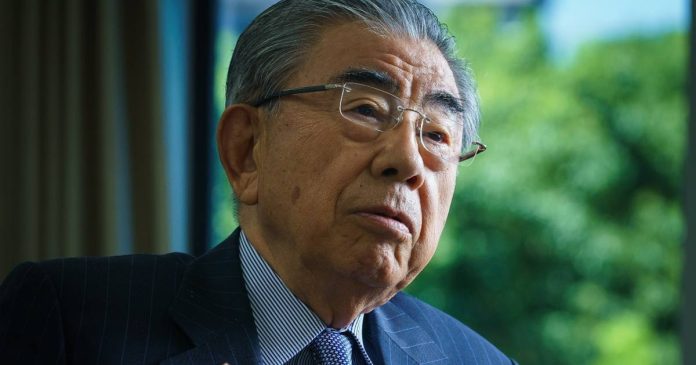
The news of Toshifumi Suzuki’s death has sent waves of reflection across Japan and the global retail world. The legendary Japanese businessman, widely credited with transforming 7-Eleven into the world’s largest convenience store chain, passed away at the age of 93. Suzuki, an honorary adviser at Seven & i Holdings, died on May 18 from heart failure at his Tokyo home, the company confirmed on Monday.
Often described as the mastermind behind Japan’s iconic “conbini” culture, Suzuki’s influence on modern retail is impossible to overstate. From late-night meals to bill payments and ATM services, his vision turned the humble convenience store into a daily essential for millions of people around the world.
The Father of the Modern Conbini
Toshifumi Suzuki was not just a businessman — he was a cultural architect. He founded the Japanese arm of 7-Eleven, which would go on to become the country’s most beloved and visited retail format. Under his leadership, the convenience store evolved from a basic neighborhood shop into a hub of urban life.
In Japan, the term “conbini” has become synonymous with quick, reliable, and high-quality service. Today, 7-Eleven outlets across the country offer a wide range of products and services, including:
- Freshly made sandwiches, rice balls, and bento boxes
- A variety of snacks, drinks, and household items
- ATM access and banking services
- Utility bill payments
- Document copying and printing services
- Package pickup and shipping options
This unique blend of retail and lifestyle services helped redefine the role of convenience stores not only in Japan but across the world.
A Global Empire Built on Vision
What started in Japan as a single store has grown into an enormous global network. Today, more than 80,000 7-Eleven stores operate worldwide, making it the largest convenience store chain on the planet.
The brand’s journey in Japan began in 1973, when the Japanese parent company signed a franchise agreement with the original U.S.-based 7-Eleven. The first Japanese store opened in 1974, marking the beginning of a retail revolution.
However, the most striking twist in the story came in the 1990s when the original American company, The Southland Corp., encountered serious financial troubles. The Japanese unit, under Suzuki’s strategic leadership, stepped in and acquired a majority stake. By 2005, the American operations had become a fully owned group company of Seven & i Holdings — a remarkable reversal of the original franchise model.
Resisting Foreign Takeover Bids
Suzuki’s carefully built empire has also stood firm against international takeover attempts. In recent years, Canadian retailer Alimentation Couche-Tard, the parent company of the global Circle K chain, made a serious effort to take over Seven & i Holdings.
However, the deal eventually collapsed in 2024 when Couche-Tard withdrew its offer. The Canadian company cited frustration with the negotiations, pointing to what it described as “a lack of constructive engagement” from the Japanese side. The decision reinforced the strength and independence of the empire Suzuki had built.
Early Life and Education
Toshifumi Suzuki was born in 1932 in Nagano Prefecture, located in the northern part of Japan. He went on to graduate from Chuo University in Tokyo, one of Japan’s most prestigious institutions.
Before entering the world of convenience retail, Suzuki began his career at Ito-Yokado, a major Japanese retail chain offering a wide range of products from groceries and cosmetics to clothing. Ito-Yokado later became part of Seven & i Holdings, further extending Suzuki’s influence across the broader retail landscape.
His early experience in traditional retail gave him a deep understanding of consumer behavior, which he would later apply with remarkable success in shaping the convenience store industry.
A Career Defined by Innovation
Suzuki officially took the role of chief executive of 7-Eleven Japan in 1978. From the very beginning, his leadership style was focused on innovation, customer experience, and operational efficiency.
He is widely credited with introducing key changes that revolutionized Japanese retail, including:
- Implementing data-driven inventory systems
- Embracing fresh food offerings that catered to local tastes
- Integrating digital technologies into store operations
- Offering 24-hour service models tailored to urban lifestyles
- Creating partnerships with banks and utility providers
Under his guidance, convenience stores in Japan became some of the most technologically advanced retail outlets in the world, often serving as testing grounds for new payment systems, digital services, and automation.
Expansion Beyond Convenience Stores
While 7-Eleven remained the crown jewel of his career, Suzuki’s ambitions extended far beyond the convenience store sector. He believed in delivering what he often described as a complete “lifestyle shopping experience” for consumers.
Some of his notable strategic moves included:
- Acquiring Barney’s Japan in 2015, expanding into luxury retail
- Bringing the historic Sogo and Seibu department stores under the Seven & i Holdings umbrella
- Adding banking and financial services to the company’s portfolio
- Driving partnerships that integrated retail with everyday consumer needs
These bold decisions helped transform Seven & i Holdings into a diversified retail powerhouse, capable of serving customers across multiple segments and lifestyles.
A Lasting Cultural Legacy
Beyond business achievements, Suzuki’s influence on Japanese society is deeply embedded in everyday life. For many Japanese consumers, a quick stop at a 7-Eleven is woven into the daily routine — whether it’s grabbing breakfast on the way to work, paying a bill on the way home, or picking up a late-night snack.
His vision helped shape habits and expectations that have spread far beyond Japan. Convenience store culture inspired by the Japanese model has influenced retail innovations in countries across Asia, North America, and beyond.
Tributes and Final Farewell
According to Seven & i Holdings, funeral services for Suzuki were held privately with close family members. The company politely declined messages, flowers, and other condolence gifts at this time. Details about a public ceremony to honor his life and legacy are expected to be announced at a later date.
Suzuki is survived by his wife and two children, who carry forward the personal legacy of a man whose professional achievements touched millions of lives.
A Legacy That Lives On
The passing of Toshifumi Suzuki marks the end of an era in Japanese business history. However, the empire he built and the cultural transformation he sparked continue to thrive in every neighborhood corner store, every 24-hour service counter, and every modern retail innovation rooted in his philosophy.
His story serves as a powerful reminder of how vision, persistence, and adaptability can reshape entire industries. From a single franchise agreement in the 1970s to a global retail empire, Suzuki’s journey reflects the remarkable possibilities that arise when bold leadership meets deep understanding of customer needs.
Final Thoughts
The legacy of Toshifumi Suzuki goes far beyond business success. He changed how millions of people shop, eat, and manage everyday tasks. The convenience store, once a simple concept, became under his leadership a symbol of modern urban life — efficient, dependable, and deeply human in its understanding of daily needs.
As the world bids farewell to one of Japan’s most influential retail pioneers, the impact of his work will continue to shape industries and inspire entrepreneurs for generations to come. In every 7-Eleven that lights up a city street, a part of Suzuki’s vision continues to live on.
Author