What Voters Really Think of Andy Burnham’s First Days as Prime Minister
Focus Keyword: Andy Burnham prime minister focus groups
SEO Tags: Andy Burnham prime minister focus groups, Burnham first days as PM, Labour voters opinion Burnham, Number 10 North, UK politics focus groups, Wallsend Norwich Lowestoft voters, 2024 Labour voters, Burnham policy announcements, scrapping digital ID, VAT electricity bills, Burnham vs Starmer, UK general election calls, northern voters Labour, British public opinion politics, Burnham leadership questions
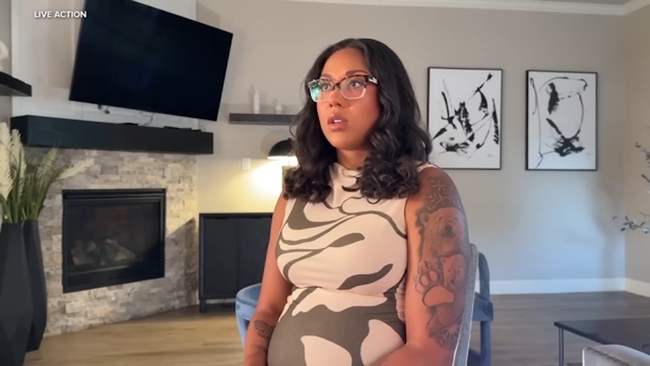
Andy Burnham prime minister focus groups conducted in Wallsend, Norwich and Lowestoft offer an early read on how the public is processing an unusual political transition. The participants — mostly 2024 Labour voters who had grown disillusioned, alongside some opponents — were asked what they made of the new occupant of Number 10.
The overall verdict lands somewhere between cautious warmth and hard-earned scepticism. People rather like him. They are not remotely convinced yet.
First Impressions: Warmer Than Expected
Most participants opened with variations on the same theme: he seems normal.
That word carried real weight, particularly in contrast to recent prime ministers. One person acknowledged his Cambridge education while insisting that education and ordinariness were not mutually exclusive. Another described a warmth that had been absent from British politics for some time, wondering whether it was simply “the up north thing,” and noting that despite being a wealthy Cambridge graduate he still came across as decent.
Others reached for the class contrast directly. One participant felt he displayed more common sense than predecessors who had struck them as having a “toffee nosed element,” while another summed it up memorably: he isn’t a run-of-the-mill posh boy, and there’s something pleasant about a prime minister simply called Andy.
Whether that impression survives contact with governing is the open question.
Style Versus Substance
Plenty of participants caught themselves being charmed and applied the brakes.
The concern was consistent: presentation isn’t delivery. One person allowed that he comes across well but might turn out to be an excellent bluffer — possibly hopeless, though seeming genuine. Another noted they had only encountered surface-level material so far, citing bus fares, DJ sets and singing as evidence of image-building rather than governing.
The most quotable formulation came from a participant who accepted his down-to-earth appeal and interest in music culture, but pointed out that foreign leaders are unlikely to negotiate favourably because he happens to like The Smiths. Real decisions, they said, would speak for themselves when they arrived.
Comparisons to Tony Blair surfaced too — the cadence, the pauses, the hand gestures — with one person saying they recognised the performance immediately. Not everyone was kind. One participant admitted, somewhat sheepishly, that photographs of him resemble a cartoon character, making it hard to take him seriously.
The Dress Code Debate
The relaxation of prime ministerial attire generated less heat than might have been expected.
Most shrugged. Day to day, one said, it doesn’t matter much. Another simply pointed to Zelensky, who has made informality a global norm.
But dissent existed. One participant framed it as a question of professional appropriateness, asking whether parents would consider it fitting for a teacher to instruct their children in jeans, trainers and a t-shirt. People in positions of esteem, in this view, should dress to match the role.
How He Got the Job Bothers People
This is where genuine unease surfaced.
Several participants found the route to Number 10 puzzling or objectionable. He was Mayor of Manchester, one noted, not even an MP — and then he slid straight in. There might be a logical explanation, they conceded, but they hadn’t heard it.
Another argued that at minimum a second candidate should have been involved, describing him as someone the party chose to bring back into the fold through processes conducted behind closed doors.
The deeper worry was not procedural but about power. If the party installed him without opposition, does he owe them too much?
One participant put it bluntly: having been headhunted and steered into the role unopposed, he risks being simply the party’s new spokesperson. Another asked whether he possesses the strength to stand up to his own party and set direction, suspecting he was chosen precisely because he wouldn’t argue.
Not everyone objected. One participant preferred it, reasoning that an election or leadership contest would have consumed six months. The decision was made — get on with it.
The Policy Blizzard
Participants spontaneously recalled a striking number of announcements and hints: removing VAT from electricity bills, scrapping digital ID, North Sea drilling, ending rough sleeping, building council houses, raising income tax thresholds, scrapping council tax, capping bus fares, social care reform, benefit system changes, apprenticeships, reviewing early prisoner release, and a promised ten-year plan.
Few objected to the ideas themselves. Almost everyone questioned the arithmetic.
The energy bill measure drew particular scrutiny, since many had heard Darren Jones suggest the funding could come from scrapping digital ID — a programme that turned out to be unfunded anyway. One participant asked directly where the £4 billion for the tax threshold change would come from. Another anticipated the classic manoeuvre: remove council tax, then recover it through other charges, giving with one hand and taking back double with the other.
The most detailed critique concerned VAT on electricity. One participant calculated that the promised £45 annual saving, delayed roughly six months, effectively amounts to £22.50 per household — and suggested Trump’s conflict with Iran would erase even that.
Small Gifts Now, Hard Choices Later
A recurring suspicion held that the early announcements are strategic sweeteners.
One participant described the pattern as a formula: clickbait announcements like scrapping digital ID, which everyone welcomed, designed to build goodwill before the less popular measures arrive the following month.
The prevailing sentiment was that he is currently distributing small snippets, and the real test lies in how he handles the bigger issues.
Migration and small boats came up repeatedly as the conspicuous absence. He hasn’t mentioned it, one said, appearing focused elsewhere. Another expressed a broader despair — that no politician has any idea what to do. A third predicted he’ll simply send more money to France.
Number 10 North Divides Opinion
The regional focus produced mixed reactions, including the obligatory Wallsend objection that Manchester isn’t the true north but “basically just above the Midlands.”
Participants liked the principle of investing in neglected areas. Several suspected the execution.
Some viewed it as an expensive gimmick aimed at recovering Labour’s northern vote — a concern one participant linked to the party’s drift toward what they perceived as a London-centric, studenty identity at the expense of traditional working-class support.
Others objected on fairness grounds, asking pointedly what about the south, and what about the east. One insisted the focus should be on the British person generally, adding sadly that it isn’t. And one participant wondered whether the northern base simply suits Burnham’s own Friday travel plans.
Cynicism Earned the Hard Way
Former Labour voters landed on cautious optimism, carefully rationed.
He’s been saying the right things, one said, but time will tell — noting that after so many prime ministers in a decade, everyone has become cynical. Another described the sensation of watching an identical speech on repeat: promises, promises, and nothing arriving.
A third raised the constraint that no rhetoric can escape, pointing out that the money available hasn’t changed. Why, they asked, does Burnham believe he can transform so much on precisely the same budget?
The Starmer-era worry about backbench approval resurfaced as well. He has to be backed by the party, one said. He can’t do everything alone.
One Clear Contrast With Starmer
Despite everything, a consistent theme emerged: this man appears to have a plan.
One participant captured the distinction directly, saying Burnham seems more focused and appears to be making definite plans, whereas Starmer struck them as wishy-washy.
Whether the plan works is separate from whether one exists. For now, the perception of direction is itself an asset.
On Calling an Election
Demands for an early general election were surprisingly restrained — perhaps because the country has grown accustomed to unelected prime ministers.
Some conditioned their view on the manifesto, arguing that if Burnham intends something drastically different from Labour’s 2024 offer, those policies should face the country.
One participant showed unusual self-awareness about the whole debate, observing that agreement produces a shrug while disagreement produces outrage and immediate calls for a vote.
Most simply wanted quiet. Give him the three years remaining, one said, see what he does, and judge then.
That may be the fairest summary of the national mood: not enthusiasm, not hostility, but a willingness to wait and watch — provided nobody asks them to get their hopes up.
Author
-
Lucienne Albrecht is Luxe Chronicle’s wealth and lifestyle editor, celebrated for her elegant perspective on finance, legacy, and global luxury culture. With a flair for blending sophistication with insight, she brings a distinctly feminine voice to the world of high society and wealth.