Pakistan-administered Kashmir unrest has escalated into what local organisers are now describing as a full humanitarian emergency, with a leading civil society group appealing to the Pakistan Red Crescent Society for urgent medical intervention in Rawalakot and surrounding areas.
The appeal reflects a confrontation that has been building since early June and shows no sign of resolving.
The Appeal for Emergency Aid
The Jammu Kashmir Joint Awami Action Committee — commonly referred to as the JKJAAC — wrote to the Pakistan Red Crescent Society requesting immediate humanitarian and medical assistance across affected districts.
The letter characterised conditions following events on July 27 and 28 as a serious humanitarian and medical emergency. According to reports the committee says it received from affected communities, the situation includes:
- Civilian casualties
- Firearm-related injuries
- Disrupted ambulance routes
- Restricted access to hospitals
- Shortages of medicines, blood supplies and emergency trauma care
Those five items together describe a healthcare system that has effectively stopped functioning for the people who need it most.
A 40-Kilometre Journey for Trauma Care
One detail in the letter illustrates the practical consequences more sharply than any general description.
The JKJAAC cited documentation from the Jammu Kashmir Human Rights Observatory indicating that critically injured people were transported roughly 40 kilometres from Rawalakot to Palandri Hospital, because immediate trauma care was neither available nor accessible locally.
In trauma medicine, the first hour after serious injury is decisive. A 40-kilometre transfer over difficult terrain consumes much of that window before treatment begins.
The Observatory’s report also records allegations that road closures, security cordons and communications restrictions delayed both evacuation and treatment of injured civilians. The committee noted that these findings remain subject to ongoing medical, family and independent verification — an important qualification given the difficulty of confirming information from the area.
Families Cut Off From Information
The communications situation compounds every other problem.
Internet and telephone services have remained severely restricted, according to the letter. The consequence is that families cannot locate relatives who have been injured, detained or gone missing, and coordinating emergency assistance becomes extremely difficult.
Communications blackouts have a particular character in situations like this. They interrupt not only the flow of news outward but the basic capacity of ordinary people to find each other, arrange transport, or confirm whether someone is alive.
What the Committee Is Requesting
The JKJAAC set out specific asks for the Red Crescent Society:
- Deploy an independent emergency assessment and medical team to Rawalakot and other affected locations.
- Supply ambulances and mobile medical units.
- Provide trained first-aid personnel and trauma-care supplies.
- Establish temporary first-aid and emergency treatment points along affected routes and near major gathering areas.
The emphasis on independence is notable. The request is not simply for supplies but for neutral personnel able to assess conditions and report on them.
Months of Confrontation
The current situation represents the most extensive standoff between the local population and the Pakistani state in decades.
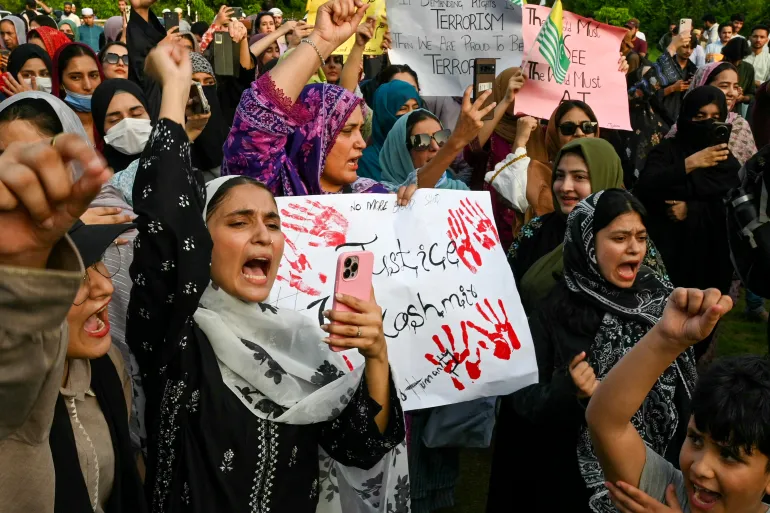
Protests reportedly began on June 5 and have intensified since. Demonstrators allege that security forces have conducted a severe crackdown, with more than 50 people killed and hundreds injured over recent weeks.
Those figures come from protest organisers and have not been independently verified — a limitation that reflects the restricted access and communications environment rather than any judgment on their accuracy.
Video From Muzaffarabad Prompts Calls for Investigation
The JKJAAC posted footage on X that it says shows Pakistani forces dragging and assaulting an unarmed civilian on a road in Muzaffarabad.
The committee called on the United Nations, the Office of the UN High Commissioner for Human Rights, Amnesty International, Human Rights Watch, international media outlets and diplomatic missions to examine the footage, verify the facts independently, and push for an immediate, impartial investigation.
It also urged the International Committee of the Red Cross to monitor the humanitarian situation closely and ensure that injured and affected civilians receive protection and assistance consistent with the ICRC’s mandate.
The choice to route the appeal through multiple international bodies simultaneously suggests limited confidence in domestic accountability mechanisms.
The Long March Continues
Demonstrators returned to the streets on Sunday, continuing a long march that began on June 9.
In a statement posted on X, the JKJAAC said the march has persisted despite weeks of arrests, killings, injuries and intimidation, with participants continuing to march with determination.
The organisation framed the Sunday protest as evidence that the movement remains grounded in public demands for fundamental rights, justice and the implementation of commitments previously made by authorities. It described the movement as belonging to the people, and said their voices would continue to be heard as long as those demands remain unmet.
Understanding the Underlying Grievances
Movements of this scale rarely emerge without accumulated cause. The reference to unimplemented commitments points to a pattern familiar across many protest movements: agreements reached to end earlier rounds of unrest, followed by limited follow-through, followed by renewed mobilisation with reduced trust on all sides.
The current phase has been running for roughly two months. Sustained participation over that period, in the face of the reported crackdown, suggests grievances that predate the immediate trigger.
The Verification Problem
Reporting on this situation faces genuine constraints that readers should keep in mind.
Communications restrictions limit independent journalism. Most available information comes from organisations directly involved in the protests. Casualty figures cannot be confirmed through neutral channels. And the government’s account of events has not been extensively reflected in the material circulating internationally.
This is precisely why the calls for independent monitoring carry weight — not because they establish what happened, but because independent access is the only mechanism capable of doing so.
What Would Change the Picture
Several developments would meaningfully alter the situation:
- Restoration of communications, allowing families to locate relatives and independent reporting to resume.
- Access for neutral humanitarian organisations such as the Red Crescent or ICRC.
- Functioning local medical capacity, removing the need for long transfers of critically injured patients.
- Credible investigation into the specific incidents alleged.
- Renewed dialogue addressing the commitments protesters say remain unfulfilled.
For now, people in Rawalakot and elsewhere are waiting on the most basic version of that list: doctors, ambulances, blood supplies, and a working phone line.
Author
-
Lucienne Albrecht is Luxe Chronicle’s wealth and lifestyle editor, celebrated for her elegant perspective on finance, legacy, and global luxury culture. With a flair for blending sophistication with insight, she brings a distinctly feminine voice to the world of high society and wealth.