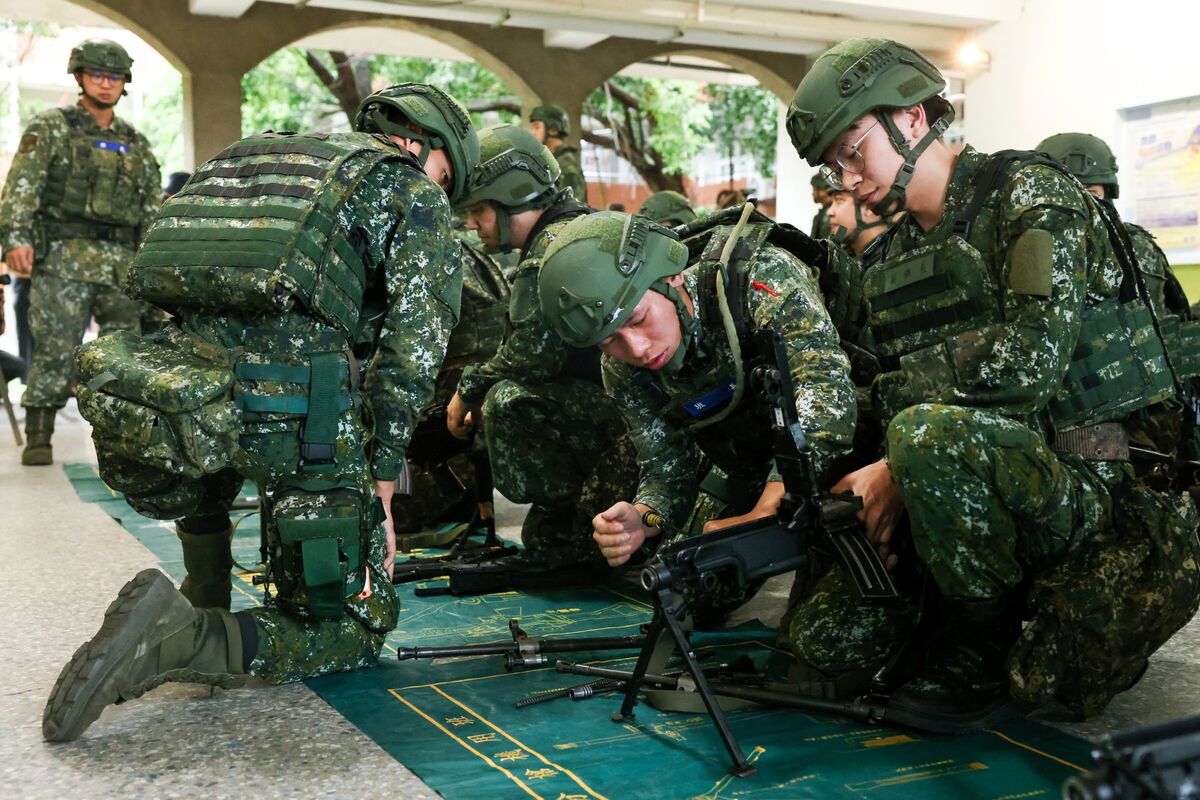
The Taiwan Han Guang Exercise began on the 5th, and this year’s edition represents the most extensive version of the annual drills since they were first conducted in 1984. The timing is deliberate, arriving as Chinese military activity around the island continues to intensify.
The exercise is built around a single premise: that China has already moved, and Taiwan must respond.
Ten Days Without a Script
According to Taiwan’s Ministry of National Defense, the drills will run until the 14th and cover the entire island.
Two features distinguish this year’s approach. Operations will continue around the clock rather than pausing overnight, and there will be no prewritten script for participants to follow.
That second point matters more than it might appear. Scripted exercises test whether units can execute known sequences. Unscripted ones test whether commanders can think under pressure when events do not unfold as anticipated, which is considerably closer to actual combat conditions.
The Scenario Being Simulated
The exercise opens at a point most simulations would treat as the ending.
Under the scenario, Chinese forces have already blockaded Taiwan, completed their attack preparations, and begun crossing the Taiwan Strait. The question is no longer whether an invasion occurs but whether it can be stopped at the shoreline.
Defensive operations focus on specific locations designated as “Red Beaches,” the points where planners assess an amphibious landing is most likely:
The Danshui River estuary
Taipei Port
Danzai Bridge
All three sit in the north, near the capital. Their inclusion reflects an assumption that any serious invasion attempt would aim directly at Taipei rather than seizing peripheral territory first.
New Equipment and New Tactics
Taiwan is integrating recently delivered M1A2T Abrams tanks into the exercise, giving crews their first large-scale operational test with the platform.
More significant, arguably, is the expanded emphasis on drone swarm tactics. Taiwan has substantially increased the role of unmanned systems in its planning, drawing directly from the Russia-Ukraine war, where Ukrainian drones proved to be among the most consequential assets on the battlefield.
That lesson translates awkwardly across theaters. Ukraine fights on land; Taiwan’s defense problem is maritime and amphibious. But the underlying principle holds, which is that large numbers of inexpensive systems can impose serious costs on a better-equipped adversary.
Testing Whether Production Can Survive
For the first time, the exercise examines something most drills ignore entirely: whether Taiwan can keep manufacturing weapons while under attack.
The scenario posits a strike on the 202 Armaments Office in Taipei, which handles defense production. Participants must then relocate manufacturing to designated safe zones and mobilize civilian manufacturers to sustain output.
This addresses a vulnerability that island nations face acutely. Taiwan cannot count on resupply arriving through a blockade, which makes domestic production capacity a survival question rather than a logistics detail.
Borrowing From American Doctrine
Taiwan has also adopted a procedure modeled on the U.S. military’s “backbrief” method.
The concept is simple. After receiving an order, subordinates restate it in their own words and report back to the commander who issued it. The purpose is catching misunderstanding immediately rather than discovering it once units are already moving in the wrong direction.
Both the backbrief practice and the wartime production tests were introduced after Taiwanese planners reviewed lessons from Ukraine and the Middle East.
What China Did the Day Before
The exercise follows immediately on a demonstration of Chinese capability.
On August 4, Chinese forces conducted a joint combat readiness patrol encircling Taiwan, involving fighter aircraft, unmanned aerial vehicles, early-warning planes, and warships.
Taiwan’s military tracked 17 Chinese military aircraft, including J-10 and J-16 fighters, a KJ-500 early-warning aircraft, and UAVs. Twelve of those aircraft crossed the Taiwan Strait’s median line and its extended line, entering air defense identification zones to Taiwan’s north, center, and southwest.
Understanding Gray Zone Pressure
These patrols fall under what analysts term gray zone tactics, a category worth understanding because it explains much of the current dynamic.
Gray zone activity involves sustained pressure through military and non-military means kept deliberately below the threshold of open conflict. The goal is advancing national interests without triggering the response that outright aggression would provoke.
In practice around Taiwan, this includes regular median line crossings, maritime patrols, undersea cable interference, economic coercion, and information operations.
The strategy works partly through accumulation. Each individual incident is too minor to justify escalation, but the cumulative effect normalizes a Chinese military presence that would have been considered provocative a decade ago, and steadily erodes the practical meaning of the median line.
Why This Year Feels Different
Han Guang has run annually for more than four decades, and its existence is routine. The content this year is not.
Removing the script, extending to continuous operations, testing industrial survival, and building drone swarms into core tactics all point toward planning for a scenario treated as plausible rather than theoretical.
The exercise runs through the 14th. Chinese patrols will almost certainly continue throughout, which means the drills and the pressure they are designed to answer will be occurring simultaneously.
Author
-
Lucienne Albrecht is Luxe Chronicle’s wealth and lifestyle editor, celebrated for her elegant perspective on finance, legacy, and global luxury culture. With a flair for blending sophistication with insight, she brings a distinctly feminine voice to the world of high society and wealth.