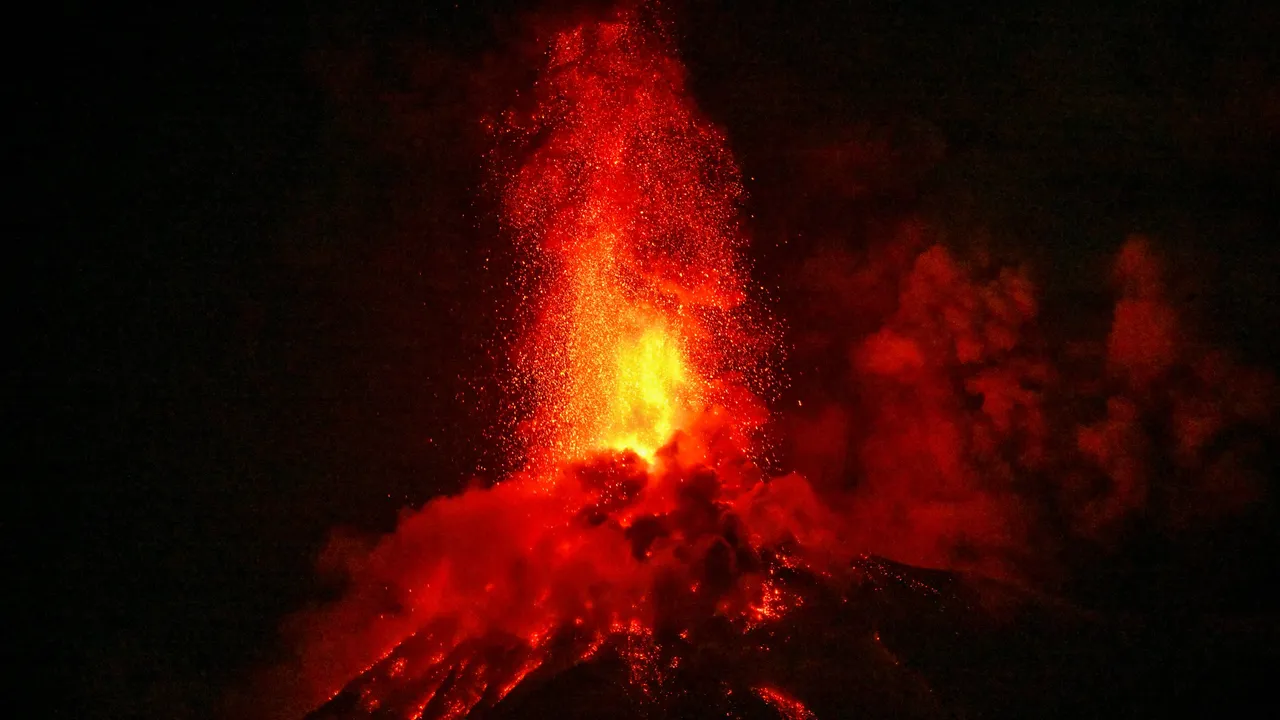
The Fuego volcano eruption in Guatemala has forced hundreds of residents from their homes, as one of Central America’s most active volcanoes sent ash, gas, and lava streaming down its flanks.
Authorities remain on alert. The eruption has not concluded, and the threat to surrounding communities continues.
What Is Happening on the Mountain
Lava has been flowing from the crater, visible from San Juan Alotenango on the volcano’s northern side. Ash clouds have risen high enough to be seen from Palin, in a different direction entirely, giving some sense of the scale involved.
The combination of ash, gas, and lava is characteristic of Fuego’s typical behavior, which distinguishes it from volcanoes that erupt rarely but catastrophically. Fuego is almost continuously active, with periods of heightened output punctuating a baseline of ongoing venting.
That constant activity is precisely what makes it dangerous. Communities have grown up around a mountain that is always doing something, which makes it harder to recognize when a particular episode has crossed into genuinely threatening territory.
Evacuations and Shelters
Hundreds of people have been moved out of the zones nearest the volcano.
Families evacuated from surrounding areas arrived at a temporary shelter in San Juan Alotenango on Tuesday, Aug. 4. Residents of El Porvenir, a village situated directly on Fuego’s slopes, were relocated to a shelter in Escuintla.
Photographs from the response captured what these operations actually look like on the ground. A woman from El Porvenir was pictured carrying first aid supplies distributed to her upon arrival. Children from the same village were photographed playing inside the shelter in Escuintla.
That second image says something worth noting. Evacuations are logistical exercises on paper and profoundly disruptive human events in practice, particularly for families with young children who may not fully understand why they have left home.
Why Fuego Demands Rapid Response
Fuego’s danger is not primarily the lava, which moves slowly enough that people can generally walk away from it.
The greater risk comes from pyroclastic flows, which are fast-moving currents of superheated gas and volcanic material that travel down slopes at speeds no person can outrun. These flows follow ravines and valleys, and they arrive with almost no warning once initiated.
That is why authorities move quickly to clear villages positioned in drainage channels below the summit, and why evacuation orders sometimes precede any visible escalation.
Ashfall presents a separate set of problems. It contaminates water supplies, damages crops, collapses roofs under accumulated weight, and creates respiratory hazards, particularly for children and elderly residents.
The Communities Living Beneath It
Villages like El Porvenir sit on the slopes of an active volcano for reasons that are entirely understandable.
Volcanic soil is exceptionally fertile, supporting agriculture that would be difficult elsewhere. Families have farmed these areas for generations, and land ownership, employment, and community ties are rooted there.
Relocating permanently is not a simple matter of choosing safety over risk. It typically means abandoning livelihood, property, and the social networks that make life manageable in a region where formal support systems are limited.
That tension defines the relationship between Fuego and the people around it. Evacuations are temporary because return is economically necessary.
What Happens Next
Guatemalan authorities will continue monitoring seismic activity and gas emissions to determine whether the eruption is intensifying or beginning to subside.
Several factors will shape the response in the coming days:
Whether pyroclastic flow activity develops, which would expand evacuation zones
How far ashfall spreads and which communities and crops are affected
Whether shelter capacity in Alotenango and Escuintla proves adequate
When conditions stabilize enough to permit residents to return
For evacuated families, the immediate reality is a shelter floor, borrowed supplies, and uncertainty about the state of homes they left behind. Those questions typically cannot be answered until the mountain quiets and assessment teams can safely reach the affected villages.
Author
-
Lucienne Albrecht is Luxe Chronicle’s wealth and lifestyle editor, celebrated for her elegant perspective on finance, legacy, and global luxury culture. With a flair for blending sophistication with insight, she brings a distinctly feminine voice to the world of high society and wealth.