A fourth case of West Nile virus in San Diego County has been confirmed this summer, and health officials are using the moment to remind residents that the season’s real defense starts at home — in backyards, plant saucers and forgotten buckets.
What Officials Have Confirmed
No deaths have been reported locally this year. Still, the four cases show how unevenly the virus can present itself.
One patient required several days of hospital care. Another experienced only mild symptoms and recovered without admission. The remaining two were picked up not through illness at all, but during routine screening of donated blood — a reminder that plenty of infections go entirely unnoticed. Of the four, one was confirmed to have been contracted locally.
Beyond the human cases, surveillance data tells a broader story. So far in 2026, the virus has turned up in 23 dead birds and 10 batches of mosquitoes collected across the county. Similar upticks are being recorded elsewhere in California and in neighboring states.
How the Virus Actually Spreads
West Nile is fundamentally a bird disease. It circulates among avian populations, and humans are incidental hosts.
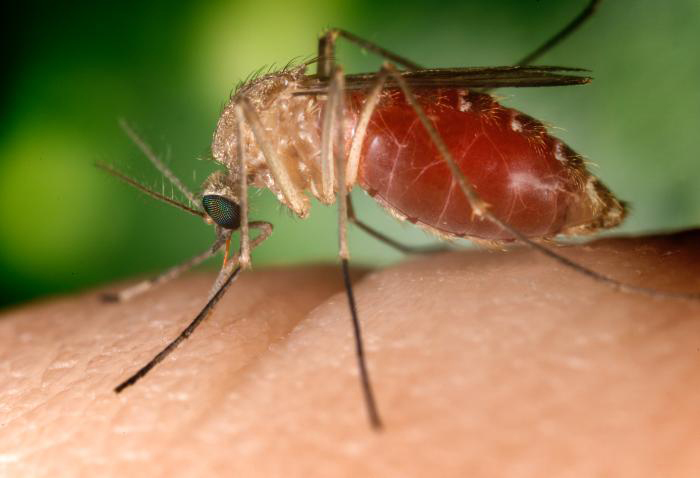
The bridge is the mosquito. Certain species feed on an infected bird, pick up the virus, and can then pass it along when they bite a person. There is no person-to-person transmission through casual contact, which is why controlling the mosquito population is the entire ballgame from a public health standpoint.
Symptoms Worth Knowing
The majority of people infected never realize it. Among those who do develop symptoms, the presentation is usually unremarkable and easily mistaken for a passing bug:
Headache
Fever
Nausea
Fatigue
Skin rash
Swollen glands
In a small percentage of cases, the picture becomes far more serious. The virus can cause severe neurological illness and, occasionally, death. The county’s own history makes that clear — in 2015, 44 residents tested positive and six of them died.
The County’s Three-Step Approach
Mosquito season generally kicks off in April and runs through the warmer months. Officials frame their guidance around three actions: prevent, protect and report.
Prevent breeding at home
This is where residents have the most direct impact. Mosquitoes need standing water to reproduce, and they need remarkably little of it. A county statement put it plainly: eliminating standing water around the home removes the place mosquitoes need to breed.
Common culprits are easy to overlook:
Plant saucers under potted plants
Rain barrels
Buckets and garbage cans
Children’s toys left outdoors
Old tires
Wheelbarrows
Anything that holds water for more than a few days is a candidate. Dump it, drain it, or get rid of it.
For water features that can’t simply be emptied — ornamental ponds, unused pools, stagnant troughs — the Vector Control Program provides mosquito fish free of charge. These small fish feed on larvae and offer a low-maintenance way to keep a water source from becoming a nursery.
Protect yourself outdoors
The advice here is straightforward and unglamorous: wear long sleeves and long pants when practical, and apply insect repellent before spending time outside. Dawn and dusk tend to be peak biting hours for the species that carry the virus.
Report what you see
Residents who notice heavy mosquito activity, a likely breeding source, or a dead bird can contact the Vector Control Program directly at 858-694-2888 or by emailing vector@sdcounty.ca.gov. Dead bird reports are particularly useful — they often serve as an early warning that the virus is active in a specific area.
Aerial Treatments and Where They Happen
Ground crews treat roughly 1,600 sites across the county, working by hand and by truck. But some breeding areas are simply not reachable that way.
For those, the program uses helicopters to distribute granular larvicide over standing water in hard-to-access terrain. The material targets mosquito larvae before they mature into biting adults.
Sites are selected based on mosquito trap counts, environmental conditions and other data rather than on a fixed rotation. Up to 54 potential locations spanning about 1,400 acres are in scope, including areas within Escondido, Fallbrook, Lakeside, Oceanside, Carlsbad, Chula Vista, Solana Beach, Encinitas, San Diego, Santee, Rancho Bernardo, Rancho Santa Fe, San Marcos and 4S Ranch.
The remaining 2026 aerial treatment dates:
Wednesday, Aug. 5 and Thursday, Aug. 6
Wednesday, Aug. 26 and Thursday, Aug. 27
Wednesday, Sept. 16 and Thursday, Sept. 17
Wednesday, Oct. 7 and Thursday, Oct. 8
Thursday, Oct. 29
Residents in those areas may notice helicopter activity on those dates.
Why It Matters Now
Four cases is not an outbreak, and the county has not framed it as one. But the combination of infected birds, positive mosquito batches and confirmed human cases suggests the virus is circulating rather than merely present.
The uncomfortable truth about West Nile is that most of the risk comes from ordinary neglect. A saucer under a patio plant, a tarp with a dip in it, a bucket behind the garage — these are the places mosquitoes actually come from. Aerial larvicide and truck-mounted treatments matter, but they can’t reach a backyard.
Ten minutes walking the perimeter of a property with an eye for standing water is, realistically, the single most effective thing a household can do this season.
Author
-
Lucienne Albrecht is Luxe Chronicle’s wealth and lifestyle editor, celebrated for her elegant perspective on finance, legacy, and global luxury culture. With a flair for blending sophistication with insight, she brings a distinctly feminine voice to the world of high society and wealth.