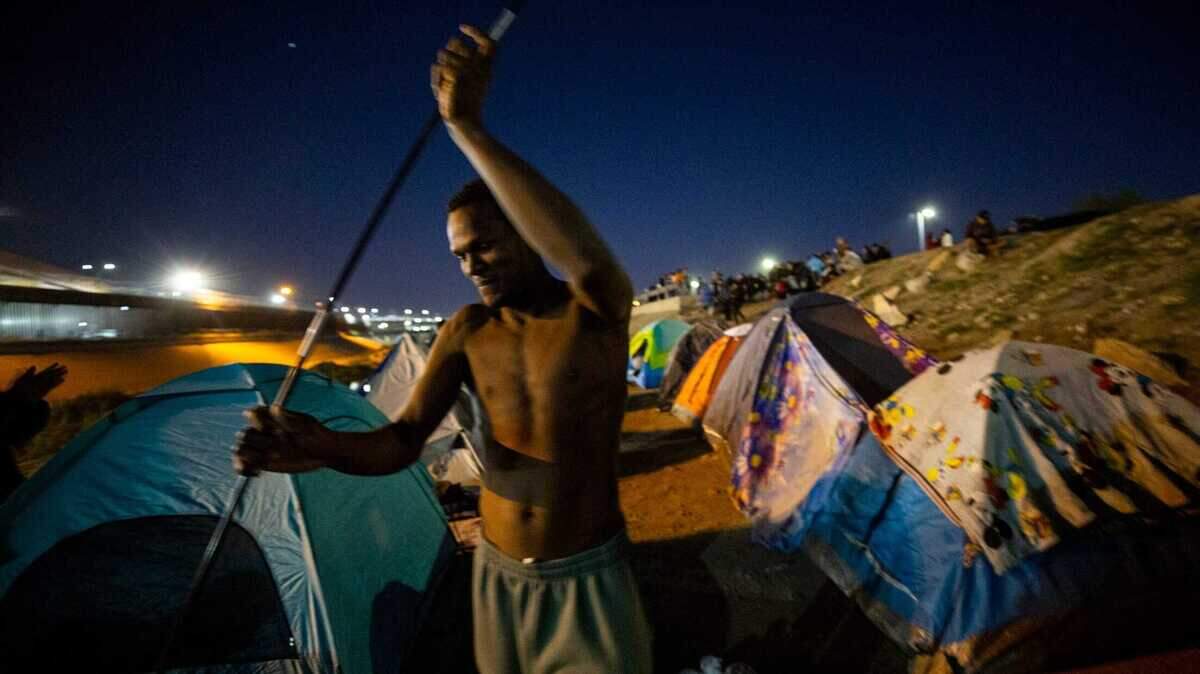
Temporary Protected Status was designed to be exactly what its name suggests: a temporary shelter for people whose home countries have become too dangerous to return to. For roughly 350,000 Haitians and Syrians living in the United States, that shelter has now closed. Their work permits have expired. Their legal status is gone. The conditions that qualified them in the first place have not improved.
Harriett Cecilia Joseph put the dilemma plainly to PBS News. The issue is not that people are unwilling to return to Haiti. It is that the situation there does not permit it.
One Life, Built and Then Suspended
Joseph applied for the program in August 2021 and settled in Springfield, Ohio. What followed was the ordinary business of making a life somewhere. She found work, formed friendships, put down roots, and eventually started her own event planning business.
She learned the program was ending while filling out routine paperwork at her job doing quality control inspections. Her mind went blank, she said. She spent that night crying and praying. Everything she had constructed over four years was suddenly conditional.
In June, the Supreme Court ruled that the administration could terminate the program for Haiti and Syria. The decision also cleared the path to end protections for several additional countries.
Murad Awawdeh, president of the New York Immigration Coalition, said the impact is nearly impossible to convey to anyone who has not faced it, describing the level of fear people are currently living with as unconscionable.
She Never Planned to Stay
Joseph’s story does not fit the assumptions often attached to immigration debates. She arrived in Florida in March 2021 on a tourist visa, expecting a visit.
Her father had urged her to stop working in Haiti as the danger escalated. Shootings and kidnappings tied to gang activity had already made it impossible for her to attend training for a new position with the Ministry of Commerce. She figured she would spend a little time in the United States while conditions at home improved, holding onto the hope that Haitians have long carried about their country turning a corner.
After some months in Florida, she traveled to Springfield to see a friend. That is when her family pushed her to apply for protected status. Gang members had begun extorting her father and brothers, threatening to kill them if payments stopped. Going home was no longer safe.
Conditions then collapsed further. President Jovenel Moïse was assassinated in July 2021. Gang violence intensified. An earthquake and a tropical storm followed.
A Country in Freefall
The situation in Haiti has not stabilized in the years since. As of March, the United Nations reported that gangs controlled 90 percent of Port-au-Prince. Mike Waltz, the US ambassador to the UN, described the capital as a kill zone during a Security Council briefing in July, emphasizing the brutality gangs are inflicting on their own population after a recent visit.
The State Department maintains a Level 4 advisory for Haiti, its highest warning tier, urging Americans not to travel there because of crime, terrorism, kidnapping and civil unrest.
Leonie Hermantin, director of special projects at Sant La Haitian Neighborhood Center in Miami, said the prospect of return is simply unimaginable for most of the people she works with. She described one client who escaped with two teenage children by climbing over barbed wire fences. The children still carry the marks, she said, both emotional and physical.
Joseph eventually accepted that her stay would be longer than intended. That adjustment was its own kind of loss. You stop your dreams, she said. You stop your projects. You move in a direction you never planned. Now she faces starting over again.
What Losing Status Actually Means
The practical consequences arrive fast and stack up. As Awawdeh described it, a person loses the ability to earn income legally, is pushed out of the formal economy, has health insurance canceled, and becomes a target for federal removal proceedings.
Joseph has an asylum application pending, which would eventually open a path to citizenship if approved. The backlog runs into the millions of cases, so approval could take years. In the meantime, she is exploring whether she can move to Canada, where her brother lives.
Hermantin’s organization is fielding a surge of calls. People say they can no longer make mortgage payments. Some are researching third countries. Others intend to keep a low profile and wait for a future administration to restore the program.
Staying carries its own dangers. Fear of detention has begun affecting basic decisions. Hermantin described an elderly man who suffered a stroke and was too frightened to go to a hospital. Teenagers have told her they are afraid to return to school in the fall.
Her organization now advises status holders with US citizen children to sign temporary powers of attorney naming trusted guardians, in case a parent is detained or deported. According to FWD.us, roughly 270,000 US citizens live in households with Haitian beneficiaries.
Employers Are Losing Workers Too
Joseph lost her full-time job within weeks of the ruling, once her work permit lapsed. She had not expected it to happen that quickly.
Employers across the country face the same compliance problem and are letting workers go regardless of performance or tenure. FWD.us estimates that nearly 190,000 Haitian beneficiaries were in the workforce, contributing approximately $5.9 billion annually to the economy.
Sean Kennedy, chief advocacy officer at the National Restaurant Association, said the changes threaten workforce stability and create operational uncertainty for an industry that ranks as the nation’s second largest private employer and already struggles to fill positions.
Health care faces a sharper squeeze. KFF estimated that of roughly 740,000 protected workers in 2024, about 53,000 worked in health care. Elder care facilities and home health services are expected to absorb the heaviest impact.
Katie Smith Sloan, chief executive of LeadingAge, which represents more than 5,000 aging services providers, told PBS News in July that some organizations will lose 40 workers at once, others 16, all on the same day.
The Ripple Reaches Everything
Joseph’s business absorbed a second blow. She launched it in 2023 at the encouragement of friends. She had two weddings and a party booked for August and another wedding in November. All four were canceled because her clients, also Haitian, no longer know where they will be living and are conserving money.
She said she understands their decision completely.
Joseph does not dwell in the problem. She allowed herself one day of grief after the ruling and has since turned toward planning. But planning does not remove the uncertainty underneath.
As a human being, she said, you can end up feeling like there is nowhere in the world where you are welcome.
Author
-
Lucienne Albrecht is Luxe Chronicle’s wealth and lifestyle editor, celebrated for her elegant perspective on finance, legacy, and global luxury culture. With a flair for blending sophistication with insight, she brings a distinctly feminine voice to the world of high society and wealth.