Supreme Court Sides With GOP on Discounted Campaign Ad Rates Ahead of November
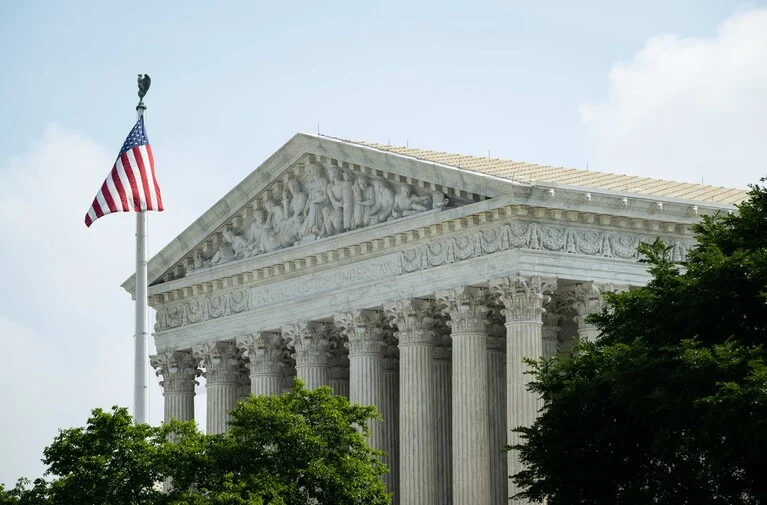
A Supreme Court campaign ad rates decision handed Republican committees a timely win on Friday, clearing away a legal barrier that had been driving up what the parties pay for broadcast time. With the midterms weeks away and advertising budgets already being drafted, the practical value of the ruling is immediate.
The justices put a lower-court decision on hold. That decision, sought by Democratic candidates, would have restricted discounted broadcast rates to candidates themselves rather than extending them to party organizations.
What the Court Actually Did
The order was unsigned, as emergency rulings typically are. One justice dissented publicly.
Rather than resolving the underlying legal question, the majority paused the appeals court ruling while the Republican committees pursue a fuller appeal. The reasoning centered on timing: the justices concluded the lower court had moved prematurely, and had reached a conclusion out of step with how judges elsewhere in the country have handled the issue.
The order pointed to concrete consequences. Rate increases already imposed, and more expected to follow, would force party committees to spend more for the same reach during the stretch of the calendar when reaching voters matters most.
The Dissent
Justice Ketanji Brown Jackson broke from her colleagues. Her position was that the court likely had no need to step in before an internal Federal Communications Commission review had run its course.
That objection is procedural rather than substantive — a disagreement about whether intervention was necessary now, not about who should ultimately win.
How the Dispute Started
Federal law has long guaranteed candidates access to discounted television time in the run-up to an election. The mechanism is well established and rarely controversial.
What changed was scope. In March, the FCC’s Media Bureau determined that certain advertisements coordinated between parties and candidates also qualify for those reduced prices.
Four Democrats challenged that finding in court, among them Senator Jon Ossoff of Georgia and former Senator Sherrod Brown of Ohio. A divided panel of the U.S. 4th Circuit Court of Appeals ruled in their favor.
Why Republicans Went to the Supreme Court
The National Republican Congressional Committee and the National Republican Senatorial Committee filed the emergency application together.
Their argument was operational rather than abstract. Broadcasters, they said, had already begun charging them higher rates in response to the appeals court decision, throwing carefully built media plans into disarray at the worst possible moment.
The Trump administration backed their application.
The June Ruling That Set the Stage
Friday’s order does not stand alone. It follows a Supreme Court decision in June that lifted restrictions on how much parties can spend in coordination with their candidates.
That earlier ruling was widely read as favoring Republicans, since the national party organization holds a substantial cash advantage. Layering discounted advertising rates on top of expanded coordination authority compounds the benefit.
But the Money Picture Is Not One-Sided
The advantage does not run uniformly in one direction.
- At the party level, Republican committees have more money to deploy.
- At the individual candidate level, a number of Democrats have outraised their Republican opponents by considerable margins.
That split explains the litigation. Democrats with strong personal fundraising benefit from a rule that reserves the cheapest airtime for candidates. Republicans relying more heavily on party infrastructure benefit from extending it to coordinated party ads.
The legal fight over who qualifies for a discount is, underneath, a fight over which side’s financial strengths get amplified.
Why Ad Pricing Carries So Much Weight
Discounted broadcast rates are not a marginal saving. Television time is the single largest expense in most competitive federal races, and the difference between the guaranteed low rate and the open commercial rate can be substantial.
Applied across dozens of contested districts and states in the final weeks, that gap translates into a meaningful number of additional advertisements — or a meaningful number fewer.
An Election Season Increasingly Decided in Court
This is not the only election-related emergency application to reach the justices this cycle, and it will not be the last. A pattern has taken hold in which contested rules of campaigning are settled through expedited appeals rather than through legislation or completed agency processes.
Emergency orders come with real limitations. They are issued quickly, usually without full briefing or argument, and they often say little about the merits. Yet in a campaign context, a temporary order can be decisive: by the time a case is fully resolved, the election has happened.
What Comes Next
The immediate effect is that party committees can once again access discounted rates while the litigation continues.
Two things remain unsettled:
The fuller appeal. The Republican committees will now file a complete challenge to the 4th Circuit ruling. That process will extend well past November.
The FCC review. The agency’s internal reconsideration of its own Media Bureau finding is still underway. Its outcome could reshape the dispute independently of what the courts do.
For now, the practical answer for broadcasters and campaign media buyers is clear. Party-coordinated ads get the lower rate, and the money that decision frees up will be spent in the weeks directly ahead.
Author