The Arizona water crisis is usually framed as an allocation fight, and understandably so. Reporting on the Colorado River framework has laid out a genuine threat: because the Central Arizona Project holds junior priority, Arizona stands to absorb larger reductions than any other state. The deepest cuts would reach farms, cities and industries built on the assumption that the river would remain a stable foundation beneath the state’s economy.
Arizona should absolutely contest any arrangement that loads disproportionate pain onto one state while permitting the Upper Basin to avoid mandatory reductions. That is a legitimate legal and political fight.
But the same reporting surfaces a harder question that Arizona’s political leadership has mostly sidestepped.
What happens if conservation is no longer enough?
The Numbers Describe a Different River
The scale of the change is not subtle.
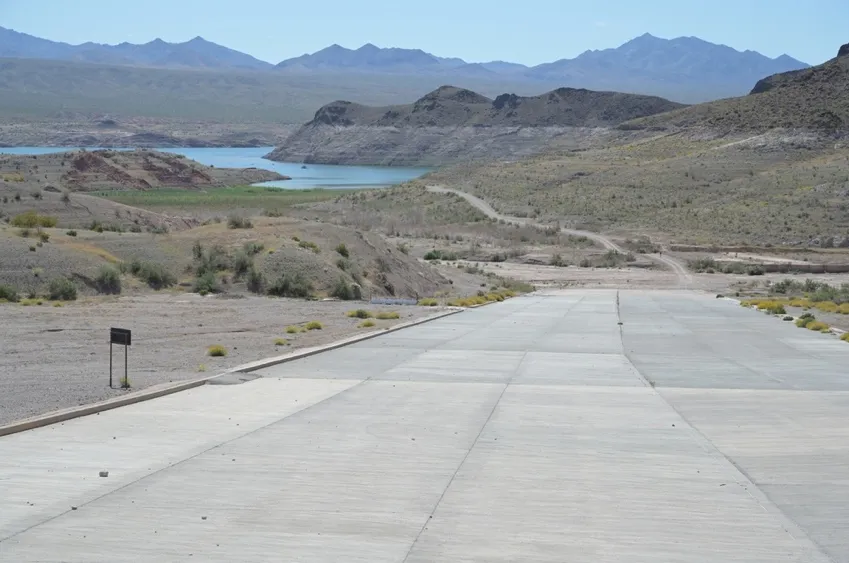
Natural flow at Lees Ferry averaged 15.2 million acre-feet across the 20th century. This century it has averaged 12.1 million. Lake Mead and Lake Powell are hovering near a quarter of capacity.
Those figures do not describe a temporary drought that patience will resolve. They describe a river that cannot honor every commitment written against it. The paper allocations exceed the physical water, and they have for some time.
The Trap of Universal Importance
Arizona officials have responded largely by cataloguing what is at stake economically. Agriculture, mining, semiconductor fabrication, defense manufacturing, housing and development all require reliable supply.
Every one of those sectors can build a compelling case for protection. That is exactly the difficulty.
When every use is designated economically essential, no use is ever expected to contract. The argument becomes circular, and the result is paralysis dressed up as advocacy.
The underlying error is conceptual. Water is not an unlimited platform sitting beneath the economy, available to be drawn from as the economy expands. It is the outer boundary of what the economy can become.
How the Growth Model Actually Works
For decades, Arizona has operated on a straightforward premise: where demand for housing, industry or expansion exists, water will be located somehow.
The sequence is familiar. Cities approve development. Builders acquire land. Companies announce facilities. Water managers are then handed the assignment of making the arithmetic work, through conservation, groundwater extraction, transfers from other users, or some supply that has not yet materialized.
The order of operations is the problem. Growth decisions are made first, and water is treated as a downstream logistics challenge rather than a prior constraint.
Business Is Starting to Say It Out Loud
What makes this moment different is who is raising the alarm.
The warnings no longer come only from environmental organizations and water agencies, whose concerns are easy for skeptics to discount as predictable. Arizona’s business community has begun acknowledging that water uncertainty threatens the growth model itself.
A recent industry analysis estimated that shortages could eliminate hundreds of thousands of homes from future development. Homebuilders generally maintain that projects already in progress are secure, but some now concede the situation could turn serious within a handful of years.
When developers themselves start hedging, the underlying assumption has shifted.
This Is Now a Land-Use Question
Once shortages appear in housing forecasts, land valuations and development pipelines, the Colorado River situation stops being confined to reservoir management and interstate negotiation.
It becomes a question of where people should be allowed to build.
Arizona has two paths available. It can deliberately determine where growth remains viable and where the water simply cannot support it. Or it can continue approving development until shortages, mandatory restrictions and escalating costs impose those determinations without anyone choosing them.
The second path still produces the same outcome. It just arrives later, more expensively, and with more people caught in it.
Paper Assurances Are Not Water
Some proposed developments do not fit the water future Arizona is actually facing, and no permitting process changes that.
A subdivision that depends on pumping groundwater faster than natural recharge replaces it is not sustainable. The permit does not make it so. It only distributes the eventual shortfall across future residents who bought in good faith.
The 100-year assured water supply determination deserves similar scrutiny. It functions as a mark of security, but it is only as sound as the assumptions underneath it. When those assumptions rest on optimistic projections of future supply that may never appear, the certification measures paperwork rather than water.
Nature does not honor documentation.
Two Fights, Not One
None of this argues against defending Arizona’s legal position. The state should press its rights and insist that all seven basin states carry a share of the burden.
But it is important to be clear about what winning that fight would accomplish. A more equitable interstate agreement changes how much water Arizona receives. It does not resolve how Arizona allocates what it has, or whether the state continues approving growth that assumes water it does not control.
Even the best possible negotiation leaves the domestic decisions untouched.
The Actual Question
The debate worth having is not whether growth is good or bad. That framing has consumed years of political energy and settled nothing.
The real question is narrower and more uncomfortable. Does every proposed development deserve water simply because someone wants to build it?
State and local officials cannot credibly warn that the water supply is endangered while continuing to approve projects that depend on that same supply. Those two positions cannot both be sincere.
Arizona has spent decades asking how to secure more water for growth. The more honest question now is how much growth the available water can support.
The river has already drawn the line. What remains is whether Arizona’s leaders are willing to govern inside it, or wait until circumstances do the governing for them.
Author
-
Lucienne Albrecht is Luxe Chronicle’s wealth and lifestyle editor, celebrated for her elegant perspective on finance, legacy, and global luxury culture. With a flair for blending sophistication with insight, she brings a distinctly feminine voice to the world of high society and wealth.