The August recess is close enough for senators to see, and far enough away that nobody is booking flights with confidence. Senate Republicans are pushing through a legislative pile-up with an unusually eclectic agenda: cryptocurrency regulation, college athlete compensation and intoxicating hemp products.
They almost certainly will not finish all of it. The White House appears to want the effort visible regardless.
The Priority Order
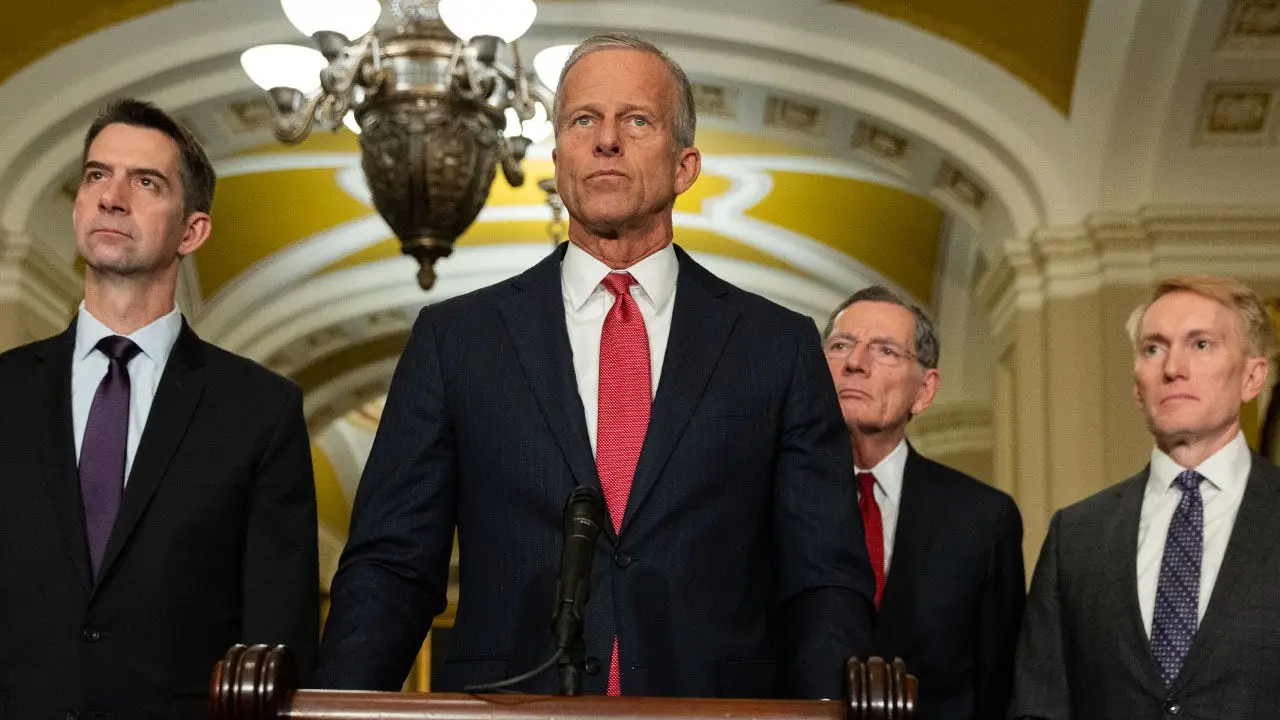
Senate Majority Leader John Thune laid out his sequencing publicly on Fox News.
His stated order begins with funding the government, followed by the Todd Blanche nomination and 74 additional nominations. After that come Russia sanctions, NIL legislation and market structure rules for digital assets.
Two of those carry hard deadlines. Senators want to move well ahead of any government shutdown confrontation rather than letting one develop. And the NIL rights bill has a calendar problem of its own, with ESPN’s first College GameDay scheduled for September 5.
The remaining items share something in common. Crypto, college sports and adjacent cultural issues animate young men, a demographic that forms a significant part of the current Republican coalition. The agenda reflects that, whether by design or instinct.
The SAVE Act Vote Nobody Expects to Pass
Thune is still deciding whether and how to force another vote on the SAVE Act or comparable election security legislation.
He is under no illusion about the outcome. The measure is expected to fall well short of the 60 votes required to advance, and Thune said as much, indicating the Senate would find a way to hold another vote while acknowledging he does not expect Democrats to shift position.
That raises the obvious question of why hold it at all. Two answers apply.
The first is messaging. A recorded vote gives Republicans another opportunity to place Democrats on record against a voter identification measure Thune has described as an 80-20 issue in terms of public support.
The second is internal politics. President Trump and allied senators have been insisting the chamber remain in session until election integrity is addressed. A scheduled vote may satisfy that demand even if the vote fails.
The Crypto Standoff
The most substantive obstruction involves the CLARITY Act, which would establish the first comprehensive federal regulatory framework for digital assets.
Democrats are resisting an initial procedural vote on the market structure bill for two distinct reasons.
The first is negotiating strategy. They argue that allowing a procedural vote could short-circuit ongoing bipartisan talks and remove pressure on Republican leadership to engage seriously at the table.
The second is financial. A failed vote could unlock substantial spending from crypto-aligned super PACs, potentially directed at Democrats who voted no. Avoiding the vote avoids the target.
That second consideration explains a great deal about the current stalemate. Several of the pending disputes are less about policy disagreement than about which votes members are willing to have on the record before spending five weeks at home.
Hemp Is Holding Up Government Funding
Republicans remain split over hemp language in the stopgap spending bill, and the disagreement is entirely internal.
Senator Ted Budd of North Carolina continues to demand a vote to strip out a provision, added at the White House’s urging, that would delay implementation of a ban on certain intoxicating hemp products.
It is a useful reminder of how these logjams actually form. A narrow policy objection from within the majority can stall must-pass legislation just as effectively as unified opposition from the other party, and there is no procedural shortcut around a senator who feels strongly enough to withhold consent.
Weekend Work Is Still on the Table
The mood among senators has been described as hopeful but uncertain.
Some remain optimistic that a last-minute agreement will let Thune clear the deck and send everyone home Friday. As of Thursday evening, working through the weekend was still a live possibility.
The frustration is structural rather than personal. Under normal Senate rules, each pending item requires multiple procedural steps that can consume days. Compressing them requires unanimous consent, and unanimity among 100 senators with competing incentives is difficult to assemble on a deadline.
What Has to Break
For the chamber to adjourn on schedule, several things need to resolve nearly simultaneously.
A consent agreement covering funding, sanctions and the nomination backlog. Some resolution of the hemp objection inside the Republican conference. Enough movement on election legislation to satisfy members threatening to stay. And either an agreement or a stand-down on the crypto procedural vote.
None is individually impossible. All of them within a day or two is the actual challenge.
For now, senators are working through a list that reads less like a legislative calendar and more like an assortment of unrelated deadlines that happened to converge in the same week.
Author
-
Lucienne Albrecht is Luxe Chronicle’s wealth and lifestyle editor, celebrated for her elegant perspective on finance, legacy, and global luxury culture. With a flair for blending sophistication with insight, she brings a distinctly feminine voice to the world of high society and wealth.