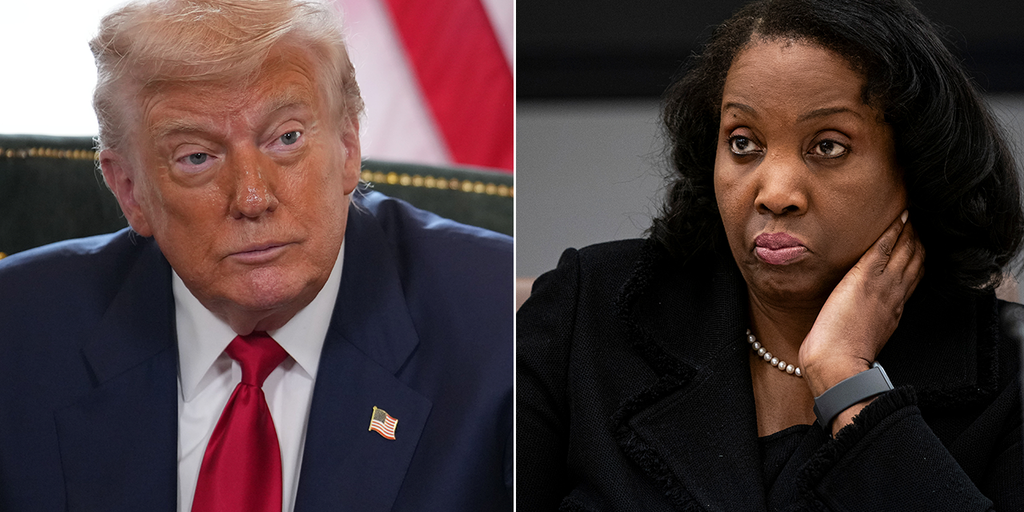
Fed Governor Lisa Cook is back at the centre of a political storm, as the White House restarts an effort that the Supreme Court shut down only weeks ago. According to a letter reviewed by Reuters, President Donald Trump is once again weighing her removal from the Federal Reserve Board, reviving a confrontation that many observers thought had been settled in June.
The move keeps alive one of the most unusual battles in modern American economic policy: a sitting president openly trying to push out a governor of the country’s independent central bank.
What the White House Letter Actually Says
The letter, sent this week and signed by Deputy Chief of Staff Dan Scavino, informs Cook that the president is weighing her dismissal. It gives her a three-week window to reply to unproven claims that she committed mortgage fraud before joining the Fed.
The document goes further than a simple request for an explanation. It suggests the alleged conduct could carry a prison term of up to three decades and argues that the behaviour amounts to negligence serious enough to undermine her fitness to help set U.S. monetary policy.
Neither the Federal Reserve nor the White House offered any public comment when approached.
Cook’s Legal Team Rejects the Claims
Cook’s attorney, Abbe D. Lowell, dismissed the accusations outright, arguing that nothing in them meets the legal bar required to strip a governor of her seat. He said his client intends to fight what he described as another manufactured justification, and to defend both her position and the institution’s long-standing independence.
Cook, the first Black woman to hold a Fed governorship, denied the allegations when they first surfaced last year. Her position has been consistent: the fraud claims are a convenient cover story for a disagreement over interest rates.
A Second Blocked Policy Brought Back to Life
The renewed push against Cook is not an isolated case. Days earlier, the administration signed a fresh order aimed at narrowing birthright citizenship, despite the Supreme Court having already struck down an earlier attempt to redefine who automatically qualifies as a U.S. citizen.
Taken together, the two actions point to a deliberate strategy: when a court closes one route, try another one.
Fired for Cause, Not at Will
The June decision was decided by the narrowest possible margin, five votes to four, and it stopped the removal in its tracks. It also carried historic weight, because no president since the Fed’s creation in 1913 had ever tried to remove one of its governors.
Chief Justice John Roberts wrote the majority opinion. His central point was procedural rather than factual: Cook had not been given the statutory safeguards she was owed, which left her unable to contest the accusations in any meaningful way.
Crucially, the justices did not rule on whether the underlying claims were true. They sent the dispute back down to the lower courts, noting that it remains unresolved whether Cook was guilty of gross negligence, let alone the far more serious misconduct alleged in the president’s original letter.
What the ruling did settle is significant on its own terms. Fed officials cannot simply be dismissed on a whim. Roberts also indicated that any future removal would have to clear a substantial threshold, and that the governor in question must have a genuine opportunity to respond.
Why Legal Experts Saw This Coming
Peter Conti-Brown, a professor at the University of Pennsylvania’s Wharton School, said the outcome was predictable precisely because the ruling turned on process. By focusing on the missing procedural steps, the court effectively left a door open for a more carefully staged second attempt.
In his view, the motive is not seriously disputed by Fed watchers on either side of the political divide. He described the mortgage fraud claims as a vehicle rather than a genuine concern, used to pressure Cook into leaving.
He also expects her to win, given that the allegations remain unsubstantiated, though he warned the process could stretch out for roughly a year, much like the first round of litigation.
Where the Fraud Allegations Came From
The Scavino letter recycles claims first raised by William Pulte, who heads the Federal Housing Finance Agency. Last year, Pulte asked the Justice Department to open a criminal inquiry into Cook and several other individuals over alleged irregularities in home loan paperwork.
There is still no sign that any such investigation has advanced. Meanwhile, the factual picture has grown weaker rather than stronger:
- Documents reviewed by Reuters showed that Cook described the Atlanta property in question as a vacation home in her submissions to the lender.
- Michigan tax officials indicated that she had not violated the rules governing tax relief on the home she listed as her primary residence.
An Earlier Court Ruling Also Favoured Cook
Before the case reached the Supreme Court, U.S. District Judge Jia Cobb found that removing Cook without notice or a hearing likely breached her Fifth Amendment right to due process.
Cobb went further, suggesting the allegations probably fell short of the legal standard for removal under the Federal Reserve Act, since they concerned events that predated her appointment. Roberts declined to endorse that specific reasoning, but he still set a demanding bar for any dismissal.
The Bigger Fight Over the Fed
This confrontation sits inside a longer campaign. Trump spent months publicly threatening former Fed Chair Jerome Powell for declining to deliver the rate cuts the White House wanted.
Powell’s replacement, Kevin Warsh, took office in May. Since then, the president’s criticism has shifted toward other members of the board, most of whom were appointed under his predecessor, Joe Biden. Warsh himself has escaped public attack, even though the rate reductions Trump has demanded have yet to materialise.
For now, Cook remains in her seat, and the three-week clock is ticking. The outcome will say a great deal about how much political pressure the Federal Reserve can absorb without losing the independence that has defined it for more than a century.
Author
-
Lucienne Albrecht is Luxe Chronicle’s wealth and lifestyle editor, celebrated for her elegant perspective on finance, legacy, and global luxury culture. With a flair for blending sophistication with insight, she brings a distinctly feminine voice to the world of high society and wealth.