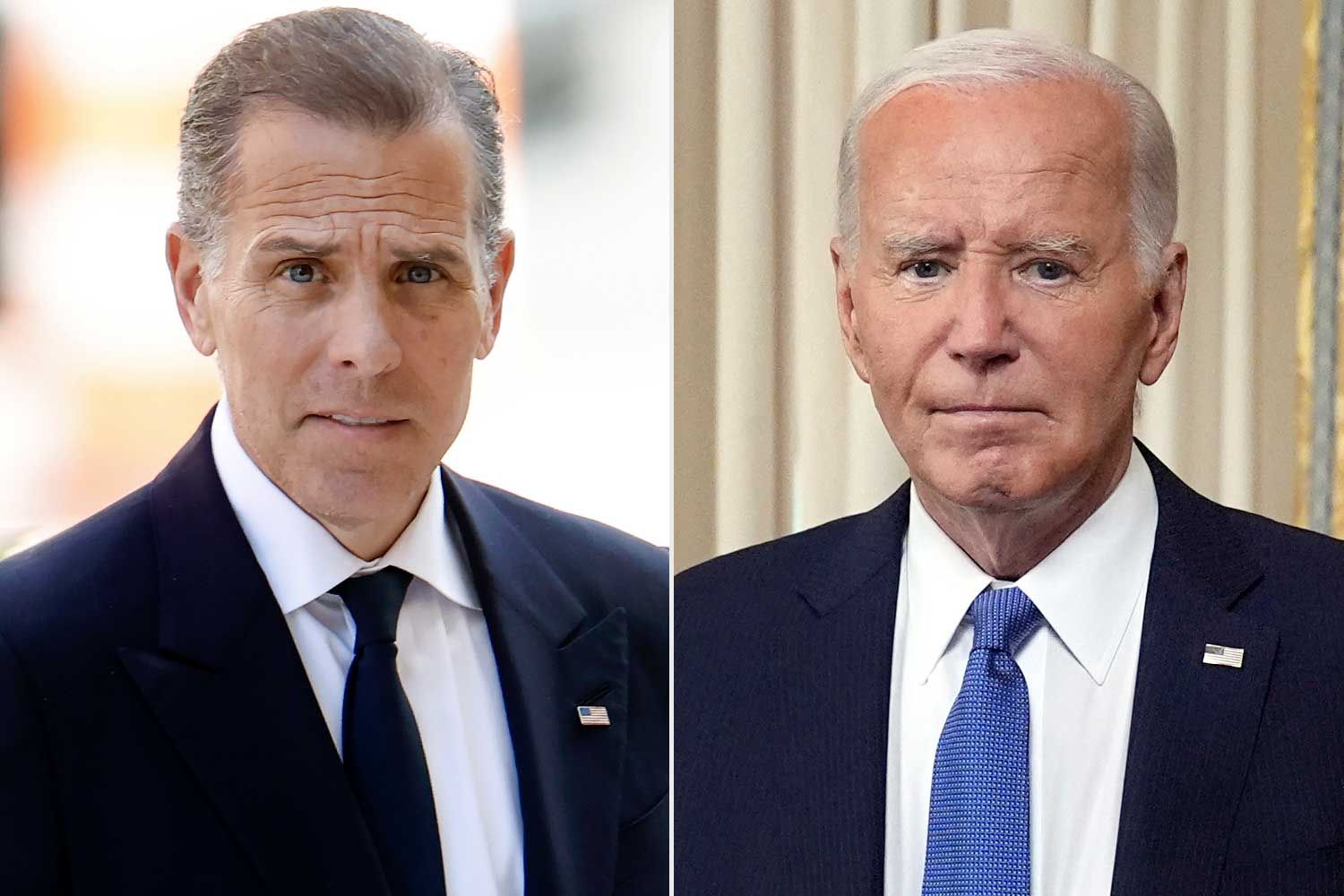
Hunter Biden Reveals His Father’s Prostate Cancer Has Spread and Turned Deeply Painful
Joe Biden cancer news took a sobering turn this week after the former president’s son offered the most candid public account yet of his father’s condition. Speaking to the BBC programme Newsnight, Hunter Biden said the disease has moved beyond where it was first found and is now causing his father considerable suffering.
The cancer, he said, has spread into the bones and further still. He described it as very painful and, in many respects, deeply debilitating. Video of the interview was posted online on Friday.
A spokesman for the 83-year-old Democrat declined to comment on the interview when approached on Saturday.
How the Diagnosis First Came to Light
Biden’s illness became public in May 2025, less than four months after he handed over the keys to the White House. His office announced at the time that he had been diagnosed with an aggressive form of prostate cancer and that it had already reached his bones.
That detail mattered. A cancer that has travelled to bone at the point of diagnosis is, by definition, no longer confined to the prostate. It signals a disease that has been active for some time rather than one caught in its earliest window.
By October, a spokesman confirmed that Biden had begun radiation treatment alongside hormone therapy, a combination commonly used when prostate cancer has advanced.
Hunter Biden’s remarks now indicate the situation has progressed further since that announcement.
Understanding What Bone Metastasis Means
Prostate cancer has an unusual relationship with the skeleton. When it spreads, bone is by far its most common destination, particularly the spine, pelvis, ribs, and the long bones of the legs.
This is one reason the disease can become so physically punishing. Tumour activity within bone tissue can cause persistent, deep aching that does not respond well to ordinary painkillers. It can weaken the bone structure itself, raising fracture risk. When deposits form near the spine, they can press on nerves and affect movement.
Hormone therapy works by cutting off the testosterone that prostate cancer cells rely on to grow. Radiation is often layered on top of it, either to shrink specific tumour sites or simply to reduce pain in a particularly troublesome area.
Neither approach cures advanced disease. Both are used to slow it, manage symptoms, and preserve quality of life for as long as possible. Many patients live with metastatic prostate cancer for years while cycling through different treatment lines as the disease adapts.
A Presidency Shadowed by Questions About Health
Biden made history in 2020 as the oldest person ever elected to the American presidency. From the moment he took office, his physical stamina and mental sharpness were subjects of relentless public debate.
Across his term from 2021 to 2025, every stumble, every verbal slip, and every scheduling decision was parsed for evidence of decline. His allies argued the scrutiny was disproportionate and often unkind. His critics insisted the questions were legitimate given the demands of the office.
The cancer diagnosis, arriving so soon after his departure from Washington, reignited that conversation. Some asked whether the disease could have been detected earlier. Others pointed out that screening decisions for men in their late seventies and eighties involve genuine medical trade-offs, and that guidelines in many countries actively discourage routine testing at that age because of the risk of overtreatment.
What the record shows is limited. What the public knows now comes largely through statements from his office and, in this instance, from his son.
Still Present in Public Life
Despite everything, Biden has not withdrawn entirely from view.
In June, he attended the dedication of Barack Obama’s presidential library in Chicago, a moment layered with personal history. Biden served as Obama’s vice president from 2009 to 2017, an eight-year partnership that shaped much of his later political identity and eventually powered his own run for the top job.
His appearance there was a reminder that he remains, at least in some capacity, engaged with the political world he spent more than five decades inside.
There is also a book on the horizon. Biden’s presidential memoir is scheduled for release on November 17, and it is expected to draw enormous attention, both for its account of his time in office and for whatever it may reveal about the period surrounding his decision to leave the 2024 race.
Why Hunter’s Comments Carry Weight
Hunter Biden has been one of the most scrutinised figures in modern American politics, largely for reasons unrelated to his father’s health. His legal troubles and personal struggles have played out publicly for years.
But in this instance, he is speaking as a son. His description of the pain and debilitation his father is enduring is not a policy statement or a political defence. It reads as a family member describing something difficult and immediate.
That is also why the comments landed with such force. Official statements from a former president’s office tend toward the measured and the clinical. A son’s account, delivered in plain language on live television, cuts through in a way that press releases rarely do.
The Broader Picture
Prostate cancer remains one of the most commonly diagnosed cancers among men worldwide. Caught early, when it is still confined to the gland, outcomes are frequently excellent. Once it has spread to bone, the conversation shifts from cure to control.
Biden’s case has, inevitably, drawn attention to the disease itself. Advocacy groups have noted a rise in public interest and screening conversations since his diagnosis became known, particularly among older men and those with a family history.
For now, no further official update has been issued. His office has stayed silent on the specifics, and the family has not indicated whether more information will follow.
What is clear is that a man who spent fifty years in American public life is fighting a fight that has nothing to do with politics at all.
Author
-
Lucienne Albrecht is Luxe Chronicle’s wealth and lifestyle editor, celebrated for her elegant perspective on finance, legacy, and global luxury culture. With a flair for blending sophistication with insight, she brings a distinctly feminine voice to the world of high society and wealth.