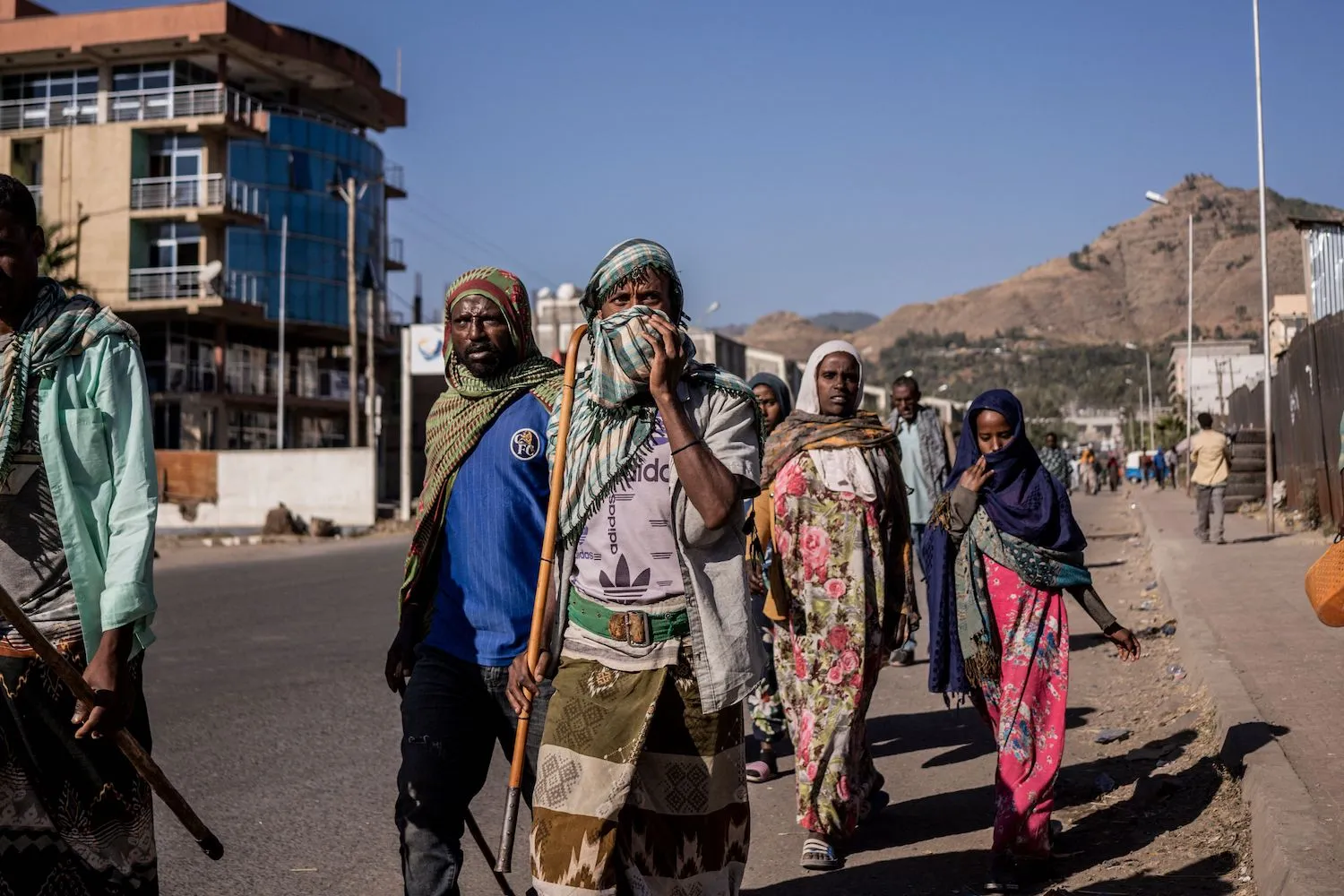
Tigray conflict Ethiopia fears are resurfacing as fresh clashes break out between regional forces and the national army, just four years after a brutal two-year civil war officially ended. For residents still rebuilding their lives, the sudden return of gunfire feels like a nightmare they thought they’d escaped, and the panic is already visible on the ground.
Reports of panic buying have spread across Tigray as people rush to stock up on food and essentials. Making matters worse, internet and phone services have been cut, leaving many unable to access their own money through banking apps in a region that became almost entirely cashless after ATMs stopped functioning months ago. For ordinary families, this isn’t just a political crisis, it’s an immediate, practical emergency.
What Sparked This Latest Round of Fighting
The current flare-up didn’t come out of nowhere. It follows more than half a year of steadily deteriorating relations between the federal government and the Tigray People’s Liberation Front, the party controlling the region. Back in 2022, the African Union helped broker what’s known as the Pretoria Agreement, a peace deal that officially ended the war. But several core disputes were never actually resolved, and those unhealed wounds have kept tensions simmering ever since.
Throughout this year, both sides have accused each other of provocations while quietly mobilizing troops, with sporadic fighting breaking out in pockets across the region. This week, things escalated dramatically, major clashes erupted in Tigray and rapidly spilled into the neighboring Afar and Amhara regions. Unsurprisingly, each side blames the other for starting it. The TPLF insists it was reacting to a federal offensive that included drone strikes, while the government claims Tigrayan forces struck first after seizing control of regional airports.
Understanding the TPLF and Its History
To grasp why this conflict keeps reigniting, it helps to understand who the TPLF actually is. The group began as an armed resistance movement in the 1970s, fighting against Ethiopia’s military government at the time. It later played a central role in toppling that Marxist regime in 1991 and became the dominant force within the coalition that governed Ethiopia for nearly thirty years.
That dominance eventually became a sticking point, since ethnic Tigrayans make up only around 6% of Ethiopia’s overall population, yet held disproportionate political power for decades. When Abiy Ahmed took over as prime minister in 2018, he restructured the ruling coalition into a new Prosperity Party, effectively sidelining the TPLF’s influence. Relations between Addis Ababa and Tigray’s leadership deteriorated quickly from there, culminating in a devastating war in 2020, one of the deadliest conflicts of this century, with an estimated 600,000 lives lost according to AU mediators. That war left Tigray isolated from the outside world and pushed it to the edge of famine before a fragile truce was reached in late 2022.
Why the Peace Deal Never Really Held
Four major unresolved issues have kept undermining the 2022 agreement, and two of them center on the fertile western Tigray territory. Amhara forces, who fought alongside the Ethiopian army during the war, seized this land early in the conflict. Many in Amhara argue the territory was wrongly folded into Tigray when regional borders were redrawn back in 1991. The result was mass displacement, with hundreds of thousands of ethnic Tigrayans forced from their homes into makeshift camps in Tigray and Addis Ababa. The TPLF wants the land returned and displaced residents allowed back, while the government insists the matter should be settled through a referendum.
Disarmament has been another flashpoint, with federal officials accusing the TPLF of surrendering only outdated weapons while secretly retaining its real arsenal. Governance disputes have added further strain too. Under the peace deal, Abiy appointed an interim administration for Tigray, but internal disagreements and the prime minister’s attempts to shape regional affairs eventually caused the TPLF to abandon that structure altogether, reinstating its pre-war leadership just before this year’s general election, which couldn’t be held in Tigray due to security concerns. The fallout has been severe: civil servants have gone unpaid, public services have collapsed, and everyday economic life has grown increasingly desperate.
A Shifting Web of Alliances
Perhaps the most consequential recent development is the TPLF’s newfound alliances. Once politically isolated within Ethiopia, it has now joined six other armed groups, including Amhara’s Fano militia and the Oromo Liberation Army, in forming what’s being called the Alliance for Survival. These groups have wildly different grievances, but they share one unifying goal: removing Abiy’s government from power. Notably, the TPLF and Fano forces fought on opposite sides during the civil war and still disagree over western Tigray’s fate, yet they’ve set aside those differences, at least for now. TPLF officials say they’re determined not to repeat the isolation they experienced in 2020. Still, analysts warn this coalition could easily fracture given how divergent its members’ underlying interests really are.
Government Response and the Eritrea Factor
Addis Ababa has firmly blamed the TPLF for igniting the latest violence and has framed the new alliance as a deliberate attempt to destabilize the country. Officials have also accused Eritrea of backing armed groups inside Ethiopia, an allegation Asmara denies outright. This marks a striking reversal, since Eritrea actually fought alongside Ethiopian forces during the earlier civil war. The renewed friction between the two neighbors centers on Red Sea port access. Ethiopia, the world’s largest landlocked country, lost its coastal access when Eritrea gained independence in 1993, and Abiy has recently pushed for control over Eritrea’s southern port of Assab, even hinting at taking it by force if necessary.
Diplomatic Efforts and the Risk of Wider Escalation
The African Union is spearheading peace efforts, calling for an immediate halt to fighting and dispatching former Nigerian President Olusegun Obasanjo to engage both sides urgently. The United Nations and regional body Igad have issued similar warnings, cautioning against a broader, more catastrophic conflict. But trust between Addis Ababa and Tigray remains virtually nonexistent, and the emergence of this new armed alliance has only complicated matters further.
The risk of the conflict spreading is real and growing. Fighting has already crossed into neighboring regions, while the government simultaneously grapples with unrest in Amhara and Oromia. This new alliance effectively links multiple separate conflicts both politically and militarily, raising the stakes considerably. There’s also genuine concern that Eritrea could be pulled back into the fray, this time potentially against the Ethiopian government. Even Sudan’s warring factions have taken opposing sides on Tigray, adding yet another layer of regional complexity. For now, the African Union has urged all neighboring countries to avoid any action that might push this fragile situation toward full-blown catastrophe.
Author