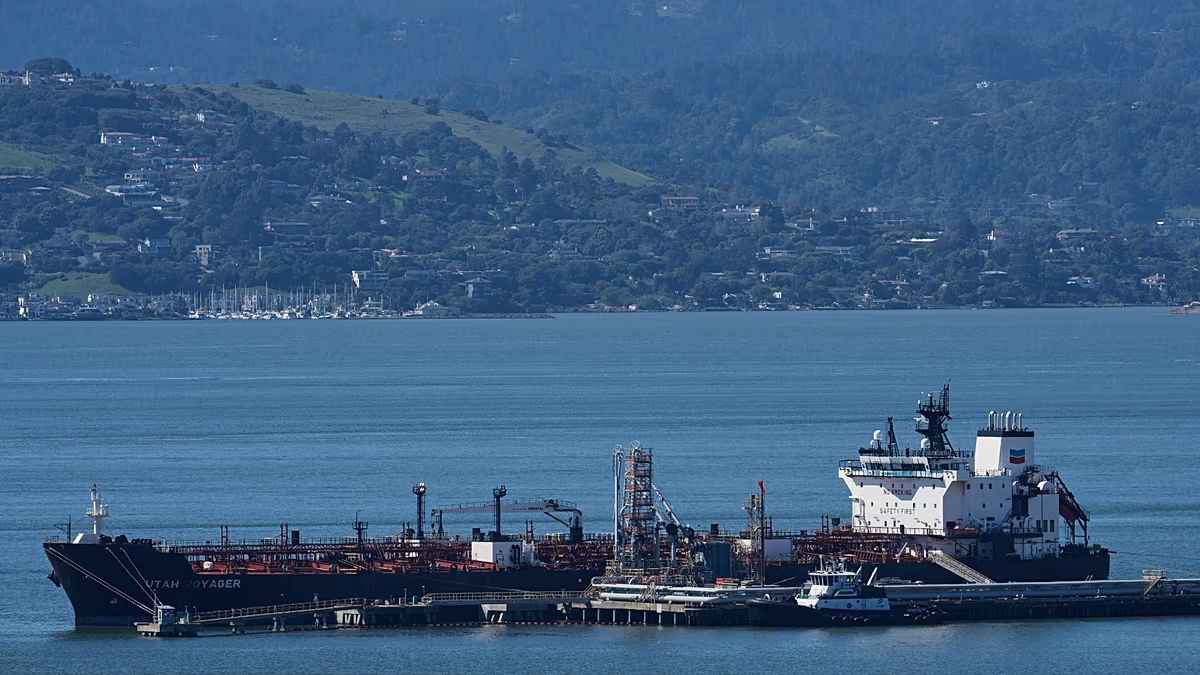
Oil prices Strait of Hormuz volatility returned this week, with Brent crude swinging sharply after a renewed attack in the critical waterway forced international authorities to pause a planned evacuation of stranded ships. Though prices ultimately eased, the episode served as a stark reminder of how fragile the recent calm in the Gulf remains.
A Sharp Swing in Crude Prices
The price action told a turbulent story. Brent crude, the international benchmark, fell more than 2 percent on Friday after earlier climbing as much as 4 percent. The spike followed the International Maritime Organization’s decision to suspend its planned evacuation of ships stranded around the strait.
By 07:30 GMT, Brent futures for August delivery stood at $73.85 per barrel, after topping $76 the previous day. The benchmark had dropped sharply last week after the United States and Iran signed a memorandum of understanding to end nearly four months of war, and it now hovers about 2 percent above its pre-conflict level.
What Triggered the Spike
The catalyst was a fresh act of violence in the strait. The IMO halted its evacuation plan after a cargo vessel reported being struck by an “unknown projectile” while attempting to cross the waterway near the Omani coast.
The timing was significant. The attack dented growing hopes for a return to normal shipping in the Gulf, hopes that had been buoyed by a notable resurgence in traffic in recent days. On Wednesday, 70 vessels transited the waterway, more than double the previous day’s total and the highest daily figure since March 1, according to ship tracking platforms.
The strait carries roughly one-fifth of global oil and liquefied natural gas supplies during peacetime, which helps explain why any disruption sends ripples through energy markets.
Pointing Fingers
US officials have attributed the attack to Iran, according to reports from multiple media outlets. Iran, for its part, did not claim responsibility but issued a pointed warning of its own.
Iran’s Persian Gulf Strait Authority, which asserts the right to regulate shipping in the strait, said that any vessel using routes outside its designated framework would not be guaranteed safe passage. The authority stated that responsibility for consequences arising from unauthorized routes would fall on the vessel’s owner, operator, and commander.
A Broad Market Selloff
The turbulence wasn’t confined to oil. Asian markets suffered steep losses on Friday, with major indices across the region falling sharply.
The damage was widespread:
- Seoul’s Kospi, the best-performing major index this year, closed down 5.8 percent after plunging as much as 9 percent earlier.
- Tokyo’s Nikkei 225 fell more than 4 percent.
- Taipei’s Taiex dropped about 3.6 percent.
- Hong Kong’s Hang Seng Index slipped 1.7 percent.
Much of the pressure in South Korea came from a tech selloff. Memory chip giants SK Hynix and Samsung Electronics fell 8.4 percent and 5.3 percent, respectively. The slide followed Apple’s decision to sharply raise prices for its Macs and iPads in response to surging memory chip costs, stirring fears that pricier devices could dampen the fierce demand for DRAM and NAND flash memory.
The Fragility of Peace
Analysts framed the attack as a sobering signal about the precariousness of the situation. June Goh, a senior oil market analyst at Sparta in Singapore, said the incident reminded markets just how fragile the peace in the strait remains amid the tenuous US-Iran ceasefire.
Goh pointed to an urgent practical need driving the situation: tankers must be able to enter and offload high crude stocks sitting in onshore tanks before normal production can resume. For that reason, she stressed, securing safe passage through the waterway is paramount to recovering the lost supply.
The Bottom Line
The latest disruption in the Strait of Hormuz underscores how quickly optimism can give way to anxiety in a region still emerging from conflict. While oil prices pulled back after their initial spike, the underlying tension remains. Until shipping companies, insurers, and global markets can trust that the waterway is genuinely safe, every incident carries the potential to jolt energy prices and rattle financial markets far beyond the Gulf.
Author