Colorado governor primary has become an unexpected proving ground for a question rippling through the Democratic Party: just how toxic is a Washington connection right now? As Senator Michael Bennet and Attorney General Phil Weiser battle for the state’s top job, their race is offering an early read on how an angry Democratic electorate judges candidates more by their fighting credentials than their ideology.
A Race Too Close to Call
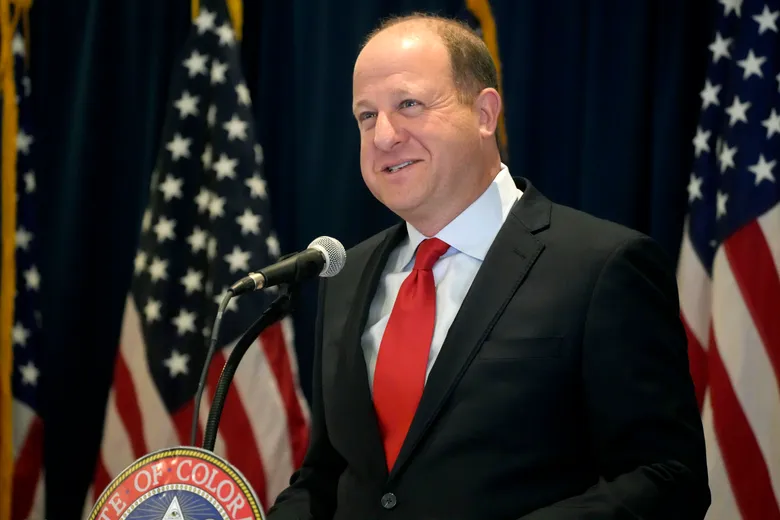
The dynamic between the two candidates was on vivid display during last weekend’s Juneteenth parade in Denver, where Bennet and Weiser were never more than a few dozen feet apart as they worked the route, posing for selfies and shaking hands. That physical proximity mirrored their political reality: an uncomfortably tight contest to become Colorado’s next governor.
The primary, among the most expensive gubernatorial races in state history, has turned into a midseason litmus test. The candidates are defined less by ideological differences than by their perceived ability to fight President Trump and by their ties to a Washington brand many voters now view as poisonous. The outcome could serve as an early warning ahead of the 2028 Democratic presidential primary, when a field of senators and governors is expected to compete for a furious base.
As one state representative who endorsed Weiser put it, being from Washington is toxic right now, and he believes Weiser is benefiting from that serious anti-Washington sentiment.
A Shrinking Lead
The race didn’t begin as a nail-biter. Bennet, first appointed to the Senate 16 years ago, cleared the field of potential rivals and led by 31 percentage points in an internal poll his campaign released last year. That commanding margin has narrowed sharply in recent months.
According to interviews with more than a dozen Democratic officials and strategists, the momentum has shifted. One Colorado Democrat described the state of play this way: Weiser has the momentum, while Bennet holds the name recognition and a spending edge on television. The same official noted that even though both candidates currently hold office, Bennet is seen as the incumbent, a label that has become a liability this cycle. The race, they predicted, would be very close.
A National Wave of Anti-Establishment Anger
Colorado’s contest is unfolding amid a broader surge of Democratic frustration with the establishment. That anger echoed loudly in New York this week, where two Democratic incumbents lost their primaries to insurgent leftist candidates backed by New York City Mayor Zohran Mamdani.
Progressives have already racked up significant wins elsewhere:
- Major primary victories in Maine and California
- Activists declaring the emergence of a left-wing version of the Tea Party
All of this comes as the Democratic Party’s approval ratings remain historically low nearly two years into Trump’s second term. One North Carolina-based strategist captured the prevailing mood bluntly, saying he would far rather have a candidate running from a state than from Washington in the 2026 and 2028 primaries, because being a Democrat from D.C. is simply not a good position right now.
Not a Typical Insider-Versus-Outsider Fight
Despite the parallels, the Colorado race doesn’t fit neatly into the insider-versus-outsider framework that defined New York’s primaries, even as Weiser is eager to portray it that way.
Weiser acknowledged that he had once imagined a campaign in which he looked like the more establishment figure. But running head-to-head against Bennet, he said, has cast him instead as the anti-establishment outsider.
That framing was shaped in part by what didn’t happen. No leftist challenger emerged to take on either Bennet or Weiser, a development that frustrated some progressives. They pointed to a serious primary challenge against a Denver-based House incumbent as evidence of a missed opportunity in the governor’s race.
The stakes are high regardless. Colorado’s solidly blue lean all but guarantees that the winner of the June 30 primary will replace Governor Jared Polis, who is increasingly viewed as a pariah within the party after Colorado Democrats voted to censure him for granting clemency to an election denier.
Weiser’s Case: The Better Trump Fighter
Without a challenger from the left, Weiser, first elected statewide in 2018, has worked to position himself as the strongest fighter against Trump. He has leaned heavily on his record of suing the Trump administration while arguing that Bennet hasn’t done enough from inside the Senate.
In his first television ad, Weiser framed it as his job to defend Colorado from illegal actions, including those of Trump, especially when members of Congress won’t. He has been particularly critical of Bennet’s votes to confirm some of Trump’s Cabinet officials and has attacked the dark money funding ads supporting his opponent.
Weiser argues that voters are underestimating the depth of the anger, contending that being in Washington makes a politician appear complicit and saddled with a tough brand.
That sentiment surfaced among parade-goers in Denver. One 45-year-old volunteer said he backed Weiser because the attorney general’s lawsuits connect directly to issues he cares about, while he felt Bennet had not done enough to fight Trump. Another voter, a 62-year-old business owner, said she supported Weiser because she didn’t want “the same old,” suggesting that after 16 years, Bennet might have lost touch.
Bennet’s Defense: Results Over Rhetoric
Bennet’s allies push back hard against the idea that he lacks fight. A state representative who endorsed him said he brings genuine fire over Trump into the race. That reputation traces back to a viral 2019 moment when Bennet sharply criticized Senator Ted Cruz over what he called crocodile tears during a government shutdown, a clip that helped launch his brief presidential bid.
That same intensity flared when Bennet was asked about Weiser’s criticism of his confirmation votes. He defended those votes as necessary to protect Coloradans, emphasizing that he regularly works with Trump’s Agriculture and Interior secretaries to ensure Colorado isn’t left behind during what he called the worst fire danger in state history. That, he argued, is his job, even if voters don’t always see it.
Bennet described voting against Trump’s nominees as the easiest vote a Democrat can cast, while insisting he has spent his Senate tenure delivering tangible results for Colorado. He also framed his decision to leave a safe Senate seat for the governor’s race as an insurgent move, saying he refuses to mail it in while his state is in trouble.
Notably, Bennet pointed to his willingness to challenge his own party, recalling that in July 2024 he was the first senator to publicly acknowledge that then-President Joe Biden wasn’t capable of winning reelection. He maintained that he hasn’t contributed to the dysfunction of Washington, while conceding he understands why some voters might wonder about that.
His pitch is landing with some. A 66-year-old voter who entered one of his events undecided left as a supporter, saying she believed his experience and connections as a senator made him best equipped to push back against the Trump administration.
The Money Factor
One advantage could prove decisive: spending. Bennet holds a significant financial edge that several Democrats cited as a key reason he could prevail. A pro-Bennet super PAC and his campaign have spent more than $10 million on ads, nearly half of it coming from former New York City Mayor Michael Bloomberg, a major Democratic donor. By contrast, Weiser and his aligned super PAC have spent just under $5 million.
A Colorado strategist not working on the race summed up the dynamic: voters aren’t choosing between two competing ideologies so much as responding to Weiser’s framing of himself as the anti-establishment candidate, even though he is also part of the establishment, against a Bennet who has been a known quantity for years. That strategist predicted Bennet would still ultimately win, but acknowledged the race reveals just how powerful a liability a Washington connection has become.
The Bottom Line
The Colorado governor primary has become far more than a state contest. It is a real-time experiment in whether name recognition, experience, and financial muscle can overcome the deep anti-Washington anger coursing through the Democratic base. With the vote fast approaching and the margin razor-thin, the result may offer one of the clearest signals yet about what Democratic voters are looking for, and what they’re ready to reject, heading into the pivotal elections ahead.
Author