Little and Often: Rethinking How Much Sun Your Body Actually Needs
Working out how much sunshine we need turns out to be far less straightforward than either extreme of the debate suggests. Avoid the sun completely and you lose real health benefits. Overdo it and you raise your cancer risk substantially.
The honest answer sits somewhere in the middle, and it varies enormously depending on who you are and where you live.
How We Got Here
The modern love affair with tanning has a surprisingly specific origin. Photographs of Coco Chanel returning bronzed from a Mediterranean cruise in 1923 helped popularise sunbathing, turning a tan into a status symbol and reshaping Western attitudes toward the sun.
Medicine encouraged it too. From the early to mid-1900s, heliotherapy was used in sanatoriums to treat rickets and tuberculosis, and a healthy tan was actively promoted.
That changed dramatically over the past fifty years as skin cancer rates climbed. Public health messaging pivoted toward avoidance and heavy sunscreen use, and the evidence linking excessive exposure to skin cancer remains solid today.
More recently, though, researchers have identified genuine benefits from moderate, time-limited exposure, which has complicated the avoid-at-all-costs message considerably.
What Sunlight Actually Does for You
The most familiar benefit is vitamin D, essential for bone health and muscle function. Some research links higher vitamin D levels to lower cancer incidence and mortality, and to reduced risk of developing type 2 diabetes.
There is also a cardiovascular effect that has nothing to do with vitamin D. When UVA rays reach the skin, they trigger nitric oxide release, which dilates blood vessels and lowers blood pressure, reducing heart attack and stroke risk.
A landmark study following 29,518 Swedish women over two decades found that sun avoiders had double the all-cause mortality rate of the highest exposure group.
Importantly, that finding does not extend to artificial sources. Sunbed use correlated with increased overall and cancer mortality. A separate Swedish study found women using a sunbed monthly or more for at least a decade had a 90 percent increase in all-cause mortality.
Rebecca Mason, professor of physiology at the University of Sydney, explains that adequate vitamin D helps dampen inflammation, respond to invading pathogens, and manage the immune system so it does not attack the body’s own cells.
The Brain Benefits
Sunlight also shapes how well you sleep and think.
Morning light contains blue wavelengths that signal daytime to the brain, raising cortisol and suppressing melatonin. The result is greater alertness and energy.
Higher daytime light exposure has been linked to better cognitive performance, faster reaction times and improved memory. One study of over 360,000 participants associated roughly 1.5 hours of daytime sunlight with reduced dementia risk.
Sunlight raises serotonin levels, helping people feel calmer and more focused. Patients treated for severe depression in sunny rooms have been shown to recover faster, while insufficient daylight increases risk of depressive symptoms, low mood and insomnia.
So How Much Is Enough
Guidance varies by age, geography and skin type, but experts consistently favour short, frequent exposure over long sessions.
Mason says vitamin D synthesis works best in the middle of the day, little and often, when UVB levels peak.
For light-skinned people, she recommends brief bursts on most days with hands, arms or legs uncovered for a few minutes at a time. In very high UV regions, shifting that to mid-morning or mid-afternoon is safer.
People with darker skin typically need considerably longer. Higher melanin slows vitamin D production. One study found that during UK spring and summer, people with dark brown skin need around 25 minutes of midday exposure to produce adequate levels.
Why Midday Specifically
This point often surprises people, since midday is exactly when we are told to hide.
The reasoning involves the ratio of UVB to UVA. UVB drives vitamin D production but is also the primary cause of skin cancer. UVA contributes to skin ageing and skin cancer development but does nothing for vitamin D.
Near midday, you get proportionally more UVB. Earlier or later, you receive less UVB while still absorbing relatively more UVA, meaning more damage for less benefit.
Mason’s advice for higher-risk individuals reflects this: expose more skin for a shorter time, more often, rather than less skin for longer stretches. And afterwards, cover up carefully.
Who Needs Extra Caution
People with very pale skin, a personal or family history of melanoma, or many moles face elevated skin cancer risk and need greater precautions. The same applies to anyone taking immunosuppressants.
In rare conditions such as albinism, unprotected exposure may not be appropriate at all.
Everyone, regardless of skin tone, should wear sunglasses in the sun, Mason says. UV 400 lenses are recommended, since excessive exposure can cause cataracts.
Lesley Rhodes, professor of dermatology and photobiology at the University of Manchester, notes that the benefit and risk balance genuinely differs by skin type and colour. Darker skin offers better protection against UV-induced DNA damage, while lighter skin is vulnerable even at low UV levels.
Australia and New Zealand acted on this in 2024, becoming the first to split their populations into three groups by skin type and cancer risk when updating sun exposure guidelines.
The Real Risks
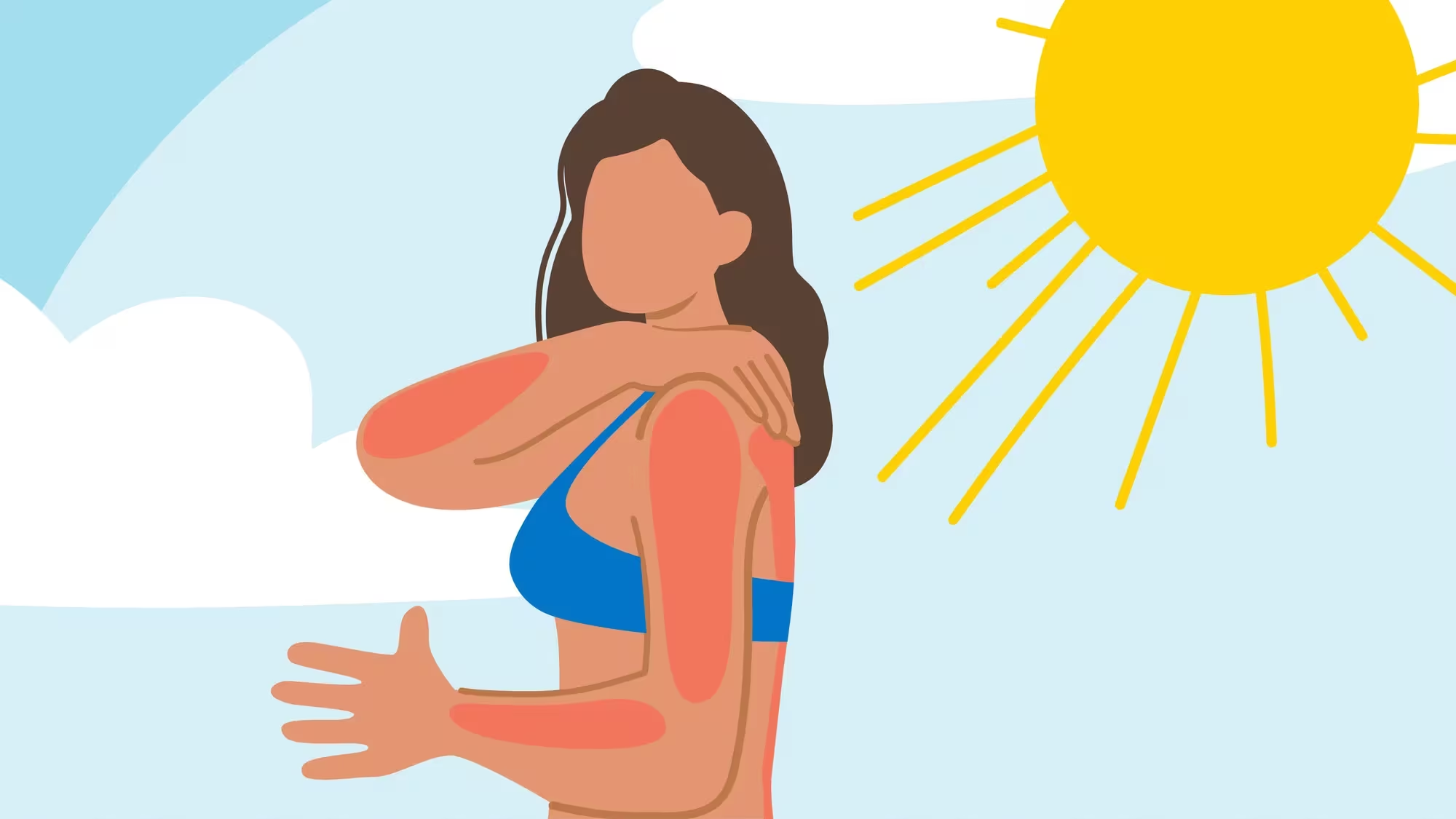
Spending excessive time in the sun does not produce more vitamin D. It simply increases sunburn, pigmentation, premature ageing and skin cancer risk.
In the UK, annual melanoma diagnoses have surpassed 20,000 for the first time. Cancer Research attributes this to UV exposure and sunbed use, estimating nine in ten cases are avoidable.
Skin cancer is the most common cancer in the United States, with 112,000 invasive melanoma diagnoses expected this year.
Childhood exposure matters disproportionately. Research indicates that sun exposure during the first twenty years of life substantially determines later skin cancer likelihood.
Climate change is compounding the problem. Warmer atmospheric conditions allow more solar radiation to reach the surface, and Scandinavia has seen annual melanoma increases correlating with longer summers and more frequent heatwaves. People in previously cooler regions often lack the habit of protective measures.
When You Cannot Get Enough
Living somewhere with little sunlight makes low vitamin D likely, particularly in winter. Risk is higher for people with darker skin, limited outdoor access, photosensitivity, or who cover their skin.
Sustained deficiency causes bone deformities including rickets and osteomalacia. Rickets became an urban epidemic in seventeenth-century Britain when heavy coal use left cities like London so smoke-laden that UV could not reach skin.
Deficiency corrects easily with supplements. Some countries with limited winter sun fortify foods including mushrooms, cereals and dairy.
There is a ceiling, though. Consuming more than 4,000 IU daily is widely considered harmful, potentially causing hypercalcemia, which weakens bones and damages kidneys and heart.
The Practical Summary
JoAnn Manson, professor of medicine at Harvard Medical School, puts it simply: only small to moderate amounts are needed for good health. She advises avoiding prolonged unprotected exposure, particularly between 10:00 and 16:00, and notes that incidental exposure from exercise or errands works perfectly well.
A century after Chanel’s tan changed everything, the guidance has landed somewhere sensible. Short, frequent bursts near midday. Protective measures afterwards. Sunglasses always. Prolonged exposure never.
Little and often, as Mason puts it, remains the best answer available.
Author
-
Lucienne Albrecht is Luxe Chronicle’s wealth and lifestyle editor, celebrated for her elegant perspective on finance, legacy, and global luxury culture. With a flair for blending sophistication with insight, she brings a distinctly feminine voice to the world of high society and wealth.