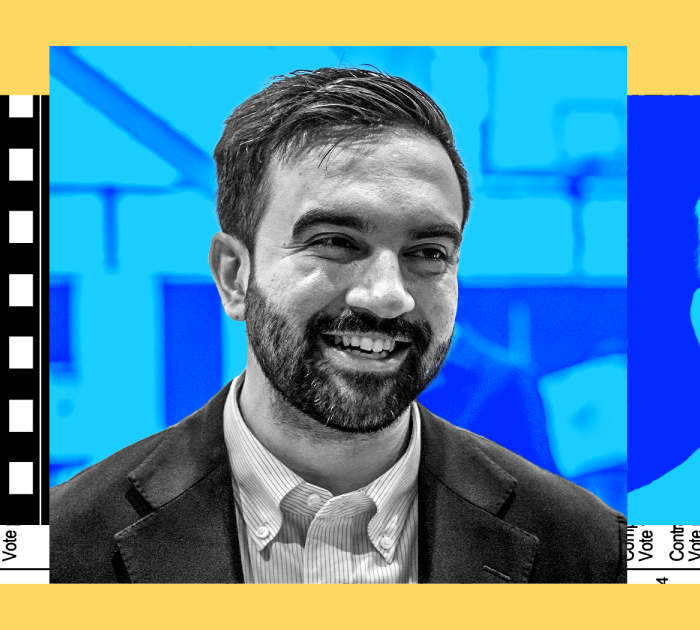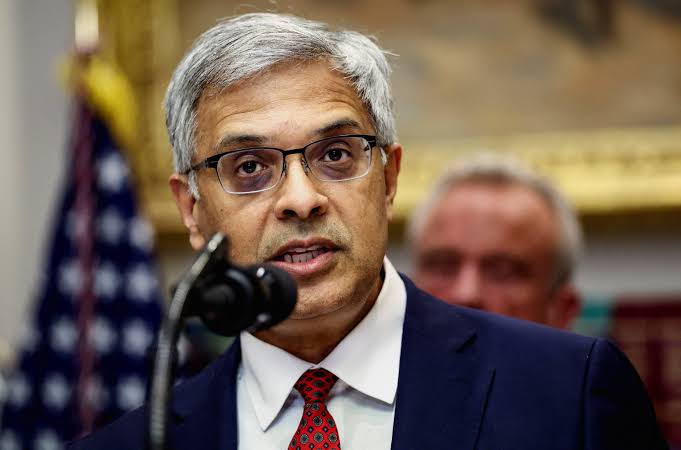
The Brennan Bhattacharya interview on CBS turned into one of those television moments where two people are technically speaking to each other while pursuing entirely separate conversations. One wanted to talk about a killing. The other wanted to talk about who caused the conditions that produced it. Neither would follow the other, and the result was several minutes of increasingly sharp crosstalk.
The Question That Started It
Margaret Brennan opened on the anniversary of the shooting at CDC headquarters in Atlanta.
She laid out the details deliberately. Officer David Rose died protecting CDC employees from a gunman who fired more than a hundred rounds into the building’s windows. Rose was a combat veteran and a Marine who had graduated from the police academy only five months earlier. He left three children behind. He had been honored that week, and Bhattacharya had traveled to Atlanta.
Then came the question. The shooter, Brennan noted, was driven by false beliefs about the COVID vaccine. Was enough being done to counter that kind of misinformation?
Bhattacharya’s first response was to redirect toward the officer rather than the attacker, arguing that examining a shooter’s motives places attention on someone who does not deserve it.
Brennan pushed back with a detail from the shooter’s own family. His father had said his son believed he had been brainwashed about the vaccine and thought it was making him suicidal.
Bhattacharya held his position. Brennan clarified that her subject was not the individual but vaccine misinformation generally.
Where the Answer Went Instead
When Bhattacharya finally engaged, he did not address countermeasures. He addressed causes, and he located them elsewhere.
His argument was that the collapse in public trust stemmed partly from how a single perspective was presented during the pandemic across major networks, including the one he was sitting on, in ways he said produced real harm.
Brennan rejected the framing directly, saying the program had covered COVID more thoroughly than any comparable Sunday show.
Bhattacharya said he was not targeting her personally, but maintained that the public-facing conduct of health authorities during the pandemic is what drove people away from trusting institutions.
Two Different Villains
From there the exchange became a dispute over whose administration bore responsibility.
Bhattacharya raised the Biden administration, saying he had personally been censored and that officials had gone after people who questioned whether COVID vaccines prevented transmission.
Brennan countered that the pandemic began under Trump and that those officials had appeared on her broadcast. She then raised RFK Jr., who has described the COVID vaccine as the deadliest ever produced, and asked directly whether Bhattacharya would agree that such a claim is misinformation and dangerous when left unchallenged.
He did not answer it. He returned instead to people who lost jobs, arguing that the Biden administration suppressed discussion of vaccine harms.
Brennan reminded him that the topic was a shooting.
Bhattacharya replied that he was explaining the origin of the distrust underlying the problems she had raised, and that the distrust was caused neither by Trump nor by Kennedy but by government messaging on natural immunity, school closures, mask mandates and vaccine mandates that he said made no sense as public health policy. Anyone serious about trust, he argued, has to confront all of it rather than only the politically convenient parts.
Brennan’s response was to restate her actual subject: a shooting at the CDC, an officer he had traveled to honor, and whether enough is being done.
Bhattacharya accused her of trying to pin the shooting on Kennedy. Brennan said she was not, and that she was quoting what the shooter’s father had said.
Neither moved.
The Pivot to the Autism Order
Brennan shifted ground, and the second half produced something arguably more newsworthy than the argument itself.
She noted reporting from the Washington Post and Bloomberg that the White House is preparing an executive order concerning vaccines and autism, and asked what it would require, why such an announcement was coming when Bhattacharya himself has research underway into a wide range of possible contributing factors, and whether narrowing the focus to one theory serves the goal of restoring confidence in vaccines.
Bhattacharya said he could not describe the contents and referred her to the president. Pressed on whether he knew about the order at all, he said he did not believe it was finished and therefore could not speak to specifics.
He then pivoted to his own work. Both the president and Kennedy care deeply about rising autism rates, he said, as do the many families living with it.
Brennan’s reply was brief and pointed. Those families want real information.
What He Said He Is Actually Doing
On his own ground, Bhattacharya was more concrete.
As NIH director, he said, his focus has been ensuring the science can address why autism diagnoses have risen, a question he characterized as complicated with no simple answer.
He pointed to the Autism Data Science Initiative, which he authorized last year. More than a dozen funded research teams are working under a mandate to think broadly, examining not only genetics and not only environmental exposures but the potential interactions between them. Early results, he said, are expected within weeks.
Asked plainly whether he knows why autism rates have climbed, he gave a direct answer. He does not.
Why the Exchange Mattered
Strip out the interruptions and the segment captured a genuine impasse in American public health.
Brennan approached trust as a downstream problem: false claims circulate, some people act on them, and institutions must respond. Bhattacharya approached it as an upstream one: institutions behaved in ways that forfeited credibility, and nothing improves until that is acknowledged.
Both propositions can be true at once, which is precisely why the conversation never converged. Each side treated its own framing as the prerequisite for discussing the other’s.
Left unresolved was the question Brennan asked first. A year after an officer was killed at the CDC by someone acting on beliefs about a vaccine, nobody in that segment described a plan for preventing the next one.
Author
-
Lucienne Albrecht is Luxe Chronicle’s wealth and lifestyle editor, celebrated for her elegant perspective on finance, legacy, and global luxury culture. With a flair for blending sophistication with insight, she brings a distinctly feminine voice to the world of high society and wealth.