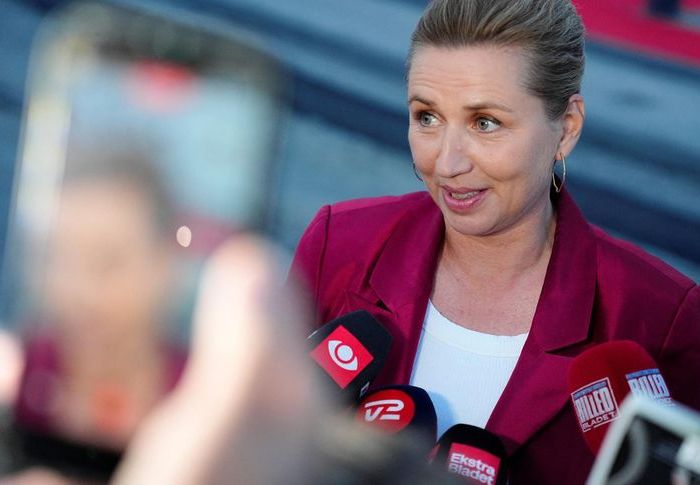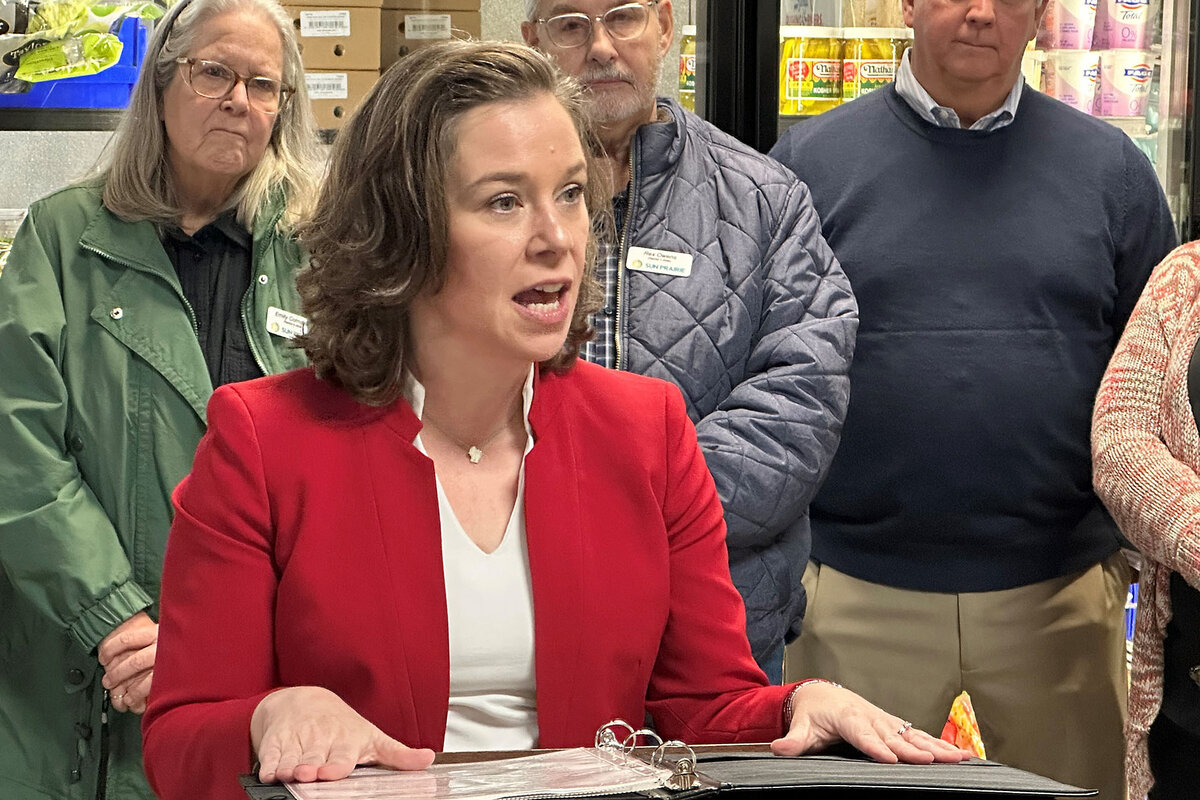
The Wisconsin governor race is heading toward a general election that both parties are already framing in unusually stark terms, with a Trump-endorsed conservative on one side and a self-described socialist on the other. If Tuesday’s primaries go the way most observers expect, voters in a state that regularly decides national elections by fractions of a percentage point will face one of the widest ideological gaps on any 2026 ballot.
The Republican Frame: A Firewall Argument
Representative Tom Tiffany, a member of the House Freedom Caucus and a former dairy farmer, is favored to win his party’s nomination. Campaigning in Oconomowoc, a suburb west of Milwaukee, he made his central argument explicit: Wisconsin, in his telling, could be the place where a leftward surge running through Democratic primaries this year finally stalls.
He described the heartland as a potential barrier against a political movement he associates primarily with coastal politics, and said he believes his state will play that role.
Former Virginia Governor Glenn Youngkin joined him and offered a blunter version of the same pitch, casting the contest as a choice between practicality and extremism. Youngkin accused the likely Democratic nominee of holding positions he characterized as fundamentally opposed to American institutions.
Those characterizations are contested, and the candidate in question rejects several of them outright.
Who Francesca Hong Is
State Representative Francesca Hong, 37, currently leads polling in the Democratic field. A former chef and a single mother, she is a member of the Democratic Socialists of America and has drawn endorsements from nationally recognized progressives including Representative Ilhan Omar of Minnesota and Representative Ro Khanna of California, who is frequently mentioned as a possible 2028 presidential contender.
Her platform is unambiguously left of the state party’s recent norm. Its main planks include:
- Guaranteed paid leave for workers across the state
- Raising the minimum wage from 7.25 dollars to 20 dollars per hour
- A one-year pause on new artificial intelligence data center construction
- A tax plan branded around taxing the wealthy, adding one percentage point to state income taxes for couples earning above 431,000 dollars and individuals above 323,000 dollars
The Democratic primary itself has been turbulent. Two significant contenders exited over the summer and another candidate re-entered, reshuffling a field that now includes Milwaukee County Executive David Crowley, backed by retiring Governor Tony Evers, former Department of Administration secretary Joel Brennan, and state Senator Kelda Roys.
The Fight Over Old Posts
Much of the pre-primary friction has centered on Hong’s social media history rather than her current agenda.
Resurfaced posts include a 2021 statement asserting that police exist to uphold white supremacy, along with messages calling for abolishing the US Senate and criticizing Thanksgiving and Valentine’s Day.
Hong has moved to distance herself from that record. Speaking to voters over the weekend, she stated directly that she is not seeking to defund or abolish police departments and described herself as serious about public safety. She has also reversed course on Thanksgiving, now calling it her favorite holiday.
Asked about the older posts by reporters, she said she had evolved and learned, and described some of them as bad takes, framing them as the product of venting online rather than considered policy positions.
Republicans are betting that voters will not accept the revision. Tiffany argued that attempts to walk back past statements will not land, saying people recognize a reversal when they see one and that authenticity is what ultimately registers with the electorate.
Two Competing Theories of the Electorate
Underneath the rhetoric sit two genuinely different reads on what Wisconsin voters want.
Tiffany’s theory is that the state’s political center has not moved. He points to conversations with neighbors, including Democrats, whom he says reject policies like abolishing prisons or steep tax increases. His campaign is leaning into that with a housing platform unveiled at the Oconomowoc event, an agenda focused on making homeownership more attainable.
Hong’s theory is close to the opposite. She argues that Democratic voters are exhausted by establishment politics and that her candidacy can reach beyond the traditional party base, including Republicans who have soured on Trump and candidates aligned with him. Her primary success so far suggests the argument has traction with at least a meaningful share of the Democratic electorate.
Whether it extends to a statewide general election is a separate question, and the one both parties are watching most closely.
Why the Stakes Extend Beyond Wisconsin
Wisconsin has spent two decades as one of the most reliably close states in the country. Statewide races there are frequently decided by margins thin enough to trigger recounts, which means the outcome tends to be read nationally as a signal about broader public mood.
A win by a DSA-aligned candidate in that environment would be treated as evidence that progressive politics can compete outside dense urban and coastal areas. A decisive loss would strengthen the argument, already common among moderate Democrats, that nominating candidates from the party’s left flank risks handing away winnable states.
Both campaigns understand this, which explains why the framing has escalated so quickly. Youngkin summarized the Republican pitch in a single phrase, describing the eventual contest as common sense against crazy.
What Happens Tuesday
Tiffany faces medical service technician Andrew Manske in his primary and is heavily favored. Hong enters hers as the polling leader against three opponents, though a fragmented Democratic field introduces real uncertainty.
If the expected outcomes hold, Wisconsin gets a general election with almost no ideological overlap between the two nominees. That clarity may prove unusual in a year of hedged messaging, and it will give voters an unusually direct choice about the direction they want their state to take.
Author
-
Lucienne Albrecht is Luxe Chronicle’s wealth and lifestyle editor, celebrated for her elegant perspective on finance, legacy, and global luxury culture. With a flair for blending sophistication with insight, she brings a distinctly feminine voice to the world of high society and wealth.