The Teamsters have broken sharply with the conciliatory tone other Hollywood unions have taken toward Paramount, demanding hard commitments rather than promises as David Ellison’s $111 billion pursuit of Warner Bros Discovery remains stalled in litigation.
Where the DGA and IATSE have signalled openness to a settlement in the state attorneys general antitrust action, and the WGA has filed its own suit, Local 399 has taken a third position: show us the numbers.
The Union’s Demand
Lindsay Dougherty of Teamsters Local 399 told Deadline on Thursday that the union has consistently asked for data demonstrating how the merger would benefit the industry, its members and domestic production.
Her core objection is about the combination of messaging Paramount has deployed. She questioned how the company can promote worker prosperity without making commitments, while simultaneously using workers’ livelihoods as a bargaining chip in the press — asking directly what the deal actually offers American film and television workers.
Her closing line was unambiguous: fast-tracking corporate greed tends to cost the creative and skilled workforce, and the company should stop playing games and demonstrate genuine commitment to workers.
The Threat Behind the Comment
Dougherty’s remarks came with a specific piece of context in mind.
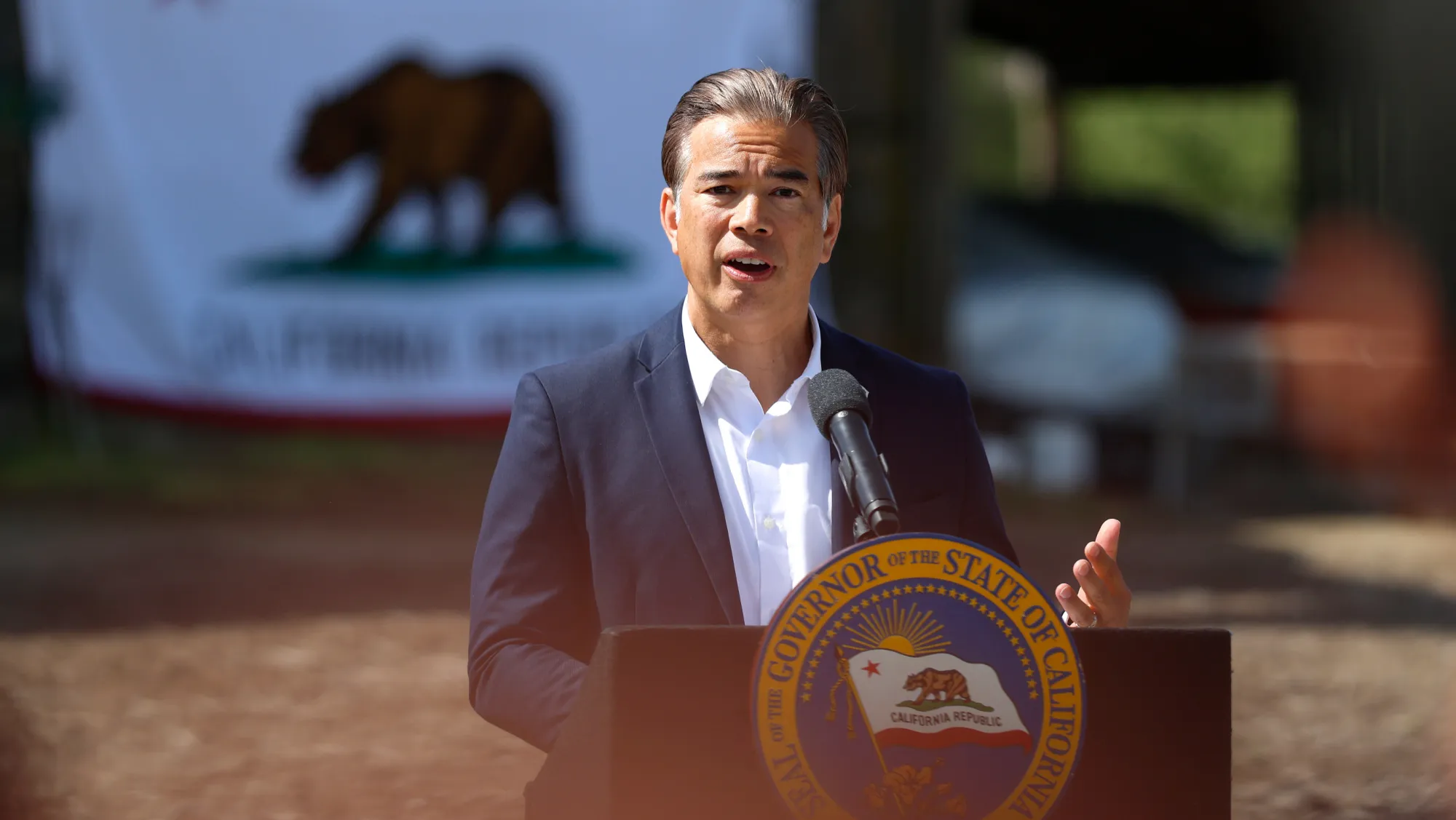
Leaks from Paramount have raised the prospect of the company leaving California entirely if California Attorney General Rob Bonta and other state officials fail to reach a deal by 1 October.
That threat is precisely what the Teamsters object to. A company arguing that a merger will create prosperity for workers, while briefing reporters that it may relocate production out of the state, is making two arguments that sit awkwardly together.
The Litigation Timeline
Whatever pressure Paramount applies, the calendar is not cooperating.
Trial on the attorneys general action has been set for spring 2027. That date effectively freezes the merger in place for well over a year.
The financial consequences of that delay are substantial and mechanical rather than speculative.
The Cost of Waiting
Paramount could begin accruing what are known as ticking fees payable to WBD shareholders — compensation for the extended period between agreement and closing.
The figure is significant: $7 million per day, beginning at the end of September. Across months of delay, that accumulates into hundreds of millions of dollars.
Additional regulatory hurdles remain in front of the Ellison team as well.
The Financing Question
The funding structure adds another layer of uncertainty.
Oracle founder Larry Ellison, David’s father, is personally backing a substantial portion of the merger. His net worth has been declining, which introduces a variable that was not present when the deal was announced.
Between the delay, the ticking fees and the financing picture, the economics of the transaction could become considerably more difficult before the Oakland-based trial even begins.
The Debt Overhang
A combined Paramount-WBD entity would carry roughly $80 billion in debt.
That figure sits at the centre of union scepticism, and for understandable reasons. Highly leveraged media combinations have a consistent history of responding to interest obligations through cost reduction, and cost reduction in this industry means layoffs.
Job cuts are widely expected regardless of what commitments are offered publicly.
The Credibility Problem
Ellison has made a series of assurances designed to reassure different constituencies — editorial independence for CNN, a commitment to releasing 30 films annually, a broader vision of ushering in a new Hollywood golden era.
Those promises have come under increasing strain in recent weeks, and his standing as a newly minted mogul has frayed noticeably.
The Teamsters’ intervention reflects that erosion. Assurances only function when the party offering them is trusted, and Local 399’s statement is essentially an argument that the assurances have run out of value without documentation behind them.
Why Labor Is Split
The divergence among Hollywood unions is worth noting on its own terms.
The DGA and IATSE appear to be positioning for influence within a settlement, calculating that a merger is likely and that shaping its terms is more productive than opposing it.
The WGA has taken the adversarial route, filing suit.
The Teamsters occupy a middle position that may be the most demanding of the three. They are neither settling nor litigating. They are withholding support pending evidence — which leaves Paramount unable to claim labour backing without producing the data it has so far declined to share.
What Happens Next
Three dates matter.
The 1 October deadline attached to Paramount’s California threat, which will test whether the company follows through or was negotiating in public.
The end of September, when ticking fees begin accumulating at $7 million daily.
And spring 2027, when a trial will either clear the merger, block it, or force a settlement well before opening arguments.
For workers watching from the middle, the question Dougherty raised remains unanswered: what, specifically, is in this for them?
Author
-
Lucienne Albrecht is Luxe Chronicle’s wealth and lifestyle editor, celebrated for her elegant perspective on finance, legacy, and global luxury culture. With a flair for blending sophistication with insight, she brings a distinctly feminine voice to the world of high society and wealth.