West Oahu primary tie results have produced one of the rarest outcomes in American politics: not one but two legislative races finishing with the candidates dead level, decided not by voters but by a random draw.
The ties emerged after election officials corrected a batch of invalid ballots, a process that shifted the final tallies just enough to erase any margin at all.
Two Races, Two Perfect Deadlocks
In the state Senate contest, incumbent Ewa Beach Senator Kurt Fevella and challenger Bob McDermott each finished with exactly 1,212 votes.
In the House race covering Kapolei and Makakilo, Representative Kanani Souza and challenger Sheila Medeiros each recorded 842 votes.
Two identical outcomes in neighbouring districts during the same election cycle is statistically extraordinary. Ties of this kind typically appear in small municipal contests with a few hundred voters, not in state legislative races drawing more than a thousand.
How the Winners Get Decided
With no votes left to count, Hawaii turns to a mechanism that feels more like a parlour game than a democratic process. Both races were set to be resolved by a draw on Saturday, Aug. 14.
Random selection as a tiebreaker exists in election law across many jurisdictions precisely because the alternative, an endless recount cycle or a costly special election, is often considered worse. It is a rule designed for a situation nobody expects to actually occur.
The Stakes Differ Sharply
The two draws do not carry equal weight, and that is where the situation becomes genuinely uncomfortable.
Whoever prevails in the Senate race still faces a general election contest against Democrat Markus Owen. The draw settles who advances, not who serves.
The House seat is different. No Democratic candidate filed for the Kapolei Makakilo district, meaning the primary is effectively the entire election. The winner of that draw takes the seat outright.
In practical terms, a legislative office is being awarded by chance rather than by any voter expressing a preference.
An Analyst’s Discomfort
Political analyst Dr. John Hart described the situation as an interesting way to resolve the matter, while making clear he sees a structural problem underneath it.
He noted that elections of this kind have occurred before and that the system is simply not built to handle margins this narrow. His sharper concern involved the House seat specifically. Because the winner faces no general election opponent, the draw does not merely determine a nominee, it determines a legislator.
Hart suggested it was unfortunate that both candidates could not simply proceed to the general election and let voters make the final decision themselves.
That proposal has intuitive appeal. If the electorate has produced no discernible preference, sending both names forward would at least give people another chance to express one. Current law does not permit it.
The Ballot Correction That Created the Ties
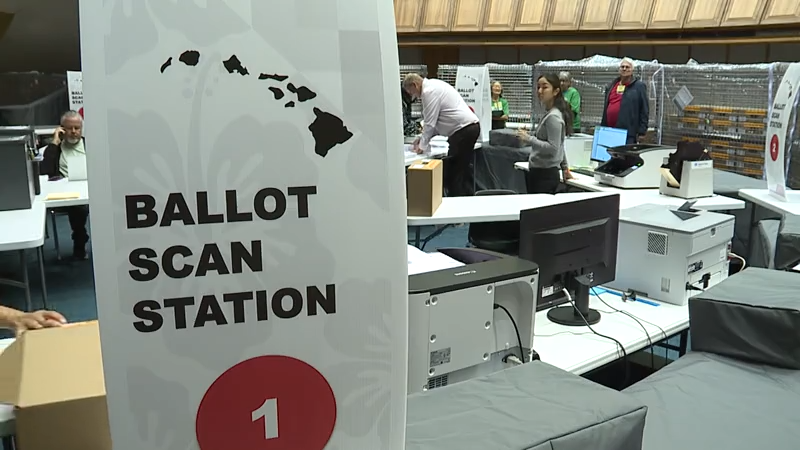
The ties did not exist on election night. They appeared after officials worked through ballots initially flagged as invalid.
Statewide, election administrators reported 2,565 invalid ballots. Within the two races now deadlocked, the numbers were far smaller: 36 invalid ballots in the Kapolei contest and 45 in the Ewa Beach race.
Those figures illustrate something important about close elections. In both cases, the number of ballots initially set aside exceeded the eventual margin, which was zero. Any administrative decision about a handful of envelopes determined the shape of the entire result.
Why Invalid Ballots Happen
Ballots get flagged for reasons that are usually procedural rather than fraudulent:
- Signature on the return envelope does not match the record on file
- Missing signature entirely
- Envelope arrived after the deadline
- Voter marked more selections than permitted in a race
- Damage or marking that machines cannot read
Many of these issues are curable, meaning voters can be contacted and given an opportunity to fix the problem within a set window. That correction process is what shifted these totals.
What This Says About Turnout
There is a lesson buried in these numbers that campaigns repeat constantly and voters rarely believe.
In the Kapolei Makakilo race, a single additional vote for either candidate would have decided who represents the district in the state legislature. Not a recount, not a legal challenge, one person choosing to fill out and return a ballot.
The Senate race sits in the same position, with a party nomination hanging on the same razor-thin absence of difference.
Elections almost never come down to one vote. Except when they do.
What Happens Next
The draws determine the immediate outcomes. Beyond that, expect renewed discussion in Hawaii about whether random selection is an appropriate way to fill a legislative seat when no general election opponent exists.
Reform proposals in similar situations elsewhere have included runoff elections, allowing both tied candidates onto the general ballot, or triggering an automatic special election. Each carries costs, which is precisely why the draw remains on the books.
For now, two West Oahu races that thousands of people voted in were settled by chance.
Author
-
Lucienne Albrecht is Luxe Chronicle’s wealth and lifestyle editor, celebrated for her elegant perspective on finance, legacy, and global luxury culture. With a flair for blending sophistication with insight, she brings a distinctly feminine voice to the world of high society and wealth.