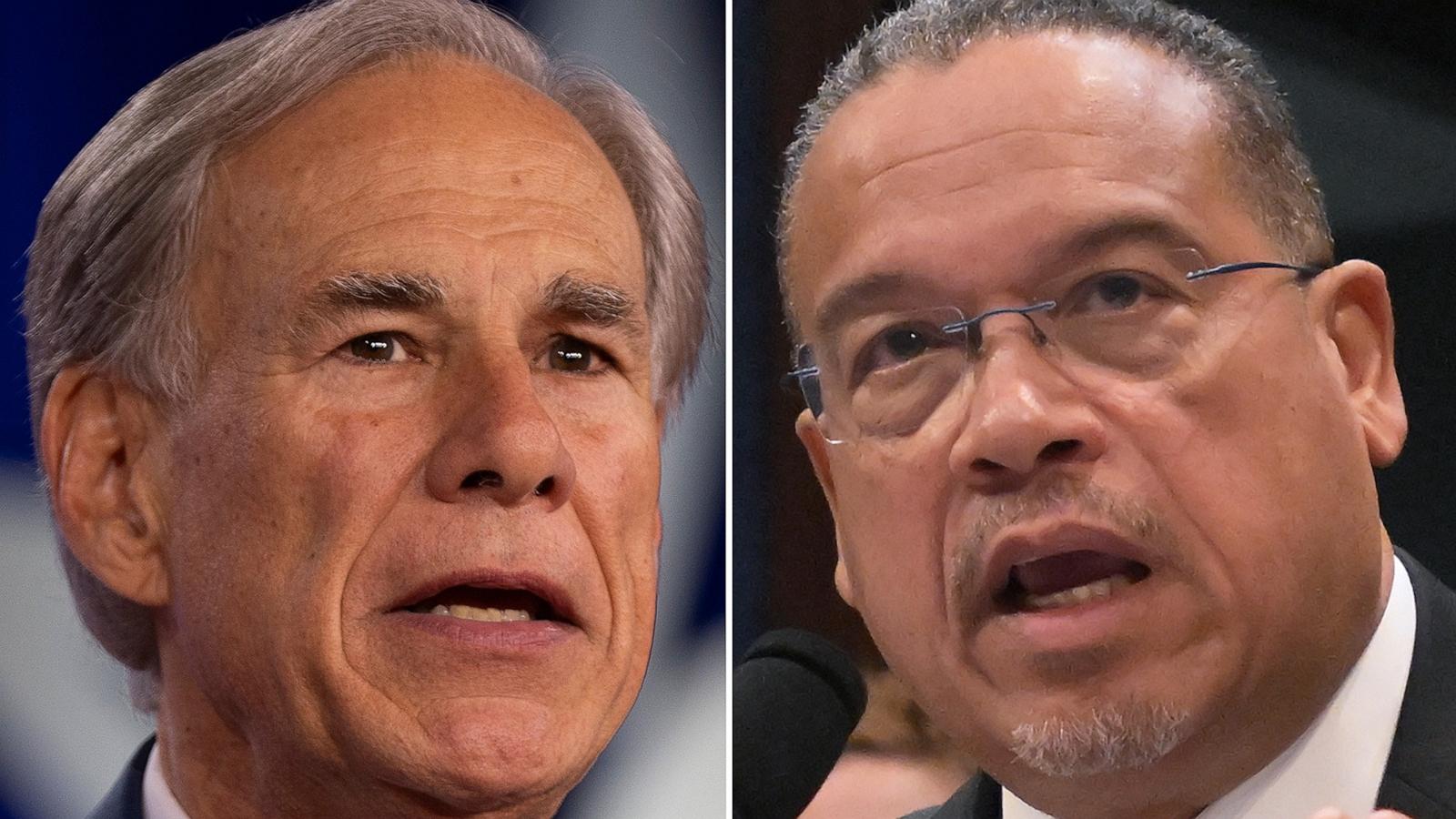
An ICE agent extradition fight has escalated into federal litigation between two states, with Minnesota suing the governor of Texas to force the transfer of a federal immigration officer charged with shooting a man in Minneapolis and then misrepresenting what occurred.
The clock is the central problem. Without action, the agent could walk out of a Texas jail as soon as next week.
The Lawsuit
Minnesota Attorney General Keith Ellison filed the complaint Tuesday in federal court, alleging that Texas Governor Greg Abbott has unlawfully delayed the extradition of Christian Castro.
Castro, an agent with US Immigration and Customs Enforcement, has been held in a Cameron County jail since his arrest in late May.
Ellison’s framing was blunt. Castro has been charged with breaking Minnesota law, he said, and must answer for it in Minnesota.
The suit asks the court to compel Abbott to sign the warrant that would allow Minnesota authorities to take custody. It also names Cameron County Sheriff Manuel Trevino as a defendant and seeks to block Castro’s release while the dispute is resolved.
Why Timing Drives Everything
Texas law generally permits holding someone arrested on an out-of-state warrant for up to 90 days while awaiting a governor’s extradition warrant.
That window is closing. Ellison indicated Castro could be released as early as next week if Abbott takes no action.
Once released, a defendant’s return becomes substantially harder to secure. The lawsuit is essentially an attempt to stop the clock before it runs out.
The Legal Ground Minnesota Stands On
Ellison’s position rests on established precedent. A 1987 Supreme Court decision held that extradition constitutes a mandatory duty rather than a discretionary choice, and that federal courts possess authority to compel governors to comply.
That ruling narrows the available arguments considerably. The question before the court is less whether extradition should happen than whether a governor may decline to process it.
What Castro Is Charged With
Minnesota prosecutors filed five counts on May 18: four felony charges of second-degree assault with a dangerous weapon and one misdemeanor count of falsely reporting a crime.
The charges stem from the January 14 shooting of Julio Cesar Sosa-Celis.
Texas Rangers arrested Castro in Cameron County less than two weeks after the charges were filed.
The Incident and the Account That Fell Apart
Court records describe a vehicle pursuit that ended outside the Minneapolis home of Alfredo Aljorna, whom Castro was attempting to arrest. Aljorna’s roommate, Sosa-Celis, was standing outside holding a snow shovel.
Castro’s initial account to investigators described being attacked. He said he fired after Sosa-Celis and others assaulted agents with a broom and a shovel.
Federal prosecutors acted on that version, charging both Aljorna and Sosa-Celis with assaulting a law enforcement officer.
Then the evidence arrived. Prosecutors later stated that surveillance footage and witness accounts contradicted Castro’s description of events. The charges against Aljorna and Sosa-Celis were dismissed, and ICE placed Castro on leave pending its own investigation.
The sequence is what elevates this case beyond a disputed use of force. Two men faced federal prosecution based on an account that video evidence undermined.
Mounting Pressure on Abbott
Requests to approve the extradition have accumulated for months.
- Minnesota Governor Tim Walz submitted a formal extradition request in early June
- Hennepin County Attorney Mary Moriarty pressed Abbott earlier this month
- All 13 Texas Democrats in Congress urged approval last week
- Ellison contacted Abbott directly on Monday, setting an end-of-day deadline and warning that litigation would follow
Abbott did not sign the warrant.
His office declined to comment on what it described as pending extradition matters. Sheriff Trevino also declined to comment.
Ellison’s Closing Argument
The attorney general framed the filing as a constitutional matter rather than a political one, saying he should never have needed to sue and that he did so to protect the Constitution.
His final line drew the comparison directly: Castro is not above the law, and neither is Abbott.
The Broader Stakes
Interstate extradition typically functions as administrative routine. States charge, other states transfer, and the process rarely produces headlines.
When it breaks down, the questions become structural. Can one state effectively shield a defendant from another state’s courts? Does the answer change when the defendant is a federal officer and the underlying conduct occurred during federal enforcement work?
Those questions carry weight beyond this case. Immigration enforcement operations happen in jurisdictions whose officials may disagree sharply with federal priorities, and the mechanism for holding individual agents accountable under state law depends on cooperation that cannot be assumed.
What Happens Next
The federal court now faces a request for relief on a compressed schedule. Minnesota needs both an order compelling the warrant and an order preventing release in the meantime.
Given the precedent Ellison cites, the state enters with a strong legal position. Whether a ruling arrives before the holding period expires is a separate matter, and one that may determine whether this ICE agent extradition proceeds at all.
Author