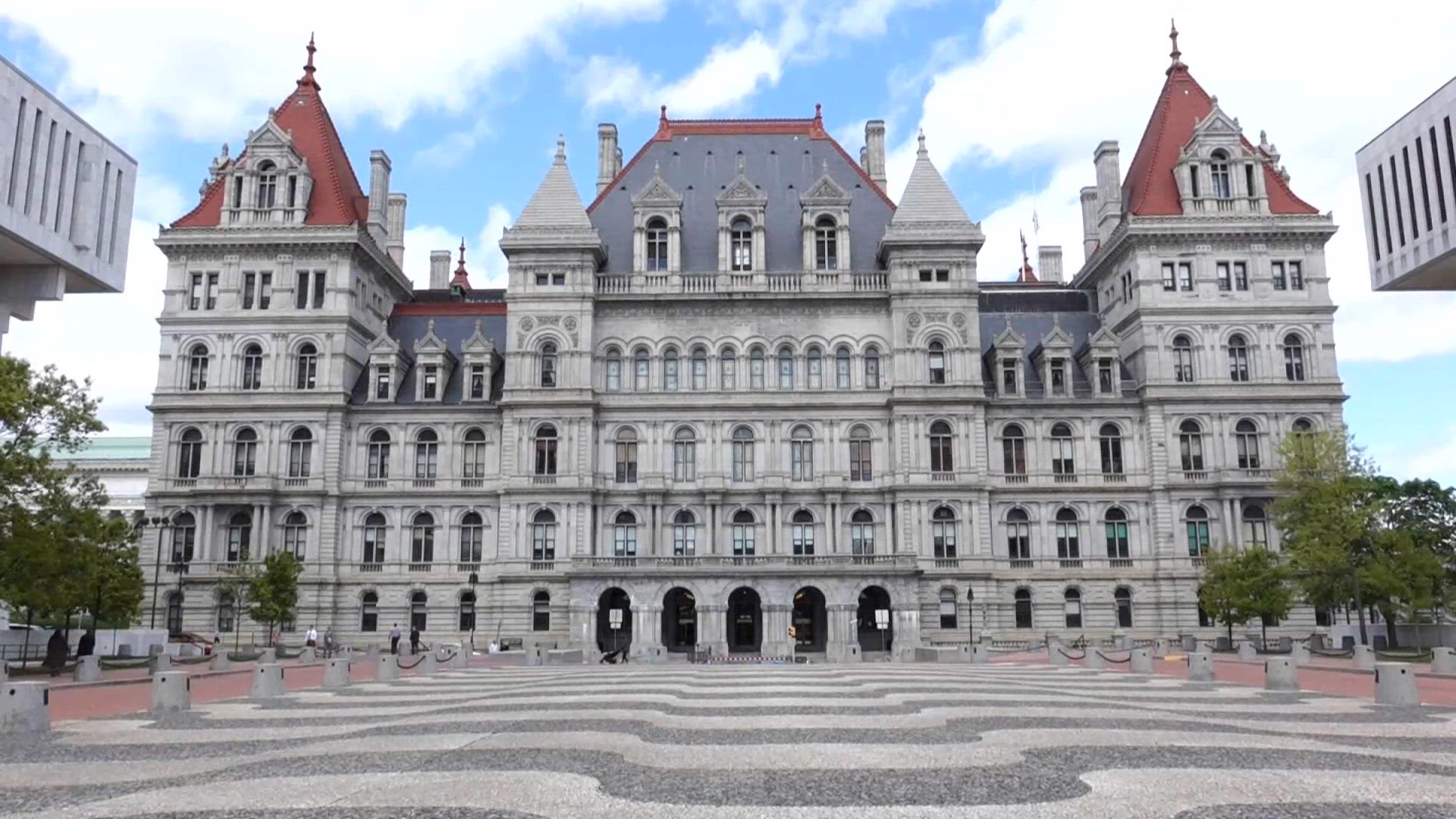
The New York State Capitol plot alleged by federal prosecutors involved a woman from Albany, an encrypted messaging app, three confidential informants and a trip to Home Depot. Whether it also involved a genuine threat that would have existed without government participation is the question the case will eventually have to answer.
The Arrest
The Justice Department announced Thursday that it had arrested Jessica Bowie, 35, on charges of providing material support to a designated foreign terrorist organization.
According to prosecutors, Bowie pledged loyalty to ISIL, which the United States has designated a foreign terrorist organization since 2004, and then obtained an explosive.
John A Eisenberg, assistant attorney general for national security, said investigators intercepted her before she could act on a plot to bring terror to the Capital Region. He stated that officials believe she intended to destroy as much of the state capitol as possible and then flee to Syria.
What the Complaint Alleges
A 21-page complaint filed by an FBI special agent lays out the government’s account.
It describes Bowie, an Albany resident, as a frequent social media user who created more than a dozen accounts expressing support for terrorism. One post referenced the September 11 attacks approvingly.
The turn from online expression to alleged plotting came in July, when an unnamed FBI informant began communicating with her through encrypted applications.
According to the filing, Bowie told the informant she wanted assistance building a bomb and identified the state capitol as her target. One message reportedly stated her intent to destroy as much of the building as possible and kill senators.
The Informant Network
The complaint describes an operation that expanded from one informant to three.
The initial contact arranged meetings with two additional confidential informants. One of them provided her with $200 to purchase bomb-making materials from Home Depot.
The filing includes photographs of Bowie allegedly using a self-checkout lane at the store, along with images of her taking cellphone pictures outside the capitol in what prosecutors characterize as reconnaissance.
She subsequently purchased a firearm and ammunition from one of the informants, who also instructed her in their use.
The FBI arrested her Wednesday.
During a later interview at the bureau’s Albany offices, agents said Bowie told them that material support carries up to 20 years in prison, that she had already looked it up, and that she knew she was going to jail.
The Tactic Under Scrutiny
The federal government has long relied on confidential sources and informants embedded in groups or communities to build terrorism cases.
The approach draws sustained criticism. Rights organizations argue that sting operations sometimes use undercover operatives to persuade individuals into plots they would never have developed independently.
The distinction matters legally and morally. A person who seeks out weapons and expertise on their own is different from a person supplied with money, materials and encouragement by someone working for the government.
The Newburgh Precedent
One case is repeatedly cited as illustrating the risk.
Four men in Newburgh, New York, were approached by an FBI informant about a plan to target synagogues and military aircraft. To secure their cooperation, the informant offered $250,000 along with other inducements.
The men were arrested in 2009 and convicted the following year on terrorism-related charges.
Critics argued the informant exploited the men’s poverty. Their attorneys contended they did little to advance the plot and at times actively avoided the informant.
More than a decade later, in 2023 and 2024, the four received compassionate release after a judge concluded that the real lead conspirator in the scheme had been the United States government.
That ruling was extraordinary. A federal judge essentially found that the prosecution’s own operation had manufactured the crime it prosecuted.
The Questions This Case Will Face
Bowie’s defense will likely focus on several elements already visible in the public filing.
- Who first raised the subject of building a bomb
- Whether she had the capability to obtain explosives without informant assistance
- The significance of the $200 provided for materials
- Why she needed an informant to supply a firearm
- Whether her online activity indicated genuine capability or expression alone
Prosecutors will point to her own recorded statements about targeting the capitol and killing lawmakers, and to her stated awareness of the legal consequences.
Both sets of facts can be true simultaneously. Someone may hold violent intentions and still lack any realistic path to acting on them without outside help.
The Difficult Middle Ground
Law enforcement faces a genuine problem here that critics sometimes minimize.
Waiting until someone independently acquires explosives means waiting until the danger is real. Investigators who identify a person expressing violent intent cannot simply monitor indefinitely and hope nothing happens.
At the same time, an approach that supplies motivation, money and materials risks generating prosecutions rather than preventing attacks.
Courts have generally sided with the government on entrapment claims in terrorism cases, requiring defendants to show they had no predisposition toward the conduct. That standard is difficult to meet when a defendant’s own messages express violent intent.
What Happens Next
The case proceeds through federal court in New York. Bowie faces a charge carrying up to 20 years in prison, a figure she reportedly knew before her arrest.
Whatever the outcome, the New York State Capitol plot joins a long line of cases where the central factual question is not what the defendant said, but how much of the plan the government built.
Author