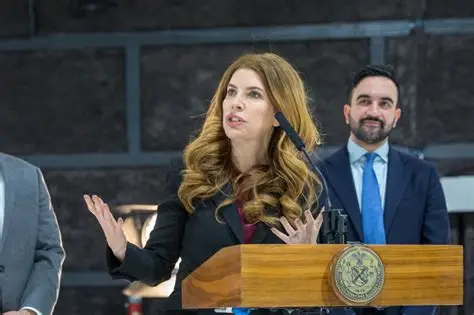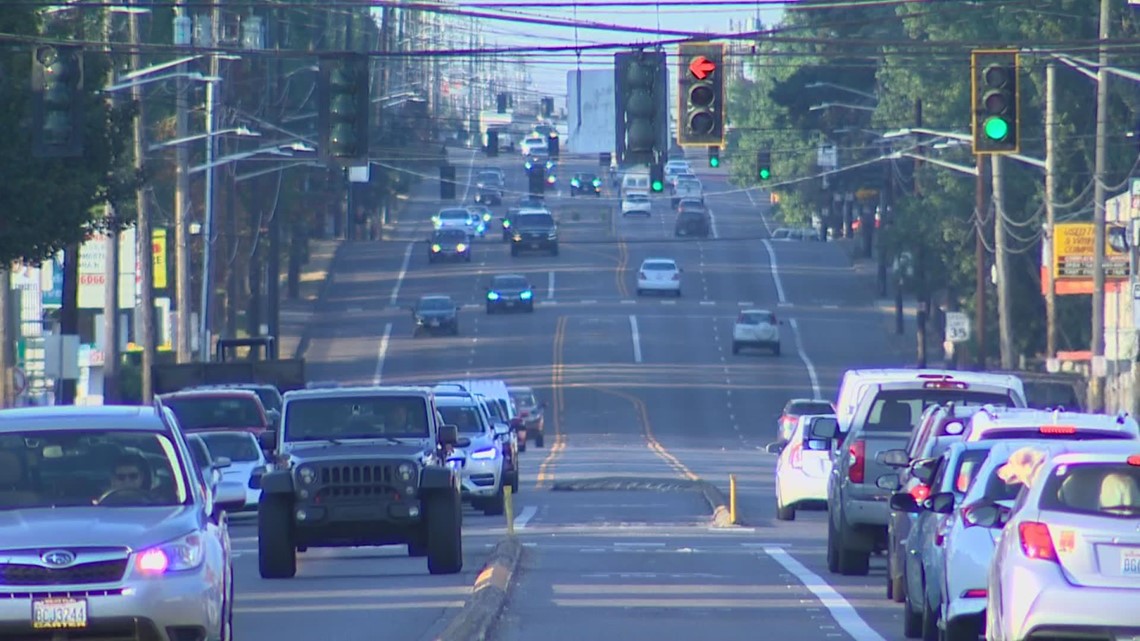
A Seattle traffic safety order signed Friday by Mayor Katie Wilson lays out the most far-reaching transportation directive of her tenure, instructing multiple city departments to treat road deaths as an urgent public safety failure rather than an unavoidable feature of urban life.
The document arrives eight months into her term, following more than a decade spent organizing within the region’s transportation advocacy community.
An Admission of Failure
Wilson framed the order around a candid acknowledgment. Despite maintaining a Vision Zero commitment for over ten years, the city has fallen short of its targets, and the pace of progress leaves no realistic path to eliminating serious injuries and deaths by 2030.
She pointed to the visible reminders of that shortfall: recurring news coverage, ghost bikes marking crash sites, and grieving families.
Her diagnosis of the problem was equally direct. The tools that work are already known, she said, listing safer street design, reduced speeds, improved crossings and better visibility. What has been missing is scale and political resolve.
Five Sections, One Message
The order spans five sections and reaches well beyond the transportation department.
The Seattle Department of Transportation receives a detailed project list while simultaneously updating its Vision Zero Action Plan and preparing recommendations on how to deliver safety work faster across the board.
Other directives touch areas rarely associated with street safety:
Upgrading vehicle fleets operated by city employees and contractors
Adjusting street lighting systems controlled by Seattle City Light
Raising participation in the school streets program at Seattle Public Schools to 40%
Wilson explained the logic behind spreading responsibility, noting that SDOT has produced measurable results on specific corridors but cannot address a problem of this magnitude alone.
Concrete Changes Coming Soon
Several measures carry firm timelines.
By next summer, SDOT will implement intersection daylighting at 20 locations, clearing sightlines near both marked and unmarked crosswalks. More consequentially, daylighting will become standard during routine capital maintenance, mirroring how the city handled no-right-on-red signage in 2023.
The automated enforcement camera program will expand as well, beginning with four new sites and growing to ten by spring 2029. The extended timeline allows the police department to adjust staffing for personnel who review violations.
SDOT will also examine signal timing adjustments aimed at safety, a notable pivot from earlier projects that used signal upgrades to move vehicles faster.
Letting Safety Projects Skip Ahead
Perhaps the most significant provision instructs SDOT to insert a new early delivery phase into major corridor projects already in development.
The affected streets include Rainier Avenue S, Aurora Avenue N, S Jackson Street, 4th Avenue S and MLK Jr Way S. The order specifies that changes may involve lane configuration, turning movements and parking, and directs the department to prioritize solutions matched to the actual crash patterns on each corridor.
These redesigns represent the highest-impact work funded through the 2024 Seattle Transportation Levy, though few design details have been released publicly even as serious crashes continue occurring on those streets.
Additional projects flagged for acceleration include a protected bike lane on SW Wildwood Place and safety improvements along 12th Avenue S, both sites of recent fatal collisions. Nineteen more high-collision locations are targeted for changes by next fall.
Francisca Stefan, SDOT’s senior deputy director, said most of the listed projects were already in planning. The order essentially moves them to the front of internal queues and applies pressure to keep them there.
Removing Bureaucratic Drag
A report due in January will identify categories of projects where changing current practice could speed delivery.
Two areas stand out. The first involves decoupling safety improvements from planned utility work, a pairing that frequently extends timelines while SDOT coordinates with City Light and Seattle Public Utilities.
The second concerns expediting community engagement, language that suggests officials are looking for ways to shorten the drawn-out consultation process when lives are at stake.
Stefan described the order as opening new methods rather than simply reprioritizing existing ones.
Rethinking City Vehicles
An entire section addresses the vehicles the city itself operates.
Finance and Administrative Services must produce a fleet transition plan focused on protecting vulnerable road users, identifying opportunities to reduce vehicle size, weight and blind zones.
The order names specific equipment: visibility cameras, convex and cross-over mirrors, side guards and blind-spot awareness decals. These apply to both new purchases and existing vehicles.
Contractors face similar scrutiny. The city will explore requiring comparable features on vehicles operating under city contracts, including possible use of Intelligent Speed Assistance to cap speeds. Applying that technology to the city’s own fleet would require negotiation with labor unions.
Alex Hudson, Wilson’s senior policy advisor on transportation and livability, emphasized that retrofitting existing vehicles means improvements need not wait for new procurement cycles.
Taking the Fight to Olympia
Seattle’s official 2026 legislative agenda, adopted during the final days of the previous administration, contains no mention of traffic safety. The order effectively creates one.
Several requested reforms address legal obstacles.
Under the doctrine of subsequent remedial action, the city can face liability when it modifies a street immediately after a serious crash. The order directs the Office of Intergovernmental Relations to seek changes protecting quick action.
Officials will also push to raise the dollar threshold requiring capital projects to go out for bid. Hudson said the current limit can add up to six months and at least 30% to project costs, preventing city crews from handling modest work themselves.
Two additional items round out the agenda: allowing citywide no-turn-on-red rules without posting signs at every intersection, and supporting the stalled statewide effort to lower the drunk driving threshold to 0.05% blood alcohol content.
Framing Traffic Deaths as Public Safety
At the announcement, held at Cleveland High School in Beacon Hill, Councilmember Eddie Lin drew a connection often left unspoken.
His District 2 has absorbed heavy tolls from both traffic violence and gun violence. Lin argued that while youth gun violence rightly generates urgency, traffic deaths get treated as an ordinary cost of daily life rather than something within the city’s power to change.
That normalization, he suggested, explains why action has lagged for so long.
Councilmember Alexis Mercedes Rinck also spoke, a day after joining Wilson and Fix the L8 advocates to finish painting a Denny Way bus lane opening this weekend.
Author