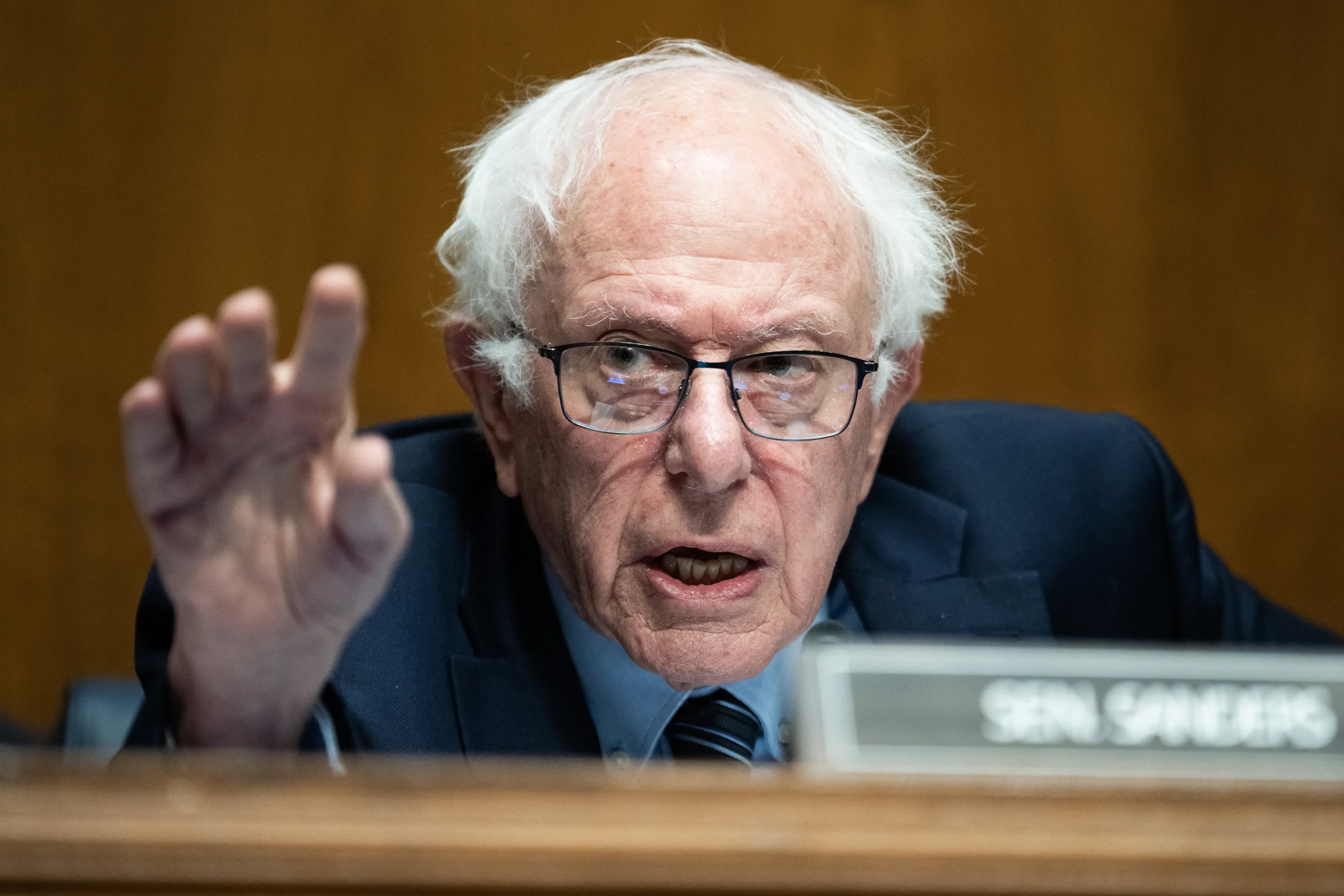
Democrats pause AI development questions are exposing a party still searching for a coherent message, as most potential 2028 presidential contenders sidestepped Bernie Sanders’ call to halt advanced AI technology altogether.
Axios reached out to nearly 20 Democrats considered possible White House contenders, asking whether they support Sanders’ demand that AI companies stop building systems humans cannot control. Only one offered a direct answer.
A Party Struggling to Find Its Footing
The hesitation reflects a broader problem. AI politics are shifting almost as quickly as the technology itself, and candidates eyeing 2028 appear unsure how to talk about the risks it poses, let alone what policies might address them.
Some Democratic strategists worry this uncertainty could leave the party exposed heading into the next presidential cycle, particularly as backlash against AI infrastructure grows louder among voters across the political spectrum.
The One Direct Response
Former Chicago Mayor Rahm Emanuel stood out as the only potential candidate willing to engage critically with Sanders’ proposal. He argued that simply pausing development sidesteps the underlying question of what happens next.
In his view, any pause only matters if the time it buys gets used productively, specifically to build a real plan for meeting the country’s energy needs rather than avoiding the issue. Emanuel called for permitting reform and argued that large tech companies operating data centers should be required to pay for the energy infrastructure upgrades their operations demand.
Silence From the Frontrunners
Roughly half of those contacted didn’t respond at all, including former Vice President Kamala Harris, California Gov. Gavin Newsom and former Transportation Secretary Pete Buttigieg.
Notably, while nobody embraced Sanders’ full proposal, almost none of the potential candidates criticized it either, a silence that itself speaks to how politically sensitive the issue has become.
The Progressive Exception
Two of the more left-leaning prospects broke from the pack. New York Rep. Alexandria Ocasio-Cortez and California Rep. Ro Khanna both expressed support for pausing data center construction, though with different levels of specificity.
Ocasio-Cortez’s chief of staff, Mike Casca, noted that she is leading data center moratorium legislation in the House, though he declined to weigh in on Sanders’ broader call to halt AI development itself.
Khanna took a more targeted position, backing a pause specifically in Pennsylvania, Michigan and Wisconsin, states he described as places where data centers have been forced on communities without adequate input. That marks a shift from his earlier stance. He avoided directly addressing Sanders’ proposal, instead referencing a recent conversation with Pope Leo and expressing support for developing AI according to principles outlined in the pope’s first encyclical on the subject.
Why Democrats May Be Missing an Opportunity
Progressive pollster Adam Carlson argued the party’s caution amounts to a strategic mistake. He suggested Democrats are ceding ground on an issue with real populist appeal, warning that if a prominent Republican figure like JD Vance were to embrace a data center moratorium before most Democrats do, it would represent a significant missed opportunity for the party.
Voter sentiment appears to support that concern. A recent Fox News poll found that 70% of voters oppose having an AI data center built in their community, a striking figure that cuts across typical partisan lines.
Midterm Candidates Move Faster
While presidential hopefuls hedge, candidates in this year’s midterm races have been considerably quicker to stake out positions.
Michigan Senate GOP nominee Mike Rogers has backed a one-year moratorium on new data centers. Amy Acton, running for Ohio governor as a Democrat, has proposed a conditional moratorium. Stacy Garrity, the Republican nominee for Pennsylvania governor, supports a pause as well.
That bipartisan movement at the state and midterm level stands in contrast to the caution shown by potential presidential candidates.
Sitting Governors and Senators Shift Tone
Several sitting officials have adjusted their public posture on data centers even without fully endorsing a moratorium.
Pennsylvania Gov. Josh Shapiro’s administration has criticized what it calls irresponsible data center development, while Illinois Gov. JB Pritzker revoked tax breaks previously extended to such projects, a notable reversal for both.
A spokesperson for Arizona Sen. Mark Kelly said data centers should not be built in communities that don’t want them. Maryland Sen. Chris Van Hollen and New Jersey Sen. Cory Booker both pointed to legislation they support requiring data centers to cover their own energy costs. Van Hollen argued that ordinary Americans shouldn’t face higher electric bills to subsidize infrastructure built by some of the wealthiest corporations in the world.
Connecticut Sen. Chris Murphy took a different angle, referencing a Substack post describing a Silicon Valley visit where he found little evidence of genuine American values guiding AI development, dismissing talk of ethical AI as largely superficial.
A Reversal in Political Winds
The current hesitancy is notable given how recently many politicians, in both parties, championed data centers as sources of tax revenue and construction jobs. That calculus is shifting as public opposition intensifies, creating discomfort even among Republicans given that the Trump administration has positioned itself as a leading advocate for AI expansion.
Sanders, notably, was the first member of Congress to back a data center moratorium last year, a position most Democrats rejected at the time. Attitudes have since moved considerably, with state-level pauses gaining traction, including a one-year moratorium New York recently enacted on hyperscaler data centers.
Whether 2028 contenders continue waiting for clearer political signals, or whether they’re forced into position sooner as backlash intensifies, remains an open question. Carlson suggested many may simply be watching how the November 3 midterms play out before committing to anything firmer.
Author