The Venezuela oil deal announced by US President Donald Trump has landed at one of the most fragile moments in recent energy history. With the war in Iran passing its six-month mark and no resolution in view, Washington says it has secured access to some of the largest untapped crude reserves on the planet — and on terms that would let American buyers purchase that oil at cost.
A Deal Announced on Social Media
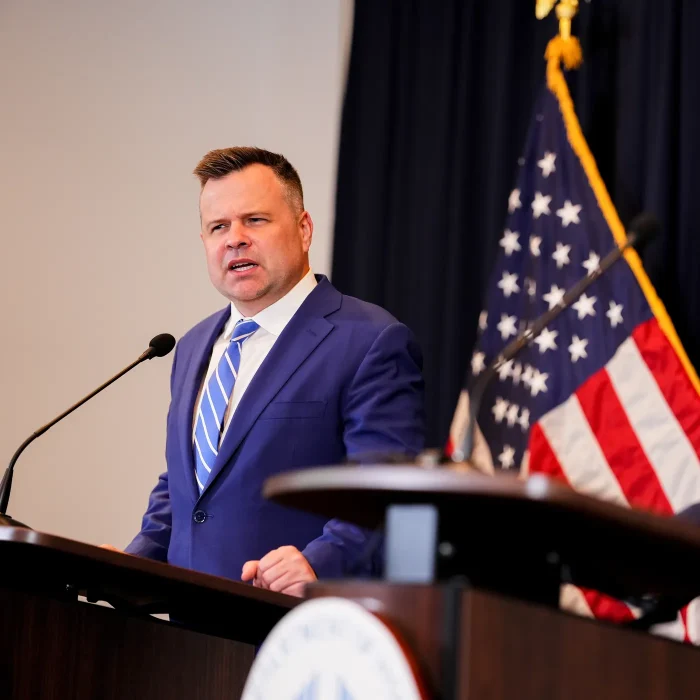
Trump revealed the arrangement in a post online, describing it in characteristically superlative terms as the largest oil agreement the world has ever seen. According to his account, the negotiations were handled by Secretary of State Marco Rubio and Defense Secretary Pete Hegseth, working opposite Venezuela’s acting president, Delcy Rodríguez.
The framing was unmistakably political. Trump has been under sustained pressure over fuel costs at home, and an announcement of this scale offers something tangible to point to while the conflict abroad drags on.
What Caracas Says Is on the Table
Rodríguez’s government issued its own statement outlining the scope of the arrangement. The numbers it put forward are enormous:
- Development rights covering 17 separate oil fields
- Proven potential estimated at 65 billion barrels
- Roughly $100 billion in projected investment flowing into Venezuela’s energy sector
- More than $209 billion in anticipated tax revenue for the Venezuelan state
For a country whose oil industry has spent years hobbled by sanctions, underinvestment, and decaying infrastructure, those figures represent a possible turning point — assuming the money and the machinery actually arrive.
How the Structure Would Work
A US official familiar with the framework, speaking anonymously because they were not cleared to discuss it publicly, described an unusual corporate arrangement at the heart of the agreement.
Rather than operating through existing state channels, the United States would partner with an unnamed private operator inside Venezuela to establish an entirely new company. That entity would hold the development rights — and according to the official, Rodríguez granted it a century-long concession over the fields in question.
The American position in that company is substantial. The United States would hold roughly 55 percent of effective output, combining an equity stake with the right to purchase crude at cost rather than market price. If the reserve estimates hold, the new venture would rank as the second-largest corporate holder of proven reserves anywhere, trailing only Saudi Aramco.
That last detail is what makes the arrangement extraordinary. Buying at cost, rather than at prevailing global rates, insulates American purchasers from exactly the kind of price volatility the Iran conflict has produced.
The Backdrop in Caracas
The announcement did not emerge from nothing. It follows roughly nine months after a US military operation, ordered by Trump, that seized Venezuela’s then-president Nicolás Maduro and transported him to the United States, where he faces federal charges tied to narcoterrorism and drug trafficking.
Rodríguez has led the country in an acting capacity since. Whatever one makes of the sequence of events, the current agreement is inseparable from it — a new government in Caracas, negotiating directly with the administration that removed its predecessor.
Why the Timing Matters
The pressure driving this deal is not abstract. It shows up at the pump.
The US-Israel campaign against Iran has severely disrupted the movement of Gulf crude through the Strait of Hormuz. Before the fighting began, roughly a fifth of the world’s petroleum passed through that narrow channel. Traffic has slowed dramatically since, and the global market has responded the way markets always do when supply becomes uncertain.
Washington has leaned hard on its own cushion in response. The Strategic Petroleum Reserve dropped below 300 million barrels in early August — a decline of more than 100 million barrels since the beginning of 2026. That is not a sustainable rate of drawdown, and everyone involved knows it.
Seen against that backdrop, the logic of the Venezuela oil deal becomes clearer. Venezuelan crude does not travel through Hormuz. It sits in the Western Hemisphere, within reach of Gulf Coast refineries, and outside the reach of whoever might choose to close a strait.
The Distance Between Announcement and Barrel
There is a considerable gap between signing an agreement and producing oil, and Venezuela illustrates it better than most.
The country’s fields have suffered years of neglect. Pipelines need repair. Refining capacity has degraded. Skilled workers left during the long economic collapse. Turning 65 billion barrels of proven potential into actual flowing production requires capital, equipment, and time — likely measured in years rather than months.
There are political questions too. Century-long concessions granted by an acting government invite challenge from whoever governs next. Investors weighing $100 billion in commitments will price that uncertainty carefully.
And the heavy, sulfur-rich crude that Venezuela produces requires specialized refining. American Gulf Coast facilities are among the best equipped in the world for that grade, which is one reason the pairing makes commercial sense — but it also means the oil cannot simply be redirected anywhere convenient.
What Comes Next
The immediate effect of the announcement is psychological. Markets respond to signals about future supply, not only present barrels, and a credible pathway to major new production can ease prices before a single tanker sails.
Whether that psychological effect becomes a physical one depends on execution. If investment materializes and production climbs, the arrangement could genuinely reshape hemispheric energy flows and reduce American exposure to Middle Eastern disruption. If it stalls in the way so many Venezuelan energy projects have stalled, it will be remembered as a headline rather than a shift.
For now, both governments have staked considerable credibility on the outcome. Trump gets to point to action on prices. Rodríguez gets investment and a measure of international legitimacy. The barrels, however, remain underground — and that is the part that will ultimately decide whether this deal deserves the language used to announce it.
Author