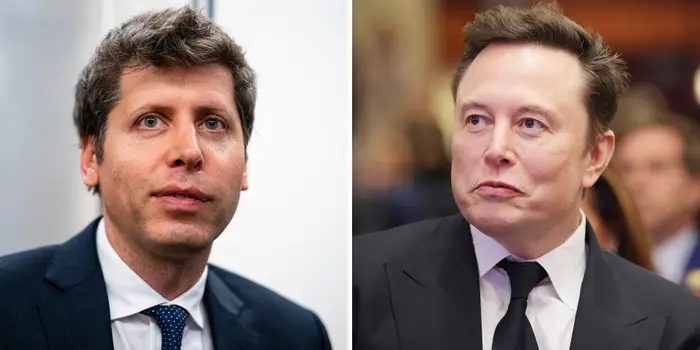
The OpenAI Cursor contract termination announced today marks one of the sharpest breaks yet between two of the most prominent forces in artificial intelligence — and the reasoning offered has less to do with technology than with trust.
OpenAI has notified SpaceX that it intends to end the arrangement supplying its models to Cursor, the popular AI coding assistant, with a proposed cutoff on November 12, 2026.
Maximum Notice, Deliberately
The company framed the timing as an intentional concession to users.
Rather than moving quickly, OpenAI is giving the longest notice period its contract allows, specifically so developers relying on its models inside Cursor retain access for as long as possible.
That detail matters for understanding the announcement. This is not an abrupt cutoff. It is a deadline set at the far edge of what the agreement permits.
OpenAI described the decision as incredibly difficult, saying it cares deeply about keeping its models broadly available to developers.
The Stated Reason
The justification offered is blunt. OpenAI says it cannot be confident that SpaceX will use its technology within the terms of service, and it grounds that lack of confidence in direct experience with companies controlled by Elon Musk.
Working with partners at this scale normally involves custom contracts — agreements designed to ensure compliance with usage terms and to build in safety provisions appropriate to large-scale integration.
Those arrangements depend entirely on the counterparty honoring them.
Two Specific Precedents
OpenAI cited two incidents rather than making a general accusation.
The first followed Musk’s acquisition of Twitter, now part of SpaceX. According to OpenAI, the company broke the terms of their contract, and was not alone in doing so among Twitter’s obligations at the time.
The second is more recent and more directly relevant. OpenAI pointed to testimony given under oath earlier this year in which Musk acknowledged that xAI — also now part of SpaceX — had violated OpenAI’s terms of service.
The company added a pointed observation: those terms closely resemble xAI’s own.
The reference concerns distillation, a technique where one model is trained using outputs from another. It is explicitly restricted in most frontier AI usage agreements, because it allows a competitor to capture capability without bearing the cost of developing it.
The Change of Control Clause
The mechanism enabling this decision was written into the original agreement.
OpenAI’s custom contract with Cursor includes a limited window during which it may cancel following a change of ownership. SpaceX’s acquisition of Cursor opened that window, and OpenAI is exercising the option before it closes.
Clauses of this kind are standard in enterprise technology contracts precisely because ownership determines behavior. A company evaluates who it is dealing with, not just what product it is supplying, and acquisition can replace a trusted partner with an untrusted one overnight.
The Astra Factor
OpenAI also connected the decision to what comes next in its own product line.
The company referenced Astra, an upcoming model, noting that advancing AI capabilities create a new level of accountability regarding how its technology is used.
That framing suggests the concern is forward-looking as much as historical. More capable models carry higher stakes when misused, and the willingness to extend access depends increasingly on confidence that restrictions will hold.
OpenAI stated it will hold the cancellation to the latest possible date while declining to provide future models to Cursor — meaning the relationship winds down at current capability rather than ending immediately.
Respect for Cursor Itself
Notably, none of the criticism was directed at Cursor.
OpenAI said it has worked with the company for nearly four years and holds enormous respect for its team, its product, and what it has built for developers.
That distinction is deliberate. Cursor did not violate any terms. It was acquired, and the acquisition changed who effectively controls the integration.
The Developers Caught in Between
OpenAI acknowledged that the people most affected are developers who depend on its models within Cursor.
The company said it cares about their experience through the transition and is prepared to go above and beyond in supporting them, though it did not specify what that support will involve.
For working developers, the practical questions are immediate. Cursor users who have built workflows around specific OpenAI models have roughly two and a half months to evaluate alternatives — whether that means switching to models Cursor retains access to, moving to a different editor, or accessing OpenAI models through another route.
What This Signals
The announcement reflects a shift in how frontier AI companies think about distribution.
The prevailing approach for years has been maximum reach: get models into as many tools as possible, on the theory that ubiquity builds ecosystem advantage. This decision subordinates that goal to control over who holds the keys.
It also demonstrates that model access has become a genuine strategic lever. A company that supplies the underlying intelligence for a product can withdraw it, and no amount of engineering on the application side changes that dependency.
For an industry where a handful of labs supply capability to thousands of downstream products, that is a dynamic worth watching. Every AI application built on someone else’s model carries the same structural exposure — and today, one of them found out what happens when the supplier decides the relationship no longer works.
Author