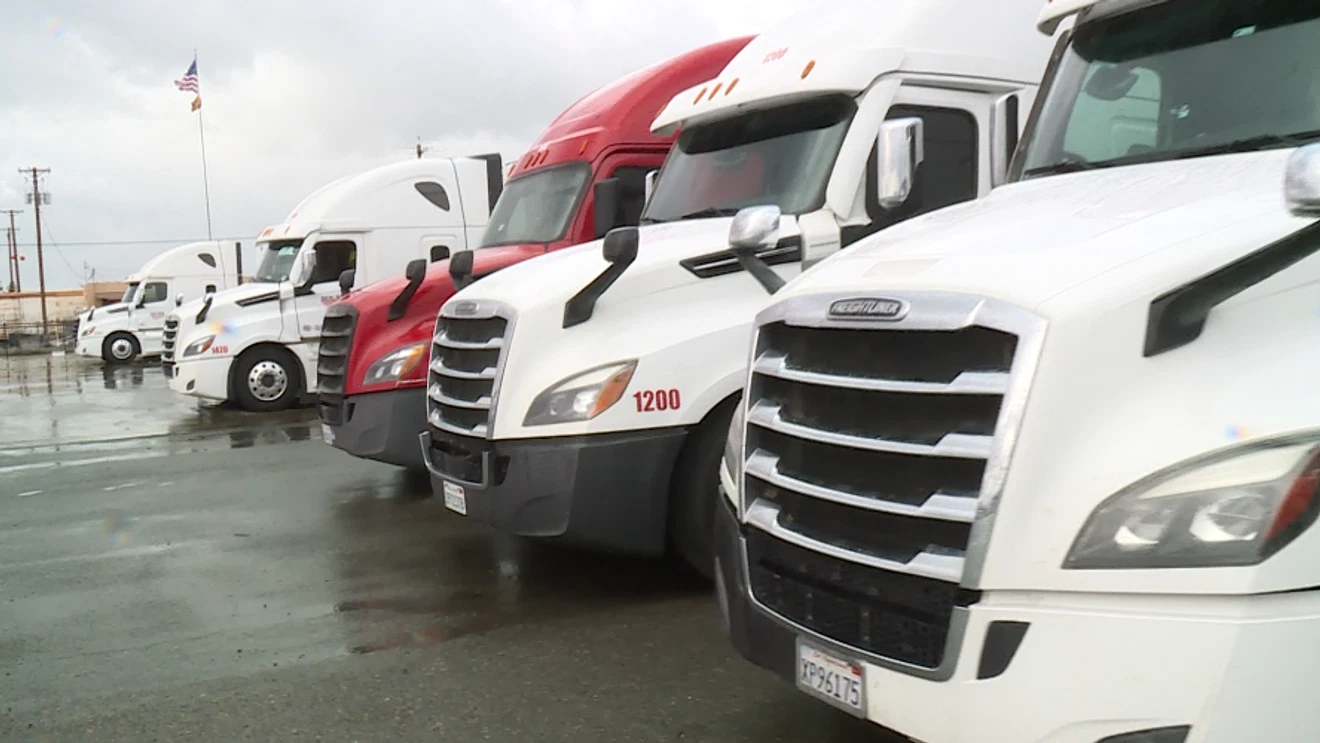
Three Wisconsin truck driving schools have been ordered to stop operating as part of a nationwide federal action targeting training providers the government says certified drivers who could not meet English proficiency requirements.
The schools are On Your Way CDL Training in Milwaukee, CDL Pro School in Kenosha, and Tez CDL School in Sturtevant. They are among 110 companies across the country the US Department of Transportation directed to cease operations on 31 August.
Owners Learned From Reporters
The rollout appears to have caught at least some operators unaware.
Mark Washington, who owns On Your Way CDL Training, said he had no knowledge his business was being closed until a reporter contacted him. He said Immigration and Customs Enforcement agents visited his location on North 76th Street in Milwaukee on 31 August and served a subpoena requesting various documents, which he is expected to produce by mid-September. Beyond that, he said, he received no explanation.
The person answering the phone at CDL Pro School said he had also not heard about the closure and learned of the national action from a reporter’s call, adding he could not comment further until he understood the situation.
At Tez CDL School, the person reached said the business had closed a long time ago and offered no further detail. The company’s most recent Instagram activity dates to January.
Instagram accounts for both CDL Pro and Tez CDL feature content primarily in Russian and Kyrgyz, and several Google reviews for CDL Pro are written in Russian.
Washington’s Response
Washington, who has run his school for four years, said he intends to keep operating in the absence of clearer information from the federal government. He rejected any suggestion of fraud and noted that his students must pass their tests in English.
He said his school follows the law and the guidance it receives from the state, and that it requests all required documentation from people before they take their tests.
How the Licensing Process Works
Understanding the allegation requires understanding the sequence of tests involved.
- The written test for a learner’s permit is generally administered in English. In Wisconsin it is also offered in several other languages, including Burmese, Russian, Serbian and Spanish
- With a learner’s permit, a person can enrol in behind-the-wheel training, which is what these schools provide
- The hands-on skills test for a commercial driver’s license must be conducted in English under federal law, with no interpreters permitted
- After licensing, drivers can face roadside English checks during vehicle inspections, which may include conversation with an inspector and questions about road sign meanings
The English requirement itself is not new. Federal rules have required truck drivers to be proficient in English since 1937. The standard requires drivers to read and speak English well enough to converse with the public, understand traffic signs and signals, answer official questions, and complete reports and records.
How the Government Selected These Schools
The Department of Transportation described its methodology in a news release.
Officials reviewed roadside inspection records for commercial drivers cited for failing English proficiency requirements. They then cross-referenced those cited drivers against the schools that trained them, seeking to identify training providers that repeatedly certified drivers falling short of federal qualification standards.
The department said it will now carry out emergency removal of the 110 schools from its training provider registry. The order requires them to immediately halt all activity as training providers, including delivering curricula, using facilities for instruction, and conducting behind-the-wheel training.
One point deserves emphasis. The allegation concerns students who later failed roadside English tests. The government is not alleging those students were in the United States illegally.
The Wider Campaign
Transportation Secretary Sean Duffy and Homeland Security Secretary Markwayne Mullin announced the closures as part of a multi-state effort described as rooting out fraud. The administration is also dispatching investigators to schools to look for rule violations and auditing third-party skills test providers.
The effort has been framed publicly as a safety matter, and the administration has highlighted crashes involving immigrant truck drivers in which Americans died.
Duffy said the department has spent the past year and a half tightening rules and removing dangerous foreign drivers from the industry, adding that the effort would address every link in the chain, from states failing to follow the law to what he called shady training schools and illicit companies.
Wisconsin Republicans voiced support, arguing that drivers who cannot speak English create risk on the road.
The Questions Left Open
Several issues remain unresolved from the information available.
The government’s method relies on downstream outcomes rather than direct evidence of misconduct at the schools themselves. A driver who passes an English-conducted skills test and later fails a roadside check raises questions, but the failure occurs after the school’s involvement ends and after a state-administered exam.
School operators also say they were given no advance notice or explanation, which makes it difficult to respond to specific allegations or correct the record.
For students currently enrolled at affected schools, the immediate consequence is disruption to training they have already paid for.
Whether the closures hold will likely depend on what the subpoenaed records show and whether any of the 110 providers challenge the removals. For now, three Wisconsin businesses have been told to stop, and at least two of their operators say they are still trying to find out why.
Author