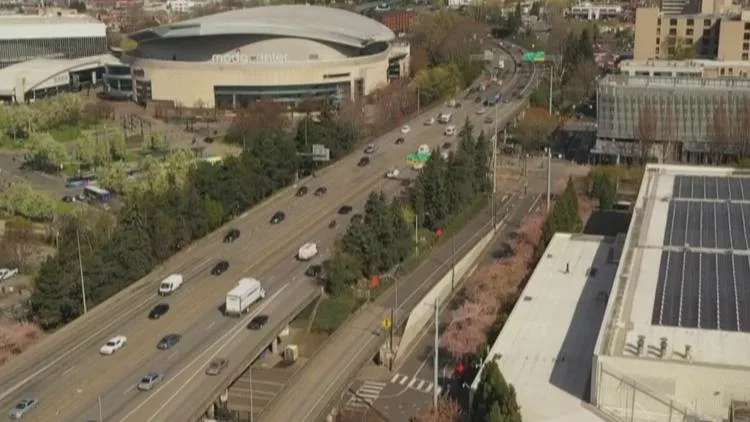
The I-5 Rose Quarter closure begins Friday, September 11, and Portland residents who live near the freeway have spent months preparing for what happens next.
All southbound lanes of Interstate 5 through the Rose Quarter will shut down for an estimated five weeks while crews repair and replace the concrete roadway surface. The closure runs around the clock, not just during off-peak hours.
The mood in surrounding neighbourhoods is roughly what you would expect.
Everyone is saying oh dear, what a nightmare, said Rachel, who lives near the freeway.
How Bad the Traffic Could Get
The Portland Bureau of Transportation projects interstate travel times two to three times longer than normal during the closure.
Backups could extend as far as Washington state and spill onto local Portland streets. The heaviest congestion is anticipated between 6:30 and 9 a.m. and again from 4 to 8:30 p.m.
That second consequence, traffic flooding neighbourhood streets, is what worries residents most.
The School Problem
Jennifer lives directly across from a school near the closure zone. She said neighbours have been discussing the project for months and expect a significant increase in vehicles.
Many people in the area bike and walk, she noted, and it functions as a genuine neighbourhood school. There is already substantial car traffic without diverted freeway drivers added to the mix.
Children walking to school and frustrated commuters hunting for shortcuts is not a combination anyone wants.
What the City Is Doing About It
PBOT has assembled a fairly detailed response.
Warning signs have gone up across the area. The city plans to deploy barriers and Local Access Only signage to discourage drivers from treating residential streets as bypass routes. One of 13 such sign and barrier installations will be placed at Legacy Emanuel Medical Center.
More interestingly, PBOT has been coordinating directly with Apple and Google Maps to reduce the number of trips routed through specific streets, including neighbourhood greenways and paths students use to reach school. Navigation apps have become one of the primary drivers of cut-through traffic, so influencing them at the source is arguably more effective than any sign.
Additional measures include temporary speed-reader boards, limited road closures and other traffic-calming tools in areas expected to absorb the most spillover.
Keeping Lanes Clear
The city has also planned for the specific problem of stalled vehicles turning slow traffic into stopped traffic.
Two tow truck operators will be stationed near high-congestion areas. Beginning September 14, parking enforcement officers will work alongside contractors to clear disabled vehicles from the right of way quickly. PBOT will cover the cost of relocating those vehicles to the nearest legal parking space.
The Business Question
Some might assume more cars passing through means more potential customers for local businesses. Residents are unconvinced.
Jennifer put it plainly: people stuck in diverted traffic are not browsing. Drivers are unlikely to pass through and think there is a lovely flower shop, perhaps they will stop for flowers on the way to work.
Congestion traffic is captive traffic, not shopping traffic.
Everyday Life Adjustments
The closure reaches into ordinary routines in ways that are easy to overlook.
Rachel said she considers herself fortunate to have a driveway, which removes parking from her list of concerns. Without one, she said, she would feel differently about the whole situation.
Jennifer’s family has been working through a different problem. With relatives in Sherwood, they have been wondering how the closure will affect visits in both directions.
Alternatives on Offer
The city’s core message is straightforward: change how, when or where you travel.
PBOT is recommending public transit, carpooling, biking, teleworking and simply shifting trips outside peak congestion windows.
To make some of those options easier, the city has partnered with BIKETOWN and Lime to offer free 10-minute rides on e-bikes and e-scooters for weekday trips beginning or ending at the Rose Quarter Transit Center. Time beyond the first 10 minutes is billed at standard rates based on the rider’s membership.
PBOT is also running special edition versions of its bike bus programme every Wednesday from September 16 through October 14 for residents of north and northeast Portland, with two new routes added for the closure period.
The Attitude Most People Seem to Share
There is a pragmatism running through the resident comments that is worth noting. Nobody is arguing the repairs are unnecessary.
Jennifer summed up the prevailing view: get it over with, rather than turning it into a six-month or year-long project that never seems to end.
Five weeks of significant disruption is a real cost. But concentrated pain with a defined endpoint is generally easier to absorb than an open-ended construction zone, and residents appear to have made peace with that trade.
The countdown to Friday is now measured in hours.
Author