China Year-Long Space Mission 2026: Shenzhou-23 Launches Bold Step Toward 2030 Moon Landing
The China Year-Long Space Mission 2026 is set to mark one of the most ambitious chapters in Beijing’s growing space program. On Sunday, China will launch the Shenzhou-23 spacecraft, sending three astronauts to its Tiangong space station for a mission that will include a record-breaking year-long stay in orbit. The flight is more than just another milestone for Chinese spaceflight — it is a critical stepping stone in China’s race to land astronauts on the moon by 2030.
With NASA pushing forward with its Artemis program and SpaceX testing massive new rockets, the global race to return to the moon has intensified, and China is determined not to be left behind.
A Historic Launch From Jiuquan
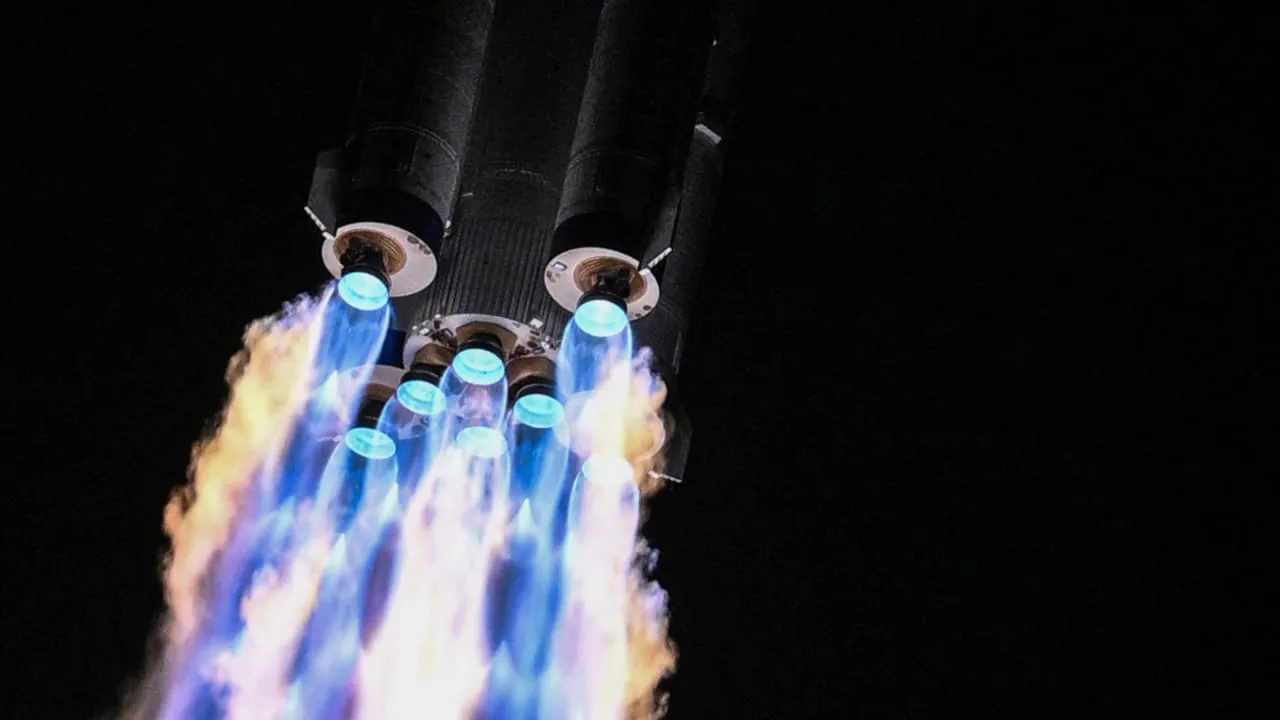
The Shenzhou-23 spacecraft will lift off at 11:08 p.m. local time from the Jiuquan Satellite Launch Center in northwest China, carried by the trusted Long March-2F Y23 rocket. Onboard will be three Chinese astronauts, each playing a unique role in the mission.
The crew includes:
- Commander Zhu Yangzhu, from the People’s Liberation Army’s astronaut division
- Pilot Zhang Yuanzhi, also from the PLA’s astronaut team
- Payload specialist Li Jiaying, a former Hong Kong police inspector
Li Jiaying’s involvement is particularly significant because she will become the first astronaut from Hong Kong to ever take part in a Chinese space mission. Her presence reflects the broadening scope of China’s astronaut program, which is now incorporating individuals from beyond traditional military backgrounds.
A Year in Space: A Record-Breaking Goal
While the Shenzhou-23 mission will carry three astronauts to the Tiangong station, one of them will remain in orbit for an entire year. The decision on which astronaut stays will be made later, based on how the mission progresses.
This extended duration would mark China’s longest crewed space mission in history. Although it still falls short of the global record — a 14½-month mission completed by a Russian cosmonaut in 1995 — it represents a major leap forward for China’s space capabilities.
Such long-duration missions allow scientists to study how prolonged exposure to space affects human health, including:
- Bone density loss
- Muscle deterioration
- Radiation exposure effects
- Cardiovascular changes
- Psychological strain over extended isolation
These studies are not only important for understanding human resilience in orbit but are also essential preparation for the deep-space missions China hopes to undertake in the coming decade.
The Race to the Moon Heats Up
The launch of Shenzhou-23 comes at a moment of intense competition in global space exploration. The United States has issued warnings about what it sees as China’s plans to expand its lunar presence, including potential efforts to mine resources and establish permanent infrastructure on the moon.
NASA is currently aiming for a crewed lunar landing in 2028, two years ahead of China’s planned 2030 mission. In April, NASA’s Artemis II mission made history by sending four astronauts on a journey around the moon — the first crewed lunar voyage in over half a century.
Meanwhile, SpaceX continues to push the boundaries of space exploration with its Starship rocket. Just on Friday, the company conducted a largely successful test flight of its upgraded Starship V3, which is being developed both to expand Starlink satellite launches and to support future NASA moon missions.
China is responding by accelerating development of its own hardware and infrastructure, knowing the next four years will be crucial.
Building Toward a 2030 Crewed Lunar Landing
Beijing’s plan to land astronauts on the moon by 2030 is one of the boldest space goals in modern history. To accomplish this, China is developing several major technologies and systems, including:
- The heavy-lift Long March-10 rocket
- The Mengzhou crewed spacecraft
- The Lanyue lunar lander
- Long-duration life-support systems
- Autonomous rendezvous and docking technology
The Shenzhou-23 mission will play a key role in validating these technologies. One of its primary objectives is to execute the first autonomous rapid rendezvous and docking procedure with Tiangong’s core module — a procedure that mimics the autonomous lunar-orbit rendezvous required for the 2030 mission.
China’s lunar program also relies on building strong partnerships. The country plans to establish a permanent base on the moon with Russia by 2035, an ambitious project aimed at securing long-term human presence beyond Earth.
Tiangong’s Growing Role
China’s Tiangong space station has become a cornerstone of the country’s space ambitions. Since 2021, Shenzhou missions have been sending three-person crews to the station for six-month stays. These missions have allowed China to gradually expand its experience in long-duration spaceflight, robotic operations, scientific research, and station maintenance.
Beyond hosting Chinese astronauts, Tiangong is becoming a hub for international cooperation. China is currently training two Pakistani astronauts, one of whom may join an upcoming short-duration mission this year. The increasing inclusion of international partners signals Beijing’s interest in expanding global participation in its space program.
Recovery From Previous Setbacks
China’s space ambitions have not been without challenges. The previous mission, Shenzhou-22, was launched ahead of schedule in November to retrieve three astronauts whose Shenzhou-20 spacecraft had been damaged by space debris while in orbit. The incident highlighted the growing dangers of operating in low-Earth orbit, where debris and high-velocity collisions pose increasing risks.
Despite the setback, China has continued to push its program forward with confidence and growing technical sophistication.
Pushing Scientific Boundaries
The Shenzhou-23 mission is not just about getting humans into orbit — it is also a major scientific endeavor. Researchers will use the long duration to study a wide array of human physiology challenges. In addition, China has been quietly making major strides in space science.
One of the most groundbreaking experiments currently underway is China’s “artificial embryo” research project, the first of its kind in space. Samples of human stem cells were recently delivered to Shenzhou-22 crew members aboard the Tiangong station. The goal is to study how human beings might one day grow, survive, and even reproduce in space — a topic that becomes increasingly relevant as humanity prepares for long-term off-Earth living.
A Strategic Statement to the World
The launch of Shenzhou-23 also serves as a strong geopolitical signal. As the global race for the moon intensifies, China is positioning itself not just as a participant but as a leader in space innovation. A successful crewed lunar landing before 2030 would significantly boost China’s plans for a permanent moon base by 2035 and further establish the country as a dominant space power.
China’s lunar program chief scientist, Wu Weiren, has even suggested that the country’s publicly stated timeline is intentionally conservative. This implies that China may achieve key milestones earlier than expected, potentially shifting the global balance of power in space exploration.
Final Thoughts
The China Year-Long Space Mission 2026 represents far more than just a record-breaking stay aboard the Tiangong space station. It is a defining moment in China’s broader vision to become the next great space superpower. With Shenzhou-23, Beijing is testing critical technologies, expanding scientific frontiers, and demonstrating the world-class capabilities required for a crewed moon mission.
As NASA prepares for Artemis missions and SpaceX continues its breakneck pace of rocket development, the world is witnessing a new era of space exploration. China’s growing ambition, technological progress, and strategic vision suggest that the next decade will be transformative for humanity’s reach into the cosmos.
If everything goes according to plan, the Shenzhou-23 mission could be the moment future historians look back to as the start of China’s true rise to the stars.
Author