Operation Vivaldi: Ukraine Reclaims Ground Near Lyman and Captures Over 250 Russian Soldiers
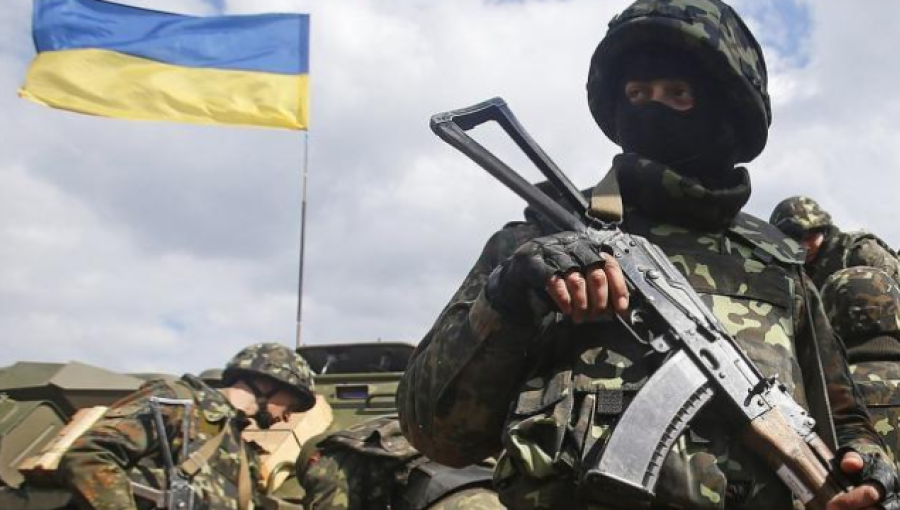
Operation Vivaldi has delivered one of Ukraine’s most notable battlefield gains in recent months. A senior Ukrainian commander announced on Monday that his troops had driven back Russian forces in a critical sector of the eastern front and taken more than 250 prisoners. The success has strengthened the defence of Lyman, a key city in the Donetsk region, and sent a pointed message to both Moscow and Ukraine’s Western partners.
Entire Units Surrender
General Andrii Biletskyi, commander of Ukraine’s Third Army Corps, said Russian troops had given themselves up in large groups. According to him, whole units surrendered together, including officers, pilots and artillery crews.
He described the latest gains as the third stage of Operation Vivaldi, a carefully planned campaign designed to seize back the initiative in Donetsk.
The Territory Recaptured
According to the Third Army Corps:
- The latest phase recovered 51 square kilometres
- The total area retaken during Operation Vivaldi now stands at 176 square kilometres
While modest in size compared with the wider front, these gains carry significant strategic weight.
Why Lyman Matters
Lyman is a vital part of what is often called Ukraine’s “fortress belt,” a chain of heavily defended cities that has held back Russian advances in Donetsk for years.
Russian forces had been attempting a pincer movement to encircle and capture the city. Mykola Bielieskov, a research fellow at Ukraine’s National Institute for Strategic Studies, explained that Russian troops had pushed all the way up to the Siverskyi Donets River.
In his view, any further Russian progress would have made it much harder to hold Lyman as the main defensive hub for northern Donetsk. It could also have cut into the supply lines and logistics that keep the city’s defenders equipped.
Robots, Drones and Deception
Operation Vivaldi stands out for the way it combined different types of military power. Ukrainian forces coordinated drones, armoured vehicles, artillery and infantry to push back the Russian attack.
Technology Taking the Risk
A major focus of the operation was using unmanned systems to reduce the danger to Ukrainian soldiers. Among the tactics used:
- Small ground robots were dropped from the air behind Russian lines
- Old Soviet-era BTR-60 armoured vehicles were packed with explosives and driven into Russian positions as remote-controlled kamikaze machines
These innovations reflect how Ukraine is increasingly relying on robotics and drones to make up for shortages in manpower.
A Well-Laid Trap
Deception also played a central role. Biletskyi said Ukrainian forces tricked the Russians into believing the main attack would come towards the villages of Shandryholove and Zelena Dolyna.
Russian commanders responded by pouring reserves into counterattacks in that area. Meanwhile, Ukraine launched its real assault in the direction of Nove. According to Biletskyi, the Russians wasted their reserves on pointless counterattacks and completely missed where the actual strike was coming from.
Undermining Russia’s Strategy
Bielieskov believes the operation weakens Moscow’s broader plan for winning the war. He said Russia’s approach relied on turning small local advances in Donetsk into major strategic victories.
The aim, he explained, was to convince the world that Russia would inevitably take the entire Donetsk region. That, in turn, would raise doubts about whether it was worth the West continuing to support Ukraine, or whether Ukraine should keep fighting for the region at all.
Operation Vivaldi challenges that narrative by showing that Russian progress can be halted and even reversed.
A Message to Washington
The operation’s significance extends beyond the battlefield. Kyiv sees counterattacks like this as proof to its allies, especially the Trump administration, that Russia’s slow gains in Donetsk are not unstoppable. It also suggests that Vladimir Putin cannot simply wait for Ukraine’s defences or Western support to crumble.
The timing is important. The Trump administration has renewed efforts to end the war, relying on its special envoys Jared Kushner and Steve Witkoff.
Bielieskov noted that even American negotiators who are not seen as especially sympathetic to Ukraine have reportedly pointed out to Putin that his promise to quickly seize Donetsk has not come true.
Zelenskyy Highlights Russian Losses
Ukrainian President Volodymyr Zelenskyy also pointed to the wider picture on the front. He said that over the past week, Ukrainian forces had killed or wounded 10,660 Russian soldiers across all active combat zones.
He argued that every week in which Ukraine holds the upper hand limits Russia’s ability to launch larger offensives.
Moscow Denies Any Setback
Independent open-source monitors, including the battlefield mapping project DeepState, have documented Ukrainian gains in the area. The Kremlin, however, insists nothing significant has changed.
Russia’s defence ministry dismissed Ukraine’s claims as a performance aimed at impressing Kyiv’s Western backers. It said the only activity in northern Donetsk involved small Ukrainian assault groups making failed attempts to infiltrate Russian lines.
The Music Plays On
The operation takes its name from Italian composer Antonio Vivaldi’s famous “Four Seasons” violin concertos. Biletskyi made clear that the campaign is far from over, saying that Vivaldi’s music will keep playing.
What Comes Next
Operation Vivaldi has given Ukraine a valuable boost, both militarily and politically. By protecting Lyman, capturing hundreds of prisoners and reclaiming territory, Ukrainian forces have shown they can still outmanoeuvre Russian troops through careful planning, deception and technology.
Whether these gains can be expanded remains to be seen. But for now, the operation offers a clear counterpoint to the idea that Russia’s advance in Donetsk is unstoppable, and it strengthens Ukraine’s hand as diplomatic efforts to end the war continue.
Author