





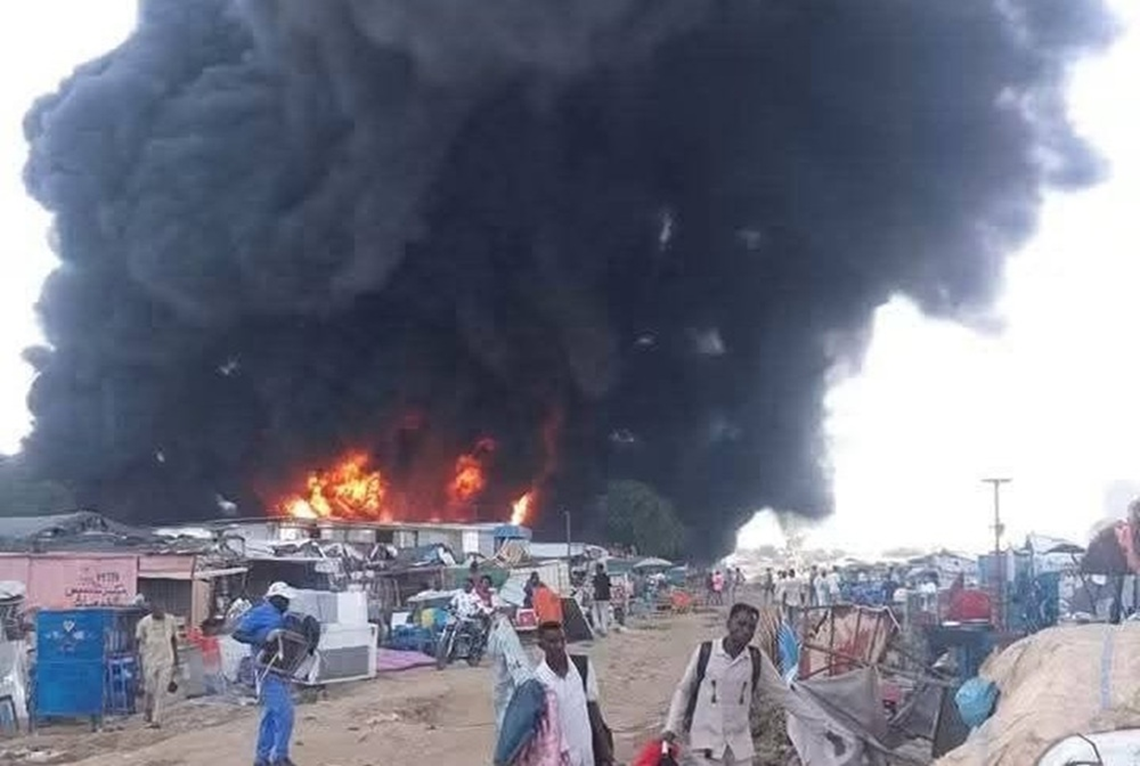
Abyei Drone Strike Kills More Than 150 as Market Fire Rages in Disputed Border Region
Abyei drone strike casualties have climbed past 150 after an aerial attack on a crowded marketplace set off a massive fuel blaze in the contested territory that sits between Sudan and South Sudan. Local officials say the fire was still burning a day later, and they fear the final count will be higher still.
The attack hit Amiet Market, a bustling trading centre just north of Abyei town, on Monday morning. According to the area’s caretaker information minister, Yohanna Akol Ngor, the strike landed close to a fuel storage site, triggering an inferno that swept through the surrounding stalls and left little time for anyone nearby to escape.
What Happened at Amiet Market
Ngor told reporters by phone that the strike occurred at roughly 11 a.m. local time. The fuel depot that caught fire, he explained, was a supply point for small businesses in the area rather than a military facility.
By the following day, his administration had documented 153 fatalities. He cautioned that the figure was provisional because flames continued to spread and rescue teams had not yet reached every part of the site.
He described the aftermath as horrifying and deeply distressing for a community that depends on the market for its daily livelihood.
Sudan’s Military Offers a Different Account
A senior officer in Sudan’s armed forces confirmed that the army launched a drone attack on Monday, but he painted a very different picture of the target. Speaking anonymously because he lacked clearance to brief journalists, the officer said the operation was aimed at fuel tankers crossing from South Sudan that were allegedly destined for the Rapid Support Forces, the paramilitary group the army has been fighting for more than three years.
He insisted that those who died were RSF fighters and individuals engaged in fuel smuggling, and he stated plainly that the military does not attack civilians. He also maintained that the strike fell outside the demilitarised buffer zone that runs along the frontier.
None of these claims could be independently confirmed. Reporters were unable to verify who was present at the market when the drone struck or whether any of the victims had links to the paramilitary group.
Medical Teams Overwhelmed
Doctors Without Borders, the international medical charity known by its French acronym MSF, reported that more than 20 wounded people had been brought to Ameth Bek Hospital, where its staff work side by side with South Sudan’s Health Ministry.
Dr. Christian Lindauer, who manages MSF’s medical operations at the facility, said several of the arrivals were in critical condition and that a number of patients were being treated for serious burns.
The organisation issued an appeal to every party in the conflict to halt attacks on civilians and the infrastructure they rely on. It also raised concerns that ongoing violence is making it increasingly dangerous for people in the region to reach clinics, hospitals and other essential services.
South Sudan Summons Sudanese Envoy
South Sudan’s government responded quickly and pointedly. Its Foreign Ministry attributed the attack to Sudan’s military and said the strike struck several spots within the market, killing civilians and destroying property on a wide scale.
The ministry called in Sudan’s ambassador to lodge a formal complaint and pressed Khartoum to avoid any further action that could put lives and livelihoods at risk. It also urged that disputes over Abyei be handled through negotiation rather than force.
A Region Caught Between Two Wars
To understand why a market in Abyei became a target, it helps to look at the broader conflict unfolding to the north. Since April 2023, Sudan’s army and the RSF have been locked in a brutal war that has devastated cities, displaced millions and pushed the country toward famine. The fighting has repeatedly spilled across Sudan’s borders, and fuel supply lines have become a key battleground.
Abyei sits in an especially vulnerable position. The territory is rich in oil and has never had its political future settled. A 2005 peace deal that ended Sudan’s long civil war deferred the question of which country Abyei belongs to, and when South Sudan gained independence in 2011, the matter remained open. A referendum meant to resolve the issue collapsed amid arguments over who would be eligible to vote.
Communities Divided Over Abyei’s Future
The region’s population is split along lines that mirror the national dispute. The Ngok Dinka, who make up the majority of permanent residents, overwhelmingly want to become part of South Sudan. The Misseriya, Arab nomads who move their herds through Abyei’s grazing lands each season, lean toward Sudan.
Amiet Market itself was built as a shared space for both groups, a place where Ngok Dinka and Misseriya traders could do business together despite their differences. That makes the strike all the more damaging, as it hit one of the few institutions that bridged the communal divide.
Abyei has not been spared violence of its own, either. In recent years, clashes over land between the Ngok Dinka and the neighbouring Twic Dinka have claimed lives and deepened insecurity across the area.
Why the Death Toll Matters
If the local administration’s figures hold, Monday’s attack would rank among the deadliest single incidents linked to Sudan’s war to occur outside the country’s own borders. It also raises fresh questions about the use of drones against targets in densely populated civilian areas, a tactic that both sides in Sudan’s conflict have been accused of employing.
For the families in Abyei, those questions are secondary to the immediate crisis. The fire has to be contained, the injured need care, and the dead must be identified and buried. The dispute over whether the victims were smugglers, fighters or simply people buying and selling goods will likely drag on long after the smoke clears.
What remains certain is that a marketplace meant to bring two communities together has been turned into a scene of devastation, and the fragile calm that Abyei has struggled to maintain for two decades has been shaken once again.
Author