Why Europe Is Boiling Over: The Economic Anger Fuelling Protests From Paris to Lisbon
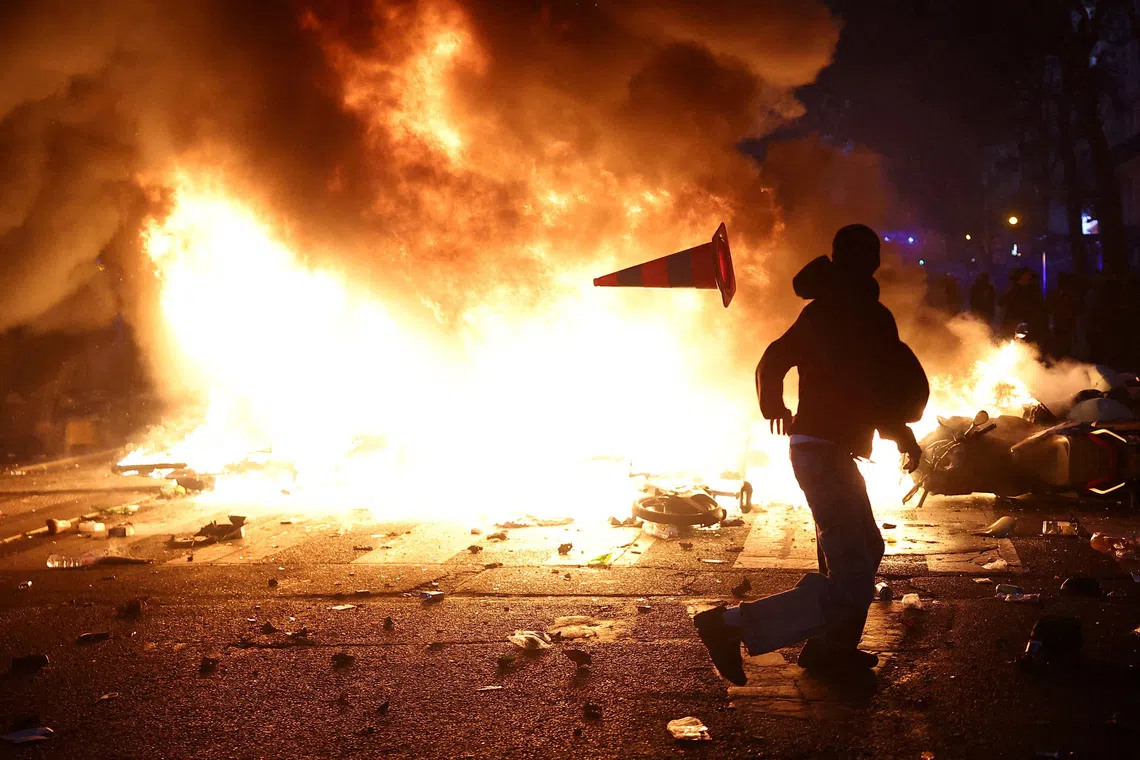
Europe protests cost of living anger has spilled onto streets across the continent in the most dramatic wave of unrest in years. From Paris to Milan, Madrid to Lisbon and Tirana, hundreds of thousands of people have marched, and in several cities a minority have torched buildings, looted shops and fought with police.
The triggers vary from country to country. The underlying frustration does not. Europeans are paying more for housing, fuel and food while their governments, weighed down by debt and sluggish growth, struggle to offer relief.
A Weekend of Rage
France saw the largest demonstrations, with more than half a million people marching over the weekend. Most did so peacefully, but scenes of city halls set ablaze and officers under attack dominated coverage.
Elsewhere the picture was similar if smaller in scale:
In Italy, a march through central Milan ended with rioters hurling stones and paving blocks at police and setting barricades alight.
In Albania, demonstrators threw petrol bombs, burned cars and bins, and demanded the resignation of Prime Minister Edi Rama.
In Spain and Portugal, crowds gathered over the cost of housing, with tens of thousands turning out in Lisbon on Saturday.
Different Sparks, Same Fire
Each national protest has its own origin story.
France’s movement began last month with high school students complaining about crumbling classrooms and a shortage of teachers. What started as a demand for basic repairs and perhaps air conditioning has swelled into a general revolt over living standards and the erosion of public services.
Spain’s housing protests were ignited in September by the case of Maricarmen Abascal, an 87-year-old woman evicted after an investment fund raised her rent by 230 percent. She died two weeks later, and her story became a rallying cry.
Portugal’s demonstrators are focused squarely on housing. The country recorded the European Union’s steepest annual rise in house prices in the second quarter of 2026, up 16.5 percent. Finance Minister Miranda Sarmento acknowledged that while fuel costs feature in the complaints, housing is the dominant grievance.
Albania’s unrest centres on universities, where students are furious about poor facilities and steep tuition fees.
Italy’s protests draw on a familiar cocktail of expensive energy, high rents, low wages and declining services.
The Energy Price Factor
Behind many of these movements sits the cost of fuel. The wars in Iran and Ukraine have driven diesel prices sharply higher across Europe, squeezing households and businesses alike.
Yet economists caution against treating energy as the sole explanation. Andrew Kenningham, chief Europe economist at Capital Economics, told CNBC there is no single trigger. He pointed out that energy prices rose far more steeply in 2022, at the start of the Ukraine war, without producing comparable violence.
The deeper problem, in his assessment, is that politicians cannot credibly promise a better future. Growth is weak and public debt is enormous, leaving governments with little capacity to spend more or tax less.
France: A Perfect Storm
Nowhere is that bind more acute than in France, and several factors have combined to turn discontent into disorder.
Douglas Yates, a professor at the American Graduate School in Paris, described a storm that grew into a hurricane. Inflation created a base of aggrieved citizens. The approach of the 2027 presidential election has encouraged opposition parties to amplify anger at President Emmanuel Macron. And the students, with their modest and reasonable demands, provided the spark.
The numbers underline the strain:
Unemployment climbed to 8.3 percent in the second quarter of 2026, affecting 2.7 million people.
Youth unemployment reached 21.6 percent.
Consumer prices rose 3.1 percent in September, with energy up 21.3 percent.
Purchasing power per person is projected to fall 0.7 percent this year.
Research cited by Le Monde estimates that a family with two adults and two children has lost the equivalent of 1,200 euros a year in purchasing power since 2024, while a single adult has lost around 600 euros.
Into this climate, Prime Minister Sébastien Lecornu has introduced a 2027 budget designed to narrow a deficit forecast at 5.4 percent of GDP. Proposed measures include freezing civil service pay scales and tightening sick leave reimbursements, hardly steps likely to calm the streets.
Markets Take Notice
Investors have begun to price in the turmoil. French bond yields rose and the euro weakened on Monday as the unrest compounded existing worries about the country’s finances.
Sharon Bell of Goldman Sachs warned that cutting the deficit will require painful choices, most likely higher taxes on businesses and possibly across the board. Mike Bell of RBC BlueBay Asset Management went further, describing a very real risk of a sovereign debt crisis.
He also highlighted a politically explosive issue: France’s retirement age of 62, which he argued is unsustainable when average life expectancy is 84. If the current protests are the reaction to a comparatively modest budget, he suggested, raising the pension age could trigger something far worse.
The Continental Diagnosis
Portugal’s Sarmento offered a broader view. Countries with lower debt, like his own, have more room to respond, but the fundamental challenge is shared. Europe is not growing as fast as the United States, and without growth there is no money for higher wages, better services or stronger social support.
His government’s answer is to boost housing supply to bring down prices. Whether that can happen quickly enough to satisfy an angry public is uncertain.
What Comes Next
The protests present every European government with the same dilemma: how to improve daily life and protect public services while keeping fragile budgets under control. Security crackdowns, like Italy’s deployment of troops to Milan, may restore order temporarily. They do nothing to address the reasons people took to the streets.
Until Europe finds a way to grow faster and spread the benefits more widely, the anger on display this weekend is unlikely to disappear.
Author