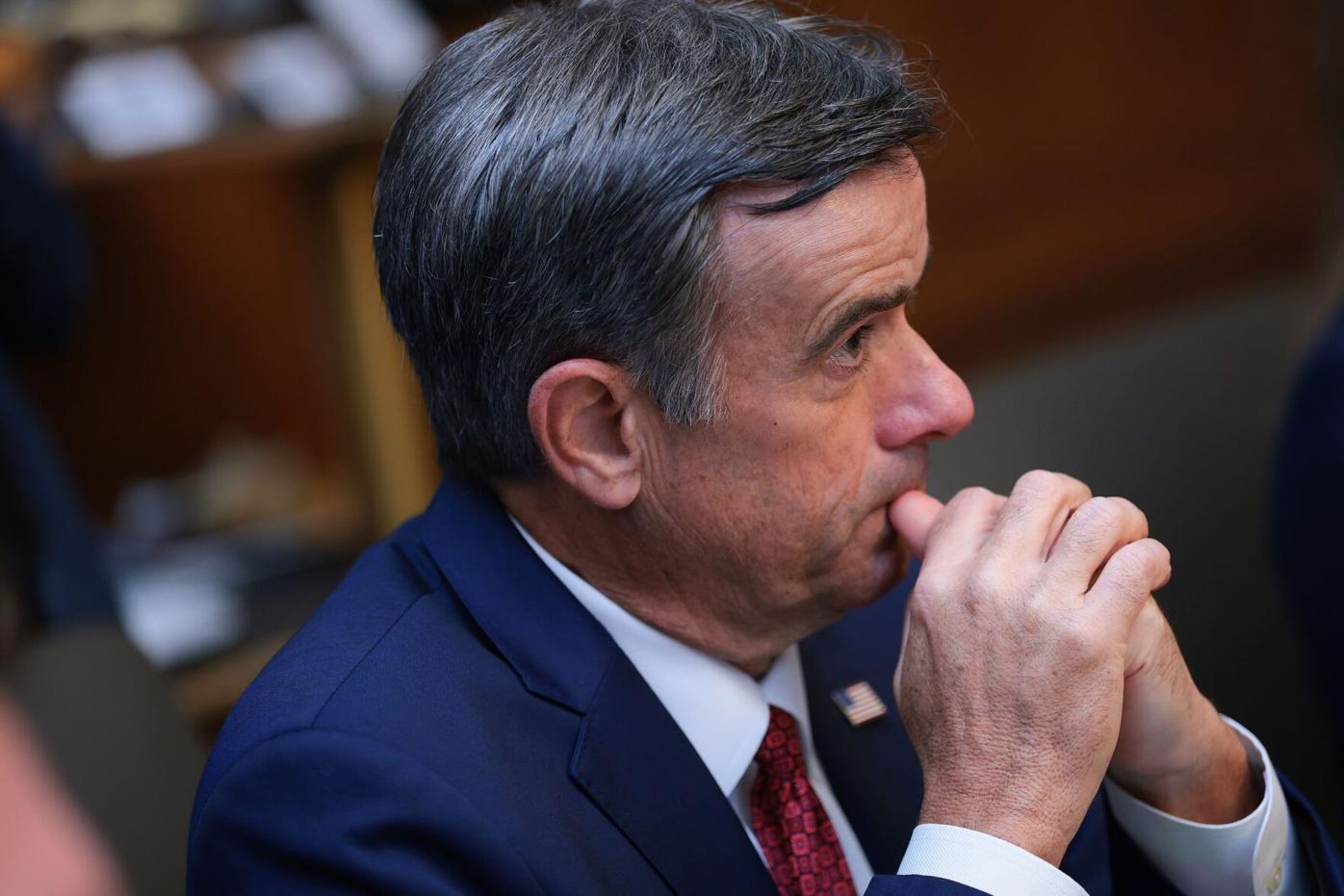
The Ratcliffe Moscow visit lasted less than a day, went unannounced, and has left analysts across Washington trying to work out what it was for.
CIA Director John Ratcliffe traveled to the Russian capital on 25 August, U.S. officials confirmed to RFE/RL. It is the first publicly known trip he has made to Russia since taking over the agency under President Trump, and it arrives at a moment when several American policy tracks involving Moscow have gone quiet or gone badly.
The Trip Itself
Officials familiar with the travel confirmed he flew to Moscow but declined to describe the substance of any meetings or identify whom he saw.
Neither the CIA nor the White House offered immediate public comment.
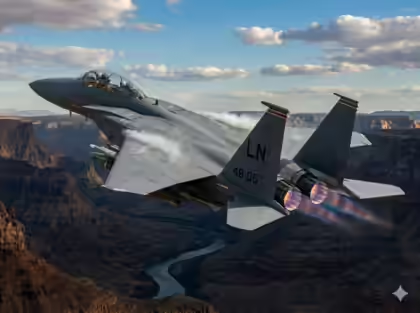
The visit was first reported by CBS News and became visible through flight-tracking data showing a U.S. military transport aircraft routing from the United States through Latvia into Russia. The plane appeared to have departed Joint Base Andrews in Maryland, landed at Moscow’s Vnukovo Airport early on 25 August, and left Russian airspace later the same day.
A same-day turnaround by an aircraft of that type is not a diplomatic courtesy call. It suggests a specific errand.
Why the Precedent Is Unsettling
Face-to-face contact at this level is genuinely uncommon. Senior American intelligence officials have kept channels open with Russian counterparts throughout the war, but in-person meetings of this seniority remain rare.
The last known Moscow trip by a CIA chief was made by Ratcliffe’s predecessor, William Burns, who met Putin in November 2021. Three months later, Russia launched its full-scale invasion of Ukraine.
That history colors how the current visit is being read.
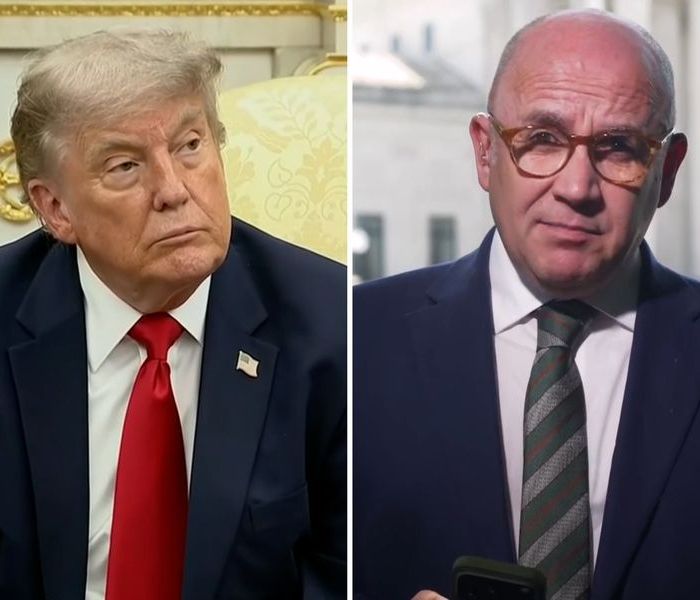
Glen Howard, a Russia analyst who chairs the Saratoga Foundation, put it plainly to RFE/RL: CIA directors do not travel to Moscow unless they intend to ask for something, and they do not make the journey unless the matter is important. He noted that Burns went in 2021 specifically to warn against invading Ukraine.
Theory One: Ukraine
The most obvious explanation involves the war itself, and specifically whether Moscow can still be moved toward a negotiated end.
American-brokered efforts have stalled, despite Trump’s summit with Putin in Alaska in August 2025.
Bradley Bowman, senior director of the Center on Military and Political Power at the Foundation for Defense of Democracies, said he would hope the top item on Ratcliffe’s agenda was a direct demand that Putin end what he characterized as a war of naked aggression.
Bowman, previously a national security adviser to members of the Senate Armed Services and Foreign Relations committees, argued Washington should make clear that continued refusal would bring escalating consequences for Russia, while the United States and its allies keep supporting Ukraine’s defense.
The negotiating impasse is well documented. Putin appears interested in keeping American diplomacy engaged, but has rejected calls from Washington and Kyiv to begin talks with front lines frozen where they stand. He has instead demanded Ukrainian territory his forces have not managed to capture militarily.
Theory Two: Iran
A second explanation has gained traction, and the timing supports it.
Ratcliffe’s trip came a day after Treasury Secretary Scott Bessent announced a new campaign to sever every economic lifeline sustaining the Iranian government, saying countries would be given deadlines to shut down activity supporting it.
Russia maintains extensive military and commercial ties with Tehran.
Bowman said he hoped Ratcliffe was delivering a message that Putin should stop providing satellite launch assistance to Iran, along with any support that could help Iranian forces target Americans, including targeting information, drone-related assistance and other military capabilities.
He pointed to reporting that Russia has supplied targeting data to Iran and transferred drone tactics and techniques refined during the Ukraine war. In his assessment, Russian support may be part of why Iran has sustained military resilience and resisted pressure to negotiate.
Howard also raised Iran as a plausible focus, while stressing that this was speculation rather than confirmed fact. In his reading, Ratcliffe could have been pressing Moscow to halt its assistance, which would make the trip an unusually blunt warning delivered in person.
Theory Three: Detained Americans
A third possibility is more transactional.
The CIA has historically been central to securing the release of Americans held in Russia, including the 2024 exchange that freed Wall Street Journal reporter Evan Gershkovich, RFE/RL journalist Alsu Kurmasheva and former Marine Paul Whelan.
Ratcliffe himself was involved in negotiations around the release of Ksenia Karelina, a Russian-American citizen imprisoned for more than a year on accusations of supporting Ukraine.
Bowman framed the obligation broadly, saying any U.S. official speaking with a country that is wrongfully detaining an American bears a serious responsibility to raise it at every available opportunity.
A Hawk in the Kremlin’s Waiting Room
One detail makes the visit harder to interpret: Ratcliffe’s own record.
Howard noted that Ratcliffe has advocated keeping CIA advisers in Ukraine to assist with intelligence and targeting work, even as the Pentagon moved to scale back its advisory footprint. Howard read that as evidence Ratcliffe carries unusual weight with the president, saying he has the president’s ear.
That cuts both ways. A hawk delivering an ultimatum is one story. A hawk sent to explore an opening is a different one entirely, and considerably more significant.
Moscow, for its part, has been making accusations of its own. Foreign Minister Sergei Lavrov said earlier this month that Russia had submitted questions to the State Department regarding intelligence data and what he described as deep American involvement in organizing and carrying out strikes inside Russian territory. He offered no supporting evidence.
The Question Nobody Can Answer Yet
Three interpretations remain open, and they point in opposite directions.
The trip may signal escalation, with a senior official delivering warnings in person because written channels were deemed insufficient.
It may represent a diplomatic opening, using an intelligence channel to explore terms that neither side wants to test publicly.
Or it may have been narrowly transactional, concerning detained Americans or some other discrete arrangement.
What is certain is that the aircraft went and returned within hours, and that nobody involved is talking.
Author