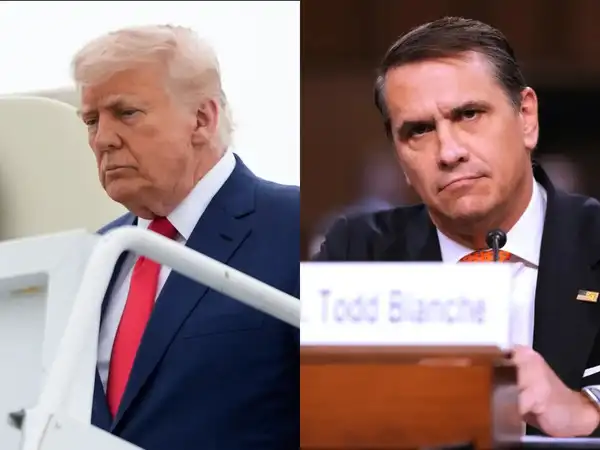
The Todd Blanche Trump fund plan is officially off the table. Acting Attorney General Todd Blanche has signed a formal order shutting down the proposed compensation fund that critics warned could have funnelled taxpayer-backed payouts to people prosecuted in connection with the 6 January 2021 attack on the US Capitol. The decision, announced late on a Sunday evening, appears designed to break a political logjam that had frozen his own path to becoming the nation’s top law enforcement officer on a permanent basis.
Why the Fund Became a Political Flashpoint
The proposal at the centre of the storm carried a price tag of roughly $1.8 billion and was branded an “anti-weaponisation” fund. It emerged earlier this year as part of a settlement of a lawsuit President Donald Trump had brought against the Internal Revenue Service over the unauthorised disclosure of his tax records.
On paper, the arrangement was pitched as redress for individuals who believed they had been targeted by politically motivated investigations under earlier administrations. In practice, opponents argued, the eligibility criteria were loose enough that people convicted of serious offences during the Capitol riot, including assaults on police officers, could have lined up for money.
That prospect triggered an unusually broad backlash. Democrats were predictably furious, but the discomfort extended into Republican ranks as well. The idea of a government-administered pot of money that might reward defendants convicted of attacking law enforcement proved difficult for many lawmakers to defend publicly.
A Second Sticking Point: Tax Audit Protection
The fund was not the only element drawing fire. The same settlement package reportedly extended protections that would have insulated the president, his relatives, and their business interests from IRS scrutiny of previously filed returns.
For a handful of senators, that provision looked less like a routine legal settlement and more like a permanent shield built into federal policy. Their demand was straightforward: narrow the language so the immunity could not be read expansively.
Blanche addressed this in a separate public statement, saying he had tightened the wording covering the IRS protections. Taken together with the order dissolving the fund, the two moves were clearly intended as a package deal aimed at the specific objections that had stalled his nomination.
The Courts Had Already Weighed In
Political pressure was not the only force acting on the plan. A federal judge had previously blocked the fund from moving forward, raising questions about whether it conflicted with established ethical standards governing the use of public resources and the settlement of claims involving the president.
Blanche had already stepped back from the proposal once before, following the initial wave of criticism. The problem was that verbal reassurances did not travel far in a Senate where trust was in short supply.
Why Words Were Not Enough
Two Republican senators, John Cornyn and Thom Tillis, refused to advance the nomination on the strength of spoken commitments alone. Both men are serving out terms that conclude in January, which arguably left them freer than most colleagues to hold their ground.
Their scepticism was not without cause. Trump had sent decidedly mixed signals in the days leading up to the announcement. At one point he declared the fund finished. Shortly afterwards, he floated reviving it if Senate Republicans failed to move on Blanche’s confirmation. He also mused publicly about pulling the nomination entirely, framing the delay as an unacceptable obstruction.
That inconsistency handed the holdouts a straightforward argument: a plan that can be resurrected by a single announcement is not really dead. Tillis captured the mood bluntly when he warned that the president still seemed interested in maintaining a “payout pot for punks.”
Notably, Tillis was careful to separate the policy dispute from the man. He described the standoff as regrettable and said he regarded Blanche, who previously served as Trump’s personal attorney, as qualified for the attorney general role. In other words, the objection was never about credentials.
Putting It in Writing
The written order changes the calculus because it converts an assurance into a documented act. Blanche said he had spent several weeks meeting with committee members and individual senators, working through concerns and unanswered questions. The document he circulated states unambiguously that no such fund exists.
A spokesperson for Cornyn confirmed the senator had come to an understanding with the Justice Department on the matter. Tillis had not issued a public response at the time the order was released.
What Comes Next
The Senate Judiciary Committee is scheduled to convene on Tuesday, and a vote on the nomination could be added to the agenda. If the two holdouts are genuinely satisfied, the mathematics that had blocked Blanche’s advancement changes overnight.
Several threads are worth watching in the days ahead:
- Whether Tillis publicly endorses the written order or presses for further guarantees
- Whether the committee schedules the vote or pushes it to a later session
- Whether the president reopens the subject after Blanche is confirmed
- How the revised IRS immunity language is interpreted by legal analysts
The Bigger Picture
This episode says something durable about the limits of executive pressure. A president with a cooperative congressional majority still found himself unable to install his preferred attorney general because a small number of members of his own party would not accept a promise in place of a signature.
It also underscores how sensitive the Capitol riot prosecutions remain as a political issue. The prospect of compensating defendants from that day proved to be a line that even loyal legislators were reluctant to cross.
For Blanche, the calculation seems to have been simple: the fund was already blocked in court and politically radioactive, while the attorney general position was within reach. Trading one for the other was, in that light, the pragmatic choice. Whether the resolution holds now depends less on the order he signed and more on whether the subject stays closed.
Author
-
Lucienne Albrecht is Luxe Chronicle’s wealth and lifestyle editor, celebrated for her elegant perspective on finance, legacy, and global luxury culture. With a flair for blending sophistication with insight, she brings a distinctly feminine voice to the world of high society and wealth.