




Albania’s Leaderless Youth Uprising: Why Young Protesters Want Edi Rama Out
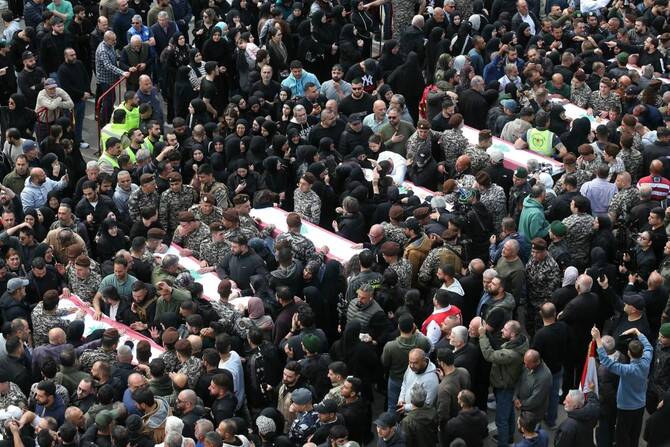
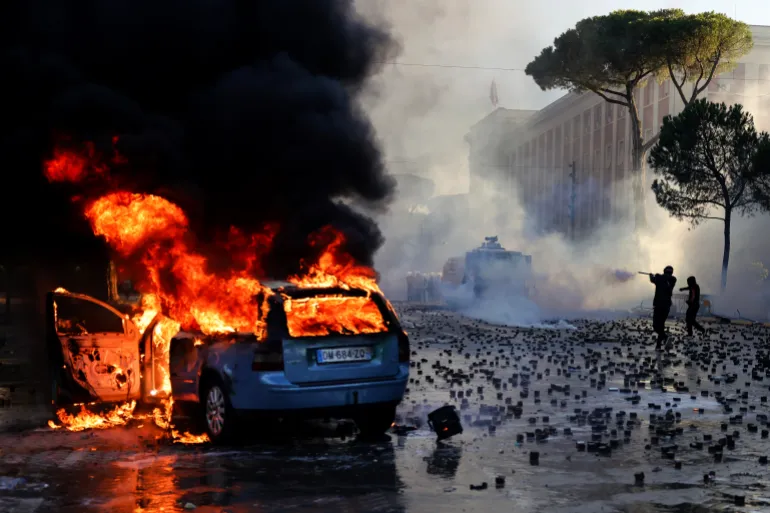
Albania protests have transformed the streets of Tirana into a battleground over the past week, with thousands of young people confronting riot police through clouds of tear gas as they attempt to breach barricades around government buildings. What began in May as a focused environmental campaign has grown into the gravest threat Prime Minister Edi Rama has faced in more than ten years in office.
The demonstrations surged last week when school and university students joined in force, bringing grievances over tuition costs and neglected campuses to a movement that already carried deep anger about corruption and the sale of public land. Yet for all its energy, the uprising has a defining peculiarity: nobody is in charge.
A Revolt Without Leaders
Government officials have insisted that opposition parties or foreign actors are pulling the strings. Journalists and analysts on the ground see something quite different.
Fatos Hakorja, editor-in-chief of TV Klan and Klan News, told Al Jazeera that the protests have grown organically into a loose coalition of high school pupils, university students, environmentalists and ordinary citizens with a list of complaints. He finds no credible evidence of a single organising structure behind them. Coordination happens in real time through WhatsApp, Telegram and Snapchat rather than through any formal hierarchy.
Political analyst Ben Andoni goes further, calling it a horizontal revolt rather than a conventional protest or even a movement. A movement, he argues, would have leaders and a set of short, medium and long-term objectives. This has none. People are mobilised through TikTok groups and social networks, not political organisations.
That absence of leadership is both the uprising’s strength and its weakness. It cannot be decapitated, but it also cannot negotiate. Rama’s government, Andoni notes, wants to talk and finds no one to talk to.
From Flamingos to Fury
The origins of the unrest lie in a dispute over Albania’s coastline. In May, environmentalists mobilised against luxury developments threatening protected areas, including Zvernec and a planned resort on Sazan Island backed by the firm of Jared Kushner, son-in-law of US President Donald Trump.
The flamingo, which nests in the region’s lagoons, became the emblem of resistance, and the campaign earned the nickname “Flamingo Revolution.” It tapped into a widespread belief that public assets were being handed to private and foreign interests.
Student anger soon fused with the environmental cause. Young Albanians complained of:
Rising tuition fees that families struggle to afford.
Dormitories in poor condition.
An education system that leaves graduates uncompetitive.
Beneath these specific grievances lies a broader despair. Andoni identifies corruption, nepotism and a lack of any sense of future as the real engines of the revolt. The protests, he says, gathered every problem the country has and delivered them to a government that has crossed too many lines on inequality and empathy.
Some protesters, particularly online, have accused Rama of serving private or foreign interests, including Israeli ones. Hakorja stresses these claims are unproven, but they have inflamed anger among parts of the population. Rama has dismissed them as conspiracy theories and disinformation spread by foreign hands to destabilise the state.
A Plague on Both Houses
Perhaps the most striking feature of the uprising is its contempt for the entire political establishment. Protesters reject not only Rama’s ruling Socialist Party but also the traditional opposition, including Sali Berisha’s Democratic Party.
While Rama has accused the opposition of hijacking the demonstrations, and opposition supporters are certainly present in the crowds, experts say opposition leaders have no control over events. Several MPs who tried to address protesters were met with open hostility.
Hakorja observes that many young people feel represented by no one. They view the political system as detached from their lives and designed to protect a privileged minority.
That cynicism has produced uncompromising demands: Rama’s immediate resignation and the installation of a technical government. Offers of dialogue have been refused outright, reflecting a total collapse of trust in state institutions.
The sources of that disillusionment are familiar across the region. Corruption is pervasive, unemployment is high, and the economy drives a relentless exodus of young talent abroad. Years of indifference toward public education have compounded the sense that the state does not care. Projects like the Kushner resort serve as proof, in protesters’ eyes, that national resources are routinely traded away.
Force as Policy
Confronted with a movement that will not negotiate, the government has leaned heavily on its security forces. Police have deployed tear gas, water cannons and rubber bullets, drawing accusations of brutality. At least 167 people have been arrested, among them minors.
Rama has responded by rewarding officers on the front line with a 2,500-euro bonus and promising significant pay rises in 2027. Hakorja sees this as evidence that the administration views the crisis primarily as a public order problem.
More troubling were reports of unidentified civilians armed with wooden sticks inside the Socialist Party headquarters while protesters attacked the building. Some of those present held public positions. Their appearance raised fears of informal security operating alongside, or outside, the official police.
What Happens Next
With no leadership to negotiate and no sign yet of intervention from the European Union or the United States, the standoff risks dragging on. Andoni believes the government has lost much of its moral authority and legitimacy, leaving force as its main tool.
He also detects fatigue among the protesters and anticipates a tactical retreat, a temporary withdrawal from the streets that would shift the burden onto Rama to demonstrate he can deliver real reform rather than simply restore order.
Whether this uprising heralds a new political era or fades under exhaustion and policing, it has laid bare a rift between Albania’s young people and those who govern them that will not easily be closed.
Author