






Pakistan’s Bureaucrats Eye Foreign Shores: Khawaja Asif Flags an Elite Exodus to Portugal and the West
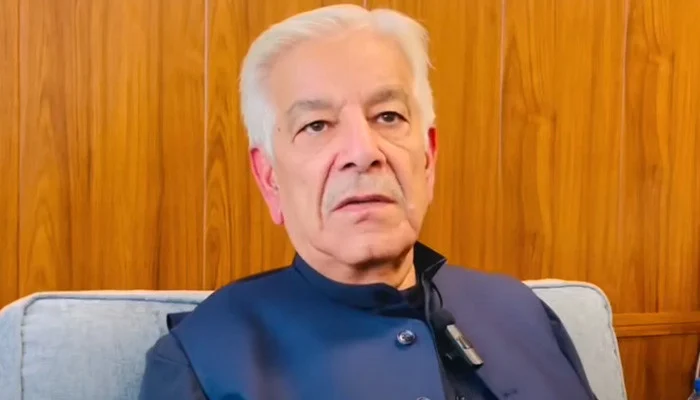
Pakistan bureaucrats exodus allegations from the country’s own defence minister have raised an uncomfortable question: do the people running Pakistan believe in its future? Khawaja Asif claims dozens of serving officers are quietly arranging to settle abroad, using their time in government to lay the groundwork for a comfortable life elsewhere.
He has offered no names and no documents. Yet his accusations have landed with force, because they tap into a long-running suspicion that Pakistan’s powerful treat foreign residency as an insurance policy against scrutiny at home.
What Asif Said
In a post on X on October 18, the defence minister accused sections of the bureaucracy of making Canada, the United States, the United Kingdom and various European countries their permanent homes. The preparations, he alleged, were made deliberately and while the officials were still drawing government salaries.
Portugal, he said, has become an especially favoured destination in recent years. Asif questioned whether people who had enjoyed senior positions and official patronage were ever committed to Pakistan or were simply passing through on their way somewhere better.
The remarks were not a first. In August 2025, Asif alleged that more than half of the bureaucracy had bought property in Portugal and was pursuing citizenship there, accusing some of funding their plans through corruption.
Portugal’s Appeal
The Portuguese connection is not accidental. The country has for years operated residency schemes attractive to wealthy foreigners, offering a path to European Union citizenship through investment. For a Pakistani official with capital to deploy, it represents a relatively accessible route to a European passport and the mobility that comes with it.
Pakistan permits dual citizenship, and owning property overseas is entirely legal. The problem arises only when assets are hidden, wealth cannot be explained, or public office has been misused to acquire it.
Parliament Takes Notice
Asif’s earlier claims prompted action. In August 2025, the Public Accounts Committee opened an inquiry into bureaucrats alleged to have purchased Portuguese property, directing the Establishment Division and the Interior Ministry to gather information and seeking briefings from the State Bank and the Federal Board of Revenue, according to The News International.
The probe brought the allegations under parliamentary scrutiny but did not verify them or establish how many officials were involved.
The Dual Nationality Count
A separate government exercise has added data, if not clarity, to the debate. The Pakistan Observer reported on October 5 that verification of roughly 500,000 federal employees had identified more than 2,500 officers holding dual nationality. Checks had been completed on about 350,000 staff, with details obtained on around 2,400 officers. Some 756 officers and family members allegedly failed to disclose their second nationality.
These figures deserve careful reading. A second passport is not the same as emigration, nor does a relative’s foreign citizenship prove misconduct by a public servant. What the exercise does highlight is the importance of honest declarations and proper enforcement of service rules. The numbers provide context for Asif’s claims rather than confirmation of them.
A Pattern Among the Powerful
The defence minister’s accusations resonate because of precedent. Former military ruler Pervez Musharraf lived out his final years in Dubai after leaving Pakistan amid legal and political battles. The family of former army chief Qamar Javed Bajwa drew scrutiny over reports of substantial wealth and overseas holdings.
These cases differ from allegations against serving civil servants and do not prove a broader flight. But they illustrate a recurring theme: Pakistan’s elite often regard foreign shores as a refuge from accountability and political turbulence.
The country’s standing on Transparency International’s Corruption Perceptions Index, 136th of 182 with a score of 28 out of 100, reinforces the perception that wealth acquired in office is rarely examined too closely.
When the Accused Are Abroad
The practical difficulty of pursuing officials who have left the country was illustrated in a case discussed by the Public Accounts Committee in August 2025. Auditors flagged alleged embezzlement by Muhammad Kaleem, a former assistant accounts officer attached to the Directorate General of Hajj in Jeddah, including 12 million rupees in remittances allegedly routed to his personal account.
Officials told the committee that Kaleem was living overseas and that recovery efforts were ongoing. The case was about one individual, but it exposed how tracing assets and enforcing judgments becomes far harder once a suspect crosses a border.
Reactions From Across the Border
Indian commentators seized on Asif’s remarks. Tilak Devasher, a former member of India’s National Security Advisory Board, asked on X whether bureaucrats with their ears to the ground were behaving like rats abandoning a sinking ship. Retired Lieutenant General Devendra Pratap Pandey pointed to the contradiction between officials enriching themselves while, in his view, steering the population toward radicalisation, then leaving to enjoy their gains elsewhere.
Such commentary should be read with its source in mind, but it reflects how the allegations are being interpreted beyond Pakistan.
Motives Beyond Corruption
Not every official who looks abroad is fleeing accountability. Better schooling for children, financial security, retirement planning and anxiety about political instability all push people toward emigration. The question is whether these ordinary motives are being pursued with legitimately earned money or with the proceeds of office.
The Unanswered Question
The true scale of any exodus remains unknown. Asif has made serious claims without evidence; parliament has asked questions without receiving full answers; the nationality audit has produced numbers without conclusions.
What the episode has achieved is to place the commitment of Pakistan’s governing class under a harsh light. Whether the state can investigate credible suspicions fairly, without descending into unproven accusation, will determine whether this becomes a moment of accountability or just another round of political noise.
Author