Kim Jong Un Resurfaces in State Media: Why Rumours of His Death Never Seem to Die
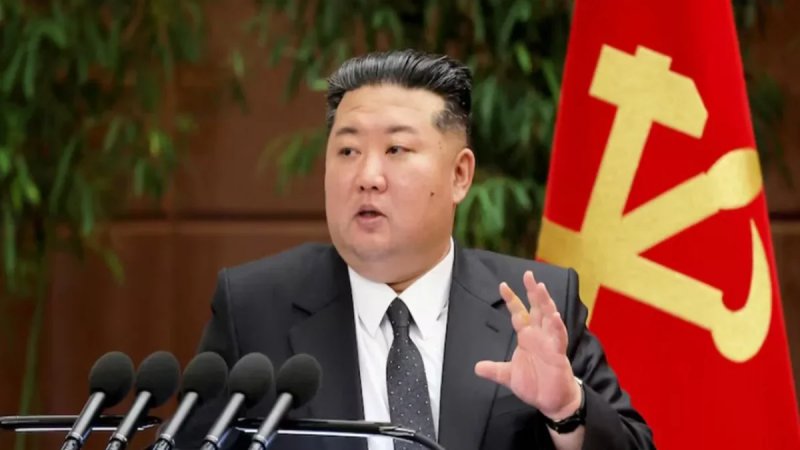
Kim Jong Un death rumours flared again this week, and once again they collapsed within hours. The North Korean leader appeared in photographs published by the state newspaper Rodong Sinmun, strolling through an exhibition of clothing and footwear alongside his daughter and looking entirely unlike a man who had supposedly succumbed to a brain haemorrhage in a Beijing hospital.
The episode followed a now-familiar script. A dramatic claim surfaces from an unverified source, spreads rapidly online, and is contradicted by Pyongyang’s propaganda machine shortly afterward. Yet the pattern keeps repeating, and the reasons why reveal a great deal about the world’s most opaque state.
Where the Latest Claim Came From
The rumour originated with Wanjun Xie, a Chinese dissident based in the United States who describes himself as chairman of the Chinese Democratic Party, an organisation outlawed by Beijing. He asserted, without offering evidence, that Kim had suffered a catastrophic brain bleed, been flown to the Chinese capital for treatment North Korea could not provide, slipped into a coma and died. His body, Xie claimed, had been quietly returned home while the regime hid the truth.
Xie has form. He previously circulated unsubstantiated speculation about the death of Chinese President Xi Jinping. His track record alone was reason for caution.
Why the Claim Did Not Hold Up
The photographs are the most obvious rebuttal. Kim, 42, is shown inspecting displays with his daughter Kim Ju Ae and the usual cluster of officials in tow. The exact date of the images cannot be independently confirmed, but other signals matter more.
A sudden collapse in Kim’s health would almost certainly leave fingerprints beyond North Korea’s borders:
China would likely reinforce security along its frontier to prepare for instability or refugee movements.
Activity around North Korean embassies and missions abroad would probably intensify.
Defectors in South Korea, who maintain informal information networks across the Chinese border, would hear whispers.
None of these indicators appeared. South Korean intelligence officials told the Yonhap news agency they had seen nothing to support the reports.
History offers further grounds for scepticism. In 2020, a prominent North Korean defector declared himself 99 percent certain that Kim had died after heart surgery. Kim reappeared in public shortly afterward, and the claim evaporated.
The First Reason the Rumours Persist: Succession
North Korea has been a family dynasty for three generations, but the line of inheritance after Kim Jong Un is far less settled than it was for his father or grandfather.
Kim Il Sung spent decades grooming Kim Jong Il, so the 1994 handover was orderly. Kim Jong Un’s own ascent was hurried and fragile. After his father’s stroke in 2008, he was pushed rapidly up the hierarchy and had been publicly anointed by the time Kim Jong Il died in 2011. Even then, he spent years purging rivals and eliminating threats to cement his control.
South Korea’s intelligence agency now believes Kim may be preparing his daughter to succeed him. Kim Ju Ae has become a fixture at major events and military parades. But she is thought to be only 13, no woman has ever ruled North Korea, and she holds no formal designation as heir. Her age would make her acutely vulnerable in any contest for power.
That uncertainty is precisely why every tremor in Kim’s health draws such intense scrutiny.
The Second Reason: The Rumours Are Not Absurd
Kim is overweight and smokes heavily. South Korea’s National Intelligence Service has repeatedly flagged his lifestyle as a cardiovascular risk, and heart disease and strokes run in his family. A health crisis is not far-fetched.
The consequences of one would be enormous. A sudden leadership vacuum raises immediate questions about who controls North Korea’s nuclear arsenal and whether hardliners might behave unpredictably during a power struggle. Unrest could send refugees streaming toward China. Seoul, Beijing and Washington, which keeps roughly 28,000 troops in South Korea, all have a direct stake in the answer. Intelligence agencies monitor Kim constantly so they are not caught flat-footed.
The Third Reason: An Information Black Hole
North Korea’s secrecy makes it uniquely susceptible to false reports. Only a tiny inner circle has regular contact with Kim. Even professional intelligence services struggle for reliable information, and most of what they produce comes wrapped in qualifiers like “unverified” or “highly likely.”
The regime is also suspected of deliberately muddying the waters, leaking misleading information to disguise what is really happening inside the country.
Against that backdrop, the idea that a dissident activist in the United States had uncovered the most significant news in Northeast Asia, ahead of every intelligence agency devoted to the task, strains credulity.
What Xie Was Really Doing
His motives can only be guessed. He may have sought attention. He may have hoped to embarrass Beijing by spotlighting its relationship with Pyongyang, though that relationship is hardly secret. Whatever drove him, he joins a long line of people who have exploited the fog around North Korea’s leadership for their own purposes.
The Takeaway
Kim Jong Un is alive, as far as anyone can tell, and the rumour mill will quiet down until the next time. But the conditions that make such claims plausible, an unhealthy leader, an unresolved succession and a state built on secrecy, are not going anywhere. Neither, it seems, are the rumours.
Author