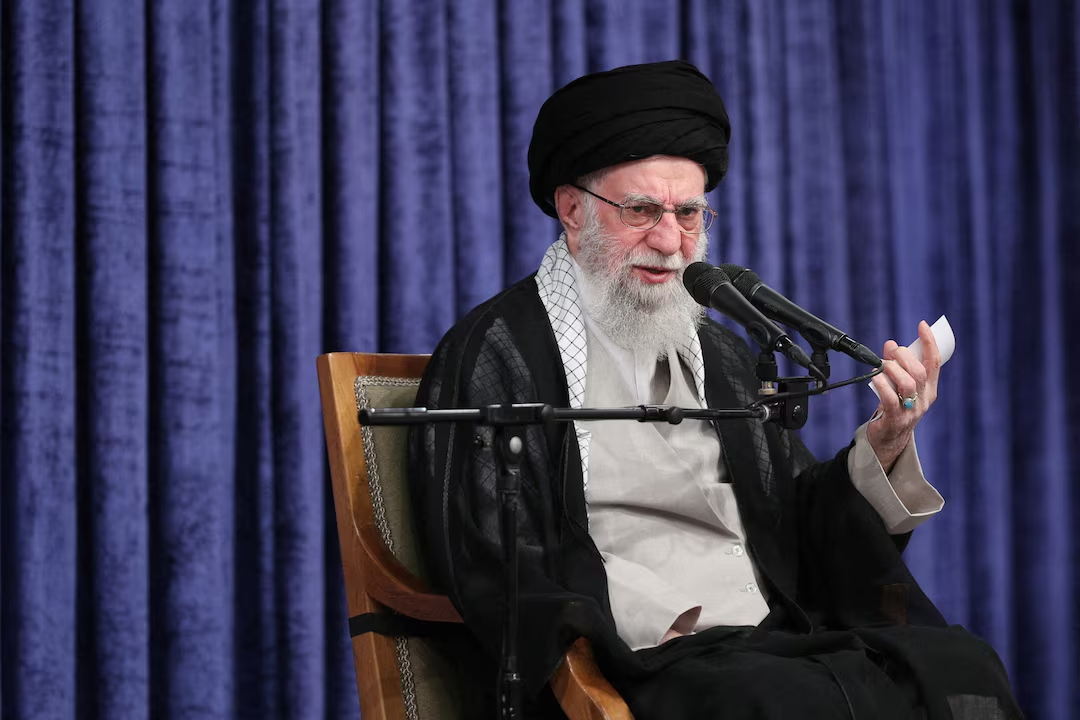
Iran dialogue with US efforts received formal backing from the very top of the Islamic Republic on Monday, when President Masoud Pezeshkian announced that Supreme Leader Mojtaba Khamenei has granted the government specific authority to negotiate with Washington on ending the war. The disclosure came shortly after Iran’s foreign ministry confirmed that messages are actively being exchanged with the United States through intermediaries.
What Pezeshkian Said
Speaking in remarks carried by the state news agency IRNA, Pezeshkian stated that Iran is working to settle the conflict through talks and that the supreme leader had conferred certain powers on the government to pursue that path. He did not spell out the scope of those powers or what concessions the government might now be authorised to offer.
The statement is significant because, under Iran’s political system, major decisions on foreign policy and national security ultimately rest with the supreme leader. Without his explicit approval, the elected government has limited room to commit the country to any agreement. Khamenei’s decision to delegate authority signals that the leadership has concluded that a negotiated end to the war is worth pursuing in earnest.
A Coordinated Message From Tehran
The president’s comments did not come in isolation. Minutes earlier, the foreign ministry had confirmed that communications with Washington were underway via mediators. Taken together, the two announcements suggest a deliberate effort to project unity and seriousness about diplomacy at a moment when the conflict could easily escalate again.
Earlier reports had already indicated that Khamenei was prepared to accelerate talks. Monday’s statement from Pezeshkian makes that intent official and places the government, rather than military or security institutions alone, at the forefront of the diplomatic effort.
The Mediation Channel
The exchanges referenced by the foreign ministry are flowing through regional intermediaries. Qatar has led the mediation effort, holding multiple rounds of talks with Iranian officials in recent days, with Pakistan also facilitating indirect contacts. A channel has also opened between US Vice President JD Vance and Mohsen Rezaei, secretary of Iran’s Supreme National Security Council.
Qatari mediators travelled to Tehran on Monday night to discuss a draft proposal that has been under negotiation for more than a week, according to officials familiar with the process. The fact that a written draft exists and is being circulated marks a step beyond the general expressions of willingness that characterised earlier phases.
What Iran Is Seeking
Tehran’s position has been consistent throughout. Its seven-step plan, first submitted in September and recently condensed so it could be implemented within two days, calls for the United States to lift its naval blockade of Iranian ports, grant a waiver on Iranian oil sales, cancel new sanctions and guarantee an end to strikes. In return, Iran would reopen the Strait of Hormuz and agree to resume talks on other issues, including its nuclear programme.
Iranian officials have been clear that discussions on nuclear matters can only begin once they have verified that their conditions have been met. Foreign ministry spokesperson Esmaeil Baghaei has also ruled out any transfer of Iran’s highly enriched uranium to a third country.
The View From Washington
The American side has offered its own signals of optimism. President Donald Trump said on Monday that Iran wants a deal and that one could happen, and he linked a drop in oil prices to expectations of an agreement. Vance said the administration had held a number of good conversations with Iranian counterparts and felt positive about the prospects for a settlement, while stressing that any deal would require a firm and verifiable commitment from Iran not to rebuild its nuclear capabilities.
At the same time, Trump has repeatedly suggested that the United States could resume military action after Tuesday’s midterm elections if no agreement is reached. Vance confirmed that no deadline had been set but noted that the president retained both military and non-military options.
Why the Timing Matters
The war, launched by the United States and Israel on February 28, has dragged on for eight months. It has closed the Strait of Hormuz, triggered an American blockade of Iranian ports, prompted Iranian drone and missile attacks on Gulf states and reignited conflict in Yemen. The economic consequences have been felt worldwide through volatile energy prices and disrupted shipping.
With the US midterms now concluded, the political constraints that had held Washington back from new strikes are lifting. That makes the current window especially consequential. Khamenei’s decision to empower the government for talks may be an attempt to lock in a diplomatic process before the risk of renewed fighting peaks.
Scepticism Remains
Despite the public optimism on both sides, Iranian sources have privately indicated that they still consider a fresh American attack more likely than a deal. Trust is in short supply. Tehran has pointed to being attacked twice during negotiations over the past year as reason for caution, and it has warned that any resumed strikes would be met with a forceful response targeting locations both inside and outside the Middle East.
Regional and global powers are watching anxiously. China and Russia have both urged restraint and called for political solutions, with Chinese Foreign Minister Wang Yi meeting Iranian and Saudi officials in Beijing and Russian President Vladimir Putin speaking by phone with Rezaei.
What Comes Next
The immediate question is whether the draft under discussion can be finalised quickly enough to forestall escalation. Khamenei’s grant of authority removes one procedural obstacle on the Iranian side: the government now has the mandate to engage substantively. Whether Washington is prepared to accept Iran’s sequencing, with sanctions relief and an end to the blockade preceding nuclear talks, remains the central uncertainty.
For now, Pezeshkian’s message is that Iran is choosing dialogue and has the institutional backing to follow through. Whether that choice is reciprocated will become clear in the days ahead.
Author