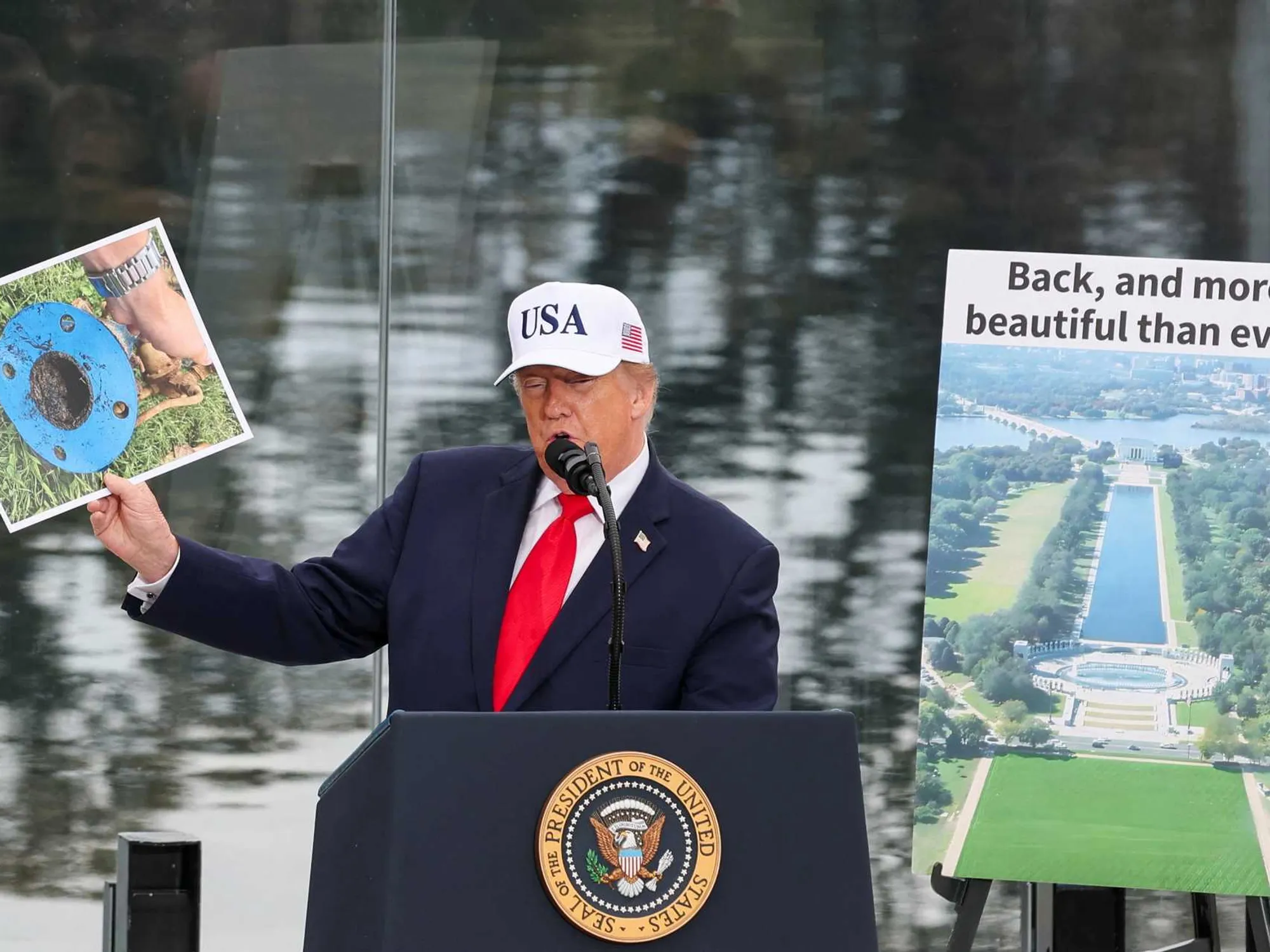
Trump midterm speech expectations pointed to a fiery closing argument on the economy, immigration or the war with Iran. Instead, President Donald Trump devoted much of his final address before Tuesday’s elections to the renovation of Washington’s Reflecting Pool, framing the restoration of the iconic landmark as a cause that should bring all Americans together. The unusual choice came as his Republican Party confronted polling that suggested it could lose control of Congress.
A Landmark Takes Centre Stage
Standing near the long stretch of water between the Lincoln Memorial and the Washington Monument, Trump turned the reopening of the Reflecting Pool into the heart of his message. The pool, which has suffered from maintenance problems over the years, has been the subject of a renovation effort championed by the president as part of a broader push to restore landmarks across the capital.
Trump argued that the project transcends party lines and should serve as a unifying endeavour for the nation. The sentiment was striking given the deeply polarised atmosphere surrounding the elections and the president’s own reputation for combative rhetoric.
Election Mentioned Late
It took 26 minutes for Trump to turn directly to the vote. When he did, he described the midterms as the most consequential of his lifetime and reminded the audience that election day was only hours away. Even then, the bulk of the speech remained focused on his efforts to refurbish Washington’s monuments rather than on the policy battles that have dominated the campaign.
The structure of the address raised eyebrows among observers who had anticipated a more conventional appeal to voters on the issues shaping the race.
The Political Backdrop
The speech unfolded against a difficult landscape for Republicans. Polling in the final days suggested Democrats were well positioned to capture the House of Representatives and had a realistic path to the Senate as well. A final New York Times and Siena survey found Democratic Senate candidates leading in five of six Republican-held battleground states, including surprising advantages in Texas and Kansas.
If Democrats secure either chamber, the consequences for the administration would be substantial. A Democratic House or Senate could obstruct Trump’s legislative priorities, launch investigations into his administration and slow or block his nominees for the federal judiciary.
The Economy and the War
Trump’s decision to foreground the Reflecting Pool rather than the economy may reflect the political headwinds he faces on that front. Voter dissatisfaction with the administration’s economic stewardship has been identified as a key driver of Democratic momentum, with rising costs and uncertainty linked to the eight-month war with Iran weighing on public opinion.
In remarks at the same location earlier on Monday, Trump did touch on the conflict. He noted a sharp drop in oil prices and attributed it to expectations that a deal with Iran was coming together. He also sought to minimise the scale of the war, suggesting it hardly merited the label given that active fighting had paused for months, despite the conflict having cost American taxpayers at least 47 billion dollars.
Unity as a Theme
The emphasis on unity is a notable rhetorical turn for a president whose political brand has often been built on confrontation. By presenting the Reflecting Pool as something every American can support, Trump appeared to be reaching for a message that could resonate beyond his base at a moment when his party needs every vote it can find.
Whether a landmark restoration can move voters on the eve of an election is an open question. Critics may see the focus as a distraction from issues that matter more directly to households, while supporters may view it as evidence of the president’s commitment to national pride and the capital’s heritage.
What Is at Stake on Tuesday
All 435 seats in the House and 35 of the 100 Senate seats are being contested, along with governorships in 36 states. Democrats need a net gain of four Senate seats and three House seats to take control of each chamber. Republicans currently hold both.
Closely watched Senate races in Michigan, Texas, Kansas, Georgia, Maine, New Hampshire, North Carolina, Florida and Iowa will help determine the outcome. Several of these contests are expected to be tight, and final results in the closest races may not be known for days.
A Closing Argument Unlike Most
Presidents typically use their final pre-election appearance to rally supporters with a sharp summary of achievements and a warning about the opposition. Trump’s speech departed from that template in both content and tone. By centring a public works project and a call for unity, he offered a closing argument that was less about drawing contrasts and more about projecting a vision of restoration and shared purpose.
How voters interpret that choice will become clear once the ballots are counted. If Republicans hold Congress, the Reflecting Pool speech may be remembered as an unconventional but effective note of calm before a hard-fought victory. If they lose, it may be seen as a sign that the administration had run out of persuasive arguments on the issues voters cared about most.
Looking Ahead
Regardless of the result, the renovation of the Reflecting Pool will continue, and the landmarks of Washington will remain a visible part of Trump’s legacy in the capital. The more pressing question for the president is whether the Congress that convenes in January will be one that works with him or one that stands in his way.
Tuesday’s vote will provide the answer, and with it a verdict on whether a message of unity delivered beside a restored pool was enough to stem the tide.
Author