







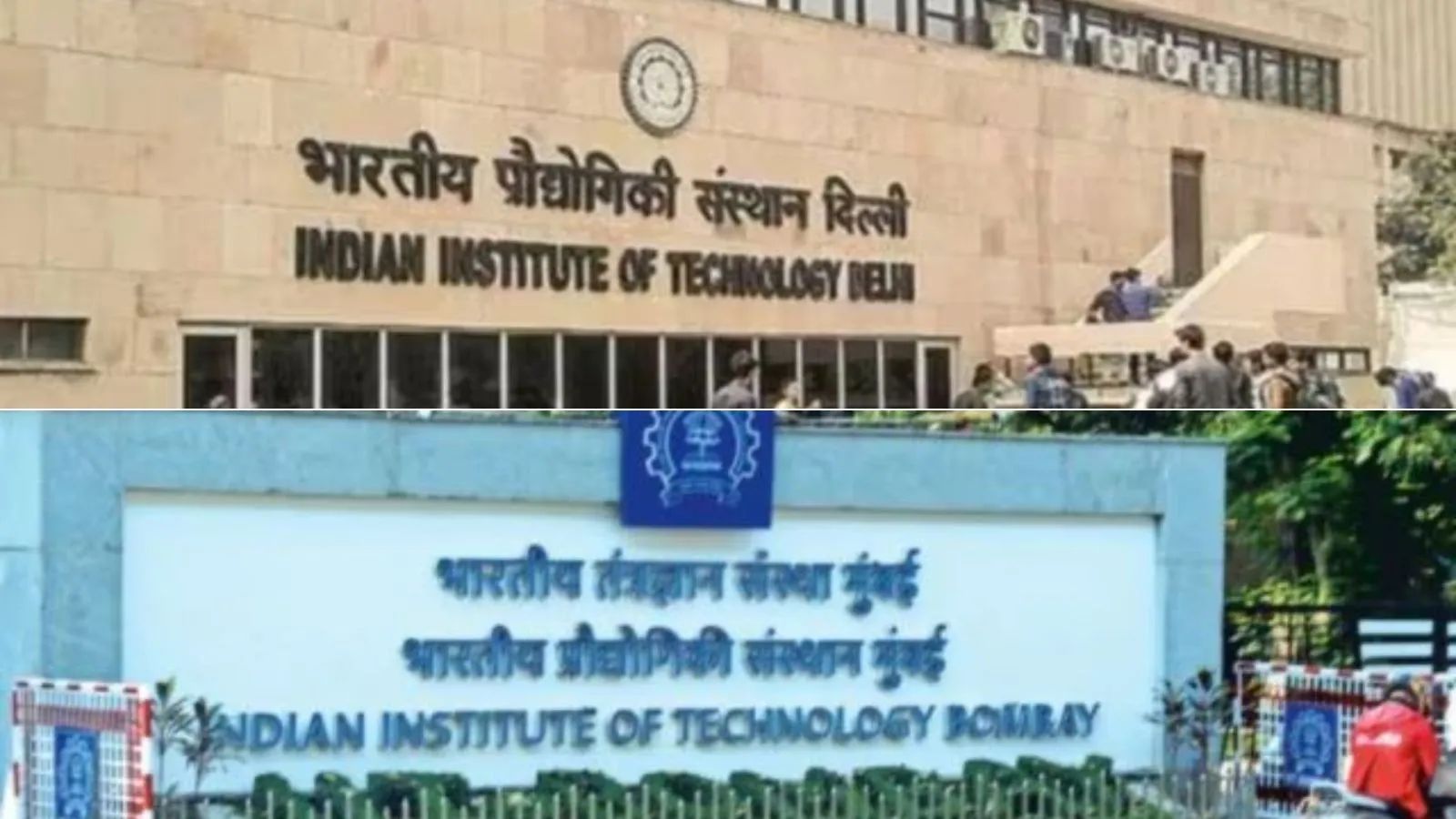
QS Asia University Rankings India results for 2026 tell a story of breadth without upward momentum. The Indian Institute of Science in Bengaluru and five Indian Institutes of Technology retained spots among the continent’s top 100 universities, but every one of them finished lower than a year ago. At the same time, India expanded its overall footprint, with 325 institutions ranked, including 34 appearing for the first time, cementing its status as the second most represented higher education system in Asia behind Mainland China.
The Headline Numbers
IIT Delhi once again led the Indian contingent, placing 66th in Asia. That nonetheless represented a seven-place fall from its 59th position last year.
IISc Bengaluru came next among Indian institutions at 79th, down from 64th. IIT Bombay slipped from 71st to 83rd, and IIT Madras dropped from 70th to 85th. IIT Kharagpur moved from 77th to 90th, while IIT Kanpur recorded the steepest decline, falling 20 places from 77th to 97th.
The pattern is consistent: six institutions, six declines, with the drops ranging from seven to 20 positions.
Breadth Versus Peak Performance
The contrast between India’s growing representation and its flagship institutions’ slide captures a tension at the heart of the country’s higher education landscape. On one hand, the inclusion of 325 universities, with dozens of new entrants, reflects a system that is expanding and increasingly visible to international assessors. On the other, the institutions that carry India’s reputation at the top end are losing ground relative to their regional competitors.
Mainland China’s continued dominance in the number of ranked universities, and the strength of institutions across East and Southeast Asia, means Indian universities face stiff competition for positions near the top of the table.
How QS Assesses Universities
Quacquarelli Symonds, the London-based organisation behind the rankings, evaluates institutions across a range of indicators. These typically include academic reputation as judged by surveys of scholars, employer reputation based on feedback from recruiters, faculty-to-student ratios, research output and citation impact, the proportion of international faculty and students, and measures of inbound and outbound exchange activity.
Indian institutions have traditionally performed strongly on academic and employer reputation, reflecting the prestige of the IIT and IISc brands and the success of their graduates. They have tended to fare less well on internationalisation metrics, with relatively small numbers of foreign faculty and students compared with universities in Singapore, Hong Kong or South Korea.
Research intensity is another area of mixed performance. While Indian institutions produce substantial volumes of research, citation rates per paper often trail those of leading Asian peers, affecting scores on research impact.
Why the Declines Matter
A single year’s movement does not define an institution, and rankings methodologies can produce fluctuations unrelated to actual changes in quality. Still, a uniform downward shift across all six of India’s top-ranked universities is difficult to dismiss as noise.
Possible explanations include stronger performance by competitors, changes in the relative weighting of indicators, or stagnation in areas where Indian institutions have long been weak. Faculty shortages, infrastructure constraints and limited international recruitment have been persistent challenges for the IITs and IISc, even as their reputations remain high.
The Significance of 34 New Entrants
The arrival of 34 Indian universities in the rankings for the first time is a notable development. It suggests that institutions beyond the traditional elite are achieving the visibility and data reporting needed to be assessed, and that the broader system is maturing.
For students and families, a wider set of ranked institutions offers more options and more information. For policymakers, it signals that efforts to raise standards across the sector are beginning to register internationally, even if the top tier is not yet pulling ahead.
The Regional Picture
Asia’s higher education landscape has become intensely competitive over the past two decades. Universities in China, Singapore, Hong Kong, South Korea, Japan and increasingly Malaysia have invested heavily in research, international partnerships and faculty recruitment. Many have climbed steadily in global rankings as a result.
India’s challenge is to match that investment and ambition. The country’s demographic advantage, with one of the world’s largest populations of young people, creates enormous demand for quality education. Translating that demand into world-class institutions requires sustained funding, governance reform and a focus on research excellence.
What the IITs and IISc Can Do
Several levers are available to India’s leading institutions. Expanding international collaboration, attracting foreign faculty and students, increasing research funding and improving the citation impact of published work would all address areas where QS scores tend to lag. Reforms to faculty hiring and retention could help address the student-to-faculty ratios that weigh on scores.
Government initiatives aimed at creating institutions of eminence and boosting research spending are designed to support such improvements, but their effects on international rankings take time to materialise.
Looking Ahead
The 2026 QS Asia rankings offer India both encouragement and caution. The system is broad and growing, and its leading institutions remain firmly within the top 100 in a highly competitive region. But the direction of travel at the top is downward, and reversing that trend will require more than reputation.
For IIT Delhi, IISc and their peers, the task now is to turn their considerable strengths into measurable gains on the indicators that drive rankings, so that next year’s results tell a different story.
Author