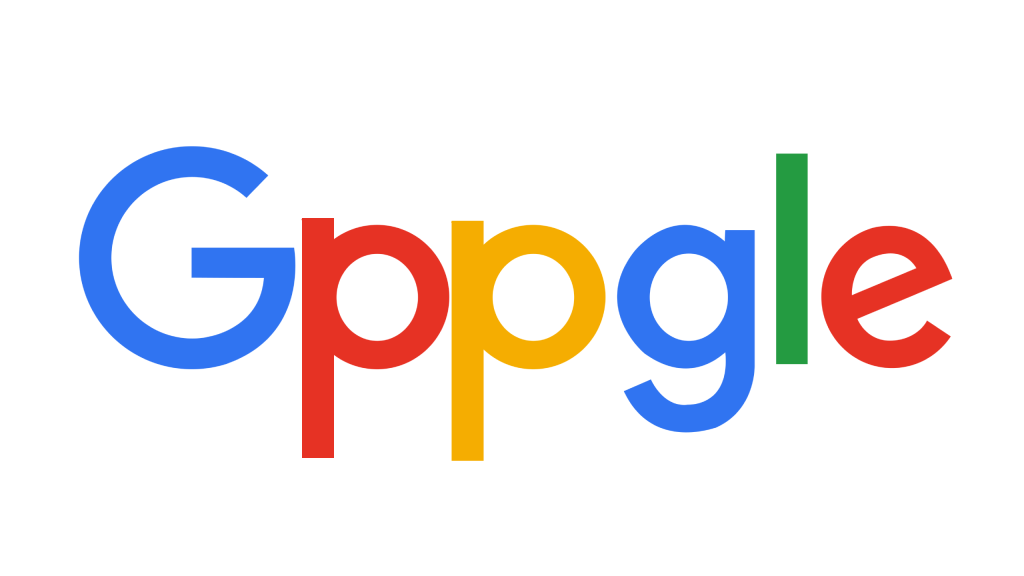
Why Google’s AI Can’t Spell: The Strange Flaw Behind the Tech Giant’s Tools
Here’s a question that sounds absurd but reveals a genuine problem: how many P’s are in the word “Google”? According to Google’s own AI, the answer is two. Understanding why Google’s AI can’t spell turns out to be a fascinating window into how artificial intelligence actually works, and why even the most powerful systems stumble over tasks a child could handle.
The errors don’t stop at the company’s own name. Google’s AI Overview has confidently claimed there is “exactly 1 ‘r’ in the word ‘poop,'” insisted there are two D’s in “journalism” while spelling it j-o-u-r-n-a-d-i-s-m, and even botched the spelling of the U.S. president’s name as t-r-p-u-m, despite correctly counting the single P.
A Predictable Stumble
Nobody needed a crystal ball to see this coming. When Google rolled out its AI-forward overhaul of Search, skepticism was already running high, and for good reason. We’ve watched this play out before.
The first time Google added AI Overviews to Search, the results were memorably bad. The feature ended up citing satirical posts from The Onion and Reddit, leading it to advise users to eat rocks and put glue on their pizza. So as Google doubles down on making generative AI the centerpiece of its 29-year-old flagship product, fresh stumbles feel almost inevitable.
When asked about the spelling errors, Google acknowledged the issue directly. The company explained that counting letters within words has been a known challenge for large language models and that it is actively working to fix the problem.
An Old Joke Among AI Watchers
If these spelling blunders feel familiar, that’s because they are. Large language models (LLMs), the type of AI that powers chatbots and text generators, simply aren’t built to understand spelling in the way humans do.
In fact, it has become something of a running joke in tech circles. Whenever a company unveils a shiny new AI model, the unofficial test is to ask it how many R’s are in the word “strawberry.” These models can write functional code in seconds and crack problems that have baffled mathematicians for decades, yet when it comes to spelling, they perform about as well as a kindergartener.
Beyond Just Spelling
Google’s troubles with its AI Overview extend past amusing typos. Last week, the company had to patch a particularly strange bug involving the word “disregard.”
When users searched for it, the feature displayed what looked like a dictionary definition, except the supposed definition read: “Understood. Let me know whenever you have a new prompt or question!” Google quickly fixed that glitch, but the spelling errors have proven far more stubborn and difficult to eliminate.
How AI Actually “Reads”
To understand why these mistakes happen, you have to understand that AI doesn’t perceive language the way people do. It doesn’t see sentences as collections of words made up of individual letters.
Most LLMs are built on what’s called a transformer architecture. These models break text down into units called tokens, which can be full words, syllables, or individual letters, depending on the system. Rather than reading text like a human, the AI converts everything into numerical representations, which it then analyzes in context to produce a response.
Matthew Guzdial, an AI researcher and assistant professor at the University of Alberta, explained the core issue clearly. He noted that the transformer architecture isn’t actually reading text at all. When you type a prompt, it gets translated into an encoding. As he put it, when the model encounters the word “the,” it has a single encoding for what “the” means, but it has no awareness of the individual letters T, H, and E that make up the word.
A Problem That May Never Fully Disappear
This token-based foundation is inherently limiting, and researchers aren’t especially optimistic that the spelling problem can be neatly solved.
Sheridan Feucht, a PhD student studying large language model interpretability at Northeastern University, described the underlying difficulty. He pointed out that it’s genuinely hard to pin down what a “word” should even be for a language model. Even if human experts could agree on a perfect vocabulary of tokens, the models would likely still find it useful to break things down even further.
His conclusion was sobering: because of this inherent fuzziness, there may be no such thing as a perfect tokenizer. In other words, the very design that makes these models so capable in other areas may permanently limit their ability to spell reliably.
Why It Doesn’t Worry Researchers Much
Despite the headlines, this spelling problem isn’t keeping AI researchers up at night. The reason is simple: the value of LLMs has never been about their ability to spell.
These systems shine at tasks like reasoning, summarizing, coding, and pattern recognition. Spelling individual letters within words is a quirk of their architecture rather than a measure of their usefulness. So while the errors are entertaining and occasionally embarrassing, they don’t undermine the core functions that make these tools valuable.
The Bigger Lesson
Still, these blatant failures serve an important purpose. They remind us that AI, for all its impressive capabilities, is far from perfect.
It’s easy to start treating these systems as all-knowing entities operating on a level beyond human comprehension. But the spelling errors puncture that illusion. They reveal that beneath the polished responses lies a system that processes language in a fundamentally non-human way, complete with blind spots.
The takeaway is practical and worth remembering. We cannot blindly trust AI outputs without verifying their accuracy. Whether you’re using AI for research, writing, or everyday questions, a healthy dose of double-checking remains essential.
Final Thoughts
The question of why Google’s AI can’t spell ultimately points to something deeper than a few funny mistakes. It highlights the gap between how machines and humans understand language, and it serves as a useful reality check in an era of rapid AI adoption.
These tools are remarkable, but they are tools, not oracles. Recognizing their limitations, including the seemingly trivial inability to count the letters in “Google,” helps us use them more wisely and keeps our expectations grounded in reality.
Author