Meta Warns of New Mexico Shutdown as Child Safety Battle Intensifies
Meta is now openly considering whether to shut down its services in New Mexico, a dramatic step the company says could become necessary if state prosecutors succeed in forcing sweeping changes to its platforms. The warning comes as a high-stakes legal fight over child safety on Instagram, Facebook, and WhatsApp moves toward a critical trial. The clash highlights an escalating tension between major tech companies and state regulators determined to crack down on online harms affecting young users.
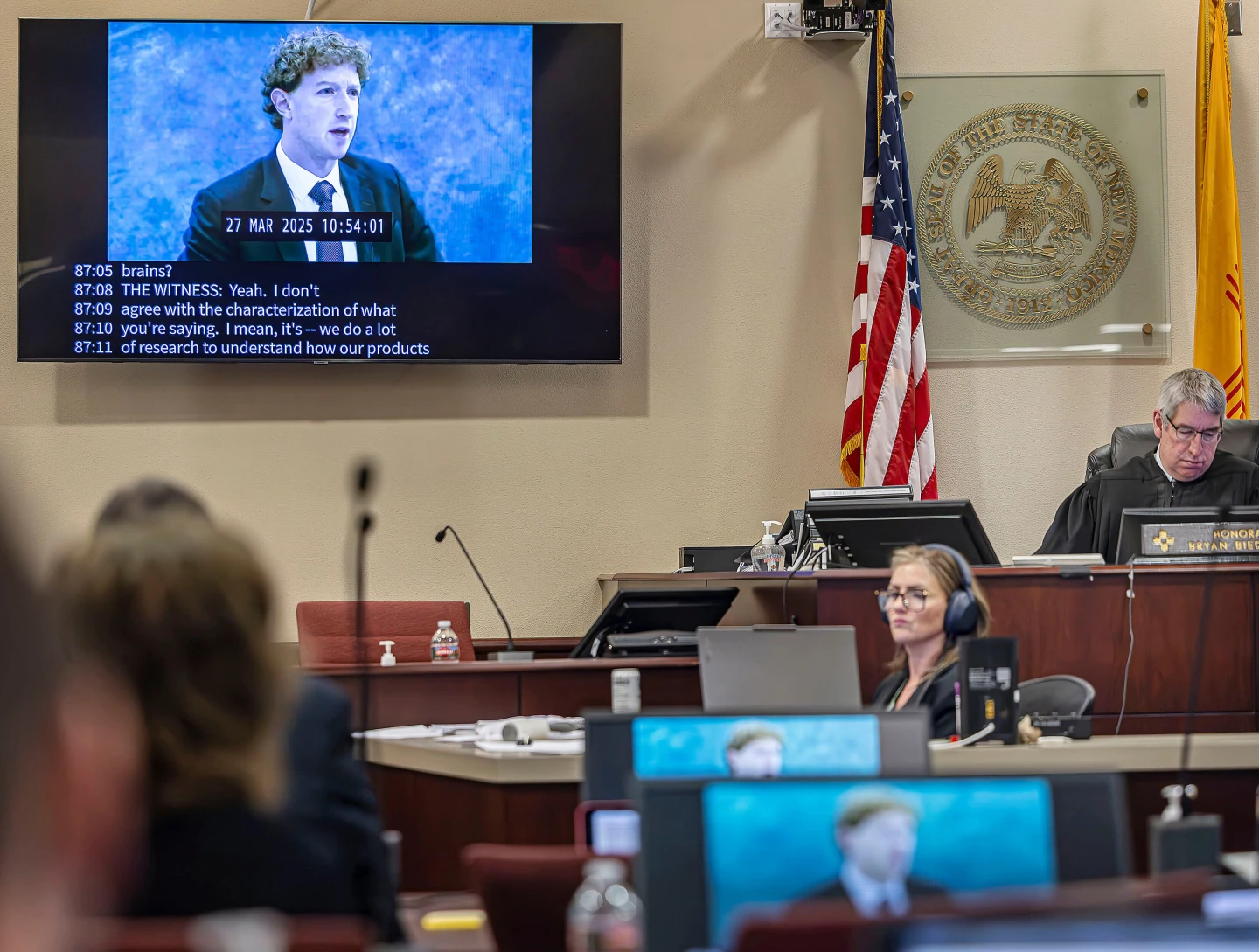
The possibility of a Meta New Mexico shutdown emerged in court filings unsealed Thursday, just days before a bench trial set to address public nuisance claims against the company. The trial represents the second phase of a case that has already led to substantial financial penalties and continues to grow into one of the most consequential legal battles facing Meta today.
A Long Legal Path Leading to This Moment
The current trial follows an earlier phase of the case in which Meta was ordered to pay $375 million in civil penalties. A jury found that the company had knowingly contributed to harm against children’s mental health and concealed information about child sexual exploitation on its platforms. That ruling set the stage for the next legal step, which focuses on whether Meta should be required to make significant structural changes to its services.
New Mexico prosecutors are seeking a series of court-ordered reforms aimed at protecting underage users. Their proposals include reducing addictive features, strengthening age verification systems, improving default privacy settings for younger users, and adding stronger oversight to prevent child sexual exploitation. They also want every child account on Meta platforms to be linked to a parent or guardian, along with the appointment of a court-supervised child safety monitor.
Meta Calls the Demands Impossible
In its court filing, Meta argued that several of the proposed changes are simply not feasible. The company specifically pushed back on a proposed rule that would require it to verify with 99 percent accuracy that all child users are at least 13 years old. Meta said meeting such a standard is unrealistic and would essentially force the company to choose between halting all services in New Mexico or attempting to satisfy what it described as impossible obligations.
The implications are significant. If Meta were to follow through on a withdrawal, it would shut off access to Facebook, Instagram, and WhatsApp for roughly 2.1 million New Mexico residents. That move would disrupt personal communication, small business marketing, and commercial advertising across the state.
Meta Says It Is Being Unfairly Targeted
Meta executives have repeatedly stressed that the company invests heavily in child safety and continuously updates its tools to address compulsive social media usage. The company also argues that it is being singled out, even though teenagers use hundreds of different apps with similar challenges.
Despite this, Meta has remained at the center of the conversation about social media’s impact on young people. With more than 40 state attorneys general having already filed lawsuits against the company over its alleged role in fueling a mental health crisis among teens, the New Mexico case stands out as the first to actually reach trial. Most other cases are still being argued in federal court.
Tech Law Experts Weigh In
Eric Goldman, codirector of the High Tech Law Institute at Santa Clara University School of Law, said withdrawing from New Mexico could be seen as an aggressive or even hostile move by Meta. While such an action would technically resolve any concerns about harm to children, it could also damage Meta’s public image and lead to unintended consequences.
Goldman pointed to a similar moment in 2023 when Canadian authorities accused Facebook of prioritizing profits over public safety. At the time, Facebook had blocked local news content in response to a new Canadian law requiring tech companies to pay publishers for linking to or repurposing their work. The block came during a period of record-setting wildfires and mass evacuations, raising serious concerns about access to important information.
Goldman also noted that Meta does not always operate in every region, especially when the cost of maintaining separate services outweighs the financial benefits. He suggested New Mexico could find itself in a similar situation.
Mounting Pressure on Social Media Platforms
The New Mexico case is part of a much wider legal trend. Just last month, a Los Angeles jury found both Meta and YouTube liable for harms caused to children using their services. The verdict added to longstanding concerns from advocates, researchers, and parents about how social media affects young users.
Beyond the United States, several other countries have introduced or proposed restrictions on children’s online activities. These regulations range from full social media bans for younger users to laws requiring teens to link their accounts to a parent’s. The growing wave of regulation reflects a global push to better protect minors from harmful online content.
Strong Words From New Mexico’s Top Lawyer
New Mexico Attorney General Raúl Torrez has rejected Meta’s arguments that the proposed reforms are impractical. He pushed back firmly during an online news conference, expressing skepticism that Meta would actually pull its services nationwide if forced to make safety improvements.
Torrez also referenced what he called the “before times” of social media, when platforms did not have features like infinite scrolling or autoplay. His point was clear: technology can change, and platforms can be redesigned. He stated that he would not ignore harm to vulnerable children just because companies have profitable advertising agreements in place. Torrez, a Democrat running for reelection in November, has positioned the case as a key issue for his political future as well.
A Pivotal Moment for Online Child Safety
The trial set to begin in New Mexico is more than just a legal proceeding. It represents a defining moment in the broader fight over how social media platforms should be regulated when it comes to protecting children. The outcome could influence how other states handle similar cases and may even shape future federal policy.
Meta now faces a difficult choice. The company can either accept new safety standards proposed by prosecutors or push back hard, possibly with the threat of pulling its services from the state entirely. Either path comes with major consequences for users, regulators, and the company itself.
The Stakes Are High for Both Sides
The Meta New Mexico shutdown threat reflects just how high the stakes have become. New Mexico is determined to demand stronger child safety protections, while Meta insists that some of those demands are unworkable. As the trial approaches, the rest of the country will be watching closely to see whether the case sets a new precedent for how big tech companies handle their responsibilities to young users.
Whichever way the case unfolds, one thing is clear. The conversation about social media’s impact on children is no longer just a matter of public concern. It is now a courtroom battle with the power to reshape how platforms operate across the country.
Author