Trump Pressure on Powell Backfires as Fed Chair Refuses to Step Aside
Trump pressure on Powell was supposed to clear the way for a more compliant Federal Reserve. Instead, it has produced one of the clearest examples yet of how authoritarian-style intimidation can blow up in a president’s face. Federal Reserve Chair Jerome Powell has decided to stay on the central bank’s board as a governor even after his term as chair ends on May 15, an unusual move that directly defies decades of tradition.
A Break From a 75-Year Tradition
Powell’s term as chair may be ending, but his role as one of the seven Fed governors runs all the way through 2028. Historically, outgoing Fed chairs leave the board entirely once their leadership term ends. According to The Wall Street Journal, every Fed chair for the past 75 years has stepped away from the central bank at that point.
Powell himself admitted he had originally planned to follow that path. But the political environment, particularly the Justice Department’s controversial criminal probe into him, changed his calculations.
“I’m literally staying because of the actions that have been taken,” Powell told reporters during a Wednesday news conference. “I have long planned to be retiring.”
Why Powell Decided to Stay
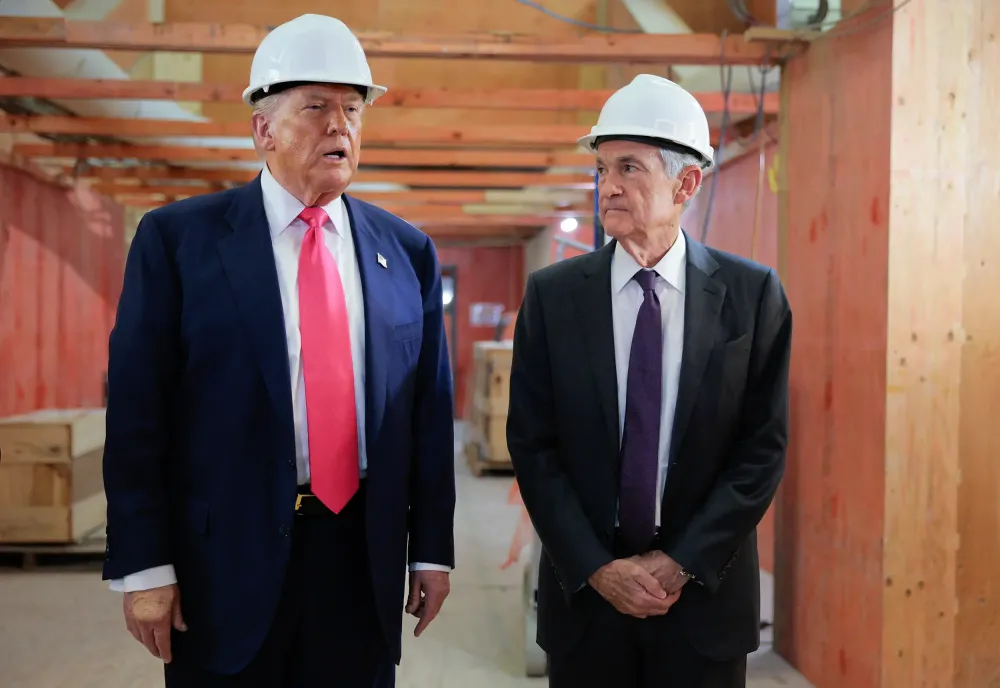
Powell explained that the DOJ’s investigation into cost overruns linked to the Federal Reserve’s headquarters renovation looked less like a genuine inquiry and more like a calculated effort to push him toward compliance with Trump’s demand for lower interest rates.
The legal foundation of the probe has already been called into question:
- In March, US District Judge James Boasberg blocked subpoenas tied to the case.
- He said there was “essentially zero evidence” suggesting Powell committed any crime.
- He concluded the subpoenas were primarily designed to pressure or intimidate Powell.
Last week, the DOJ indicated it was dropping the investigation, although officials said it could be reopened. White House press secretary Karoline Leavitt added more confusion by stating the case wasn’t necessarily over but was being “moved over to the inspector general.”
Powell, for his part, said he’s waiting until the matter is fully resolved with “finality and transparency.”
A Defense of Federal Reserve Independence
Powell’s choice to remain on the board isn’t just a personal decision. It’s a strategic move to defend the credibility of the entire Federal Reserve.
He warned that political attacks on the institution risk damaging the public’s trust in something far bigger than any one chair: the ability of the Fed to make monetary policy decisions without political interference.
That independence is critical because:
- Politicians are typically focused on short-term election cycles.
- Central banks are designed to think long-term about the economy.
- Their credibility depends on being free from political influence when fighting inflation or steering rates.
By staying on, Powell signals that the Fed can hold its ground even under intense pressure from the White House.
A Wrench in Trump’s Plans
Powell’s decision also creates real complications for Trump. By keeping his governor seat, Powell denies the president an opportunity to appoint another loyal ally to the board. He could also serve as a counterbalance if Kevin Warsh, widely considered the likely next chair, leans too far toward accommodating the president’s demands.
Trump didn’t take the news quietly. On Truth Social, he lashed out at Powell, claiming he was only staying because no one else would hire him. The reaction underscored just how much the move stung.
The Warsh Question
Kevin Warsh, Trump’s preferred pick to replace Powell, raised eyebrows during his recent Senate confirmation hearing. When asked directly whether Trump lost the 2020 election, Warsh declined to give a clear answer.
That moment has been seen as a warning sign. If Warsh hesitates to acknowledge basic election results, critics argue he may also bend to political pressure when making consequential monetary policy decisions.
Powell’s continued presence on the board could provide an important check if that turns out to be true.
Why This Matters Beyond the Fed
The Powell saga illustrates a broader pattern. Trump’s pressure tactics, designed to force compliance, have instead pushed a previously by-the-book central banker to break tradition in defense of institutional integrity.
This kind of resistance is something authoritarian-style leaders often struggle to anticipate. People who place public service above personal comfort tend to dig in rather than fold when threatened, a dynamic that has played out repeatedly throughout history.
Final Thoughts
Trump pressure on Powell was meant to clear the path for a more obedient Fed leadership team. Instead, it has produced the opposite outcome. Powell is staying. The Fed’s independence has a stronger defender than expected. And Trump now faces the uncomfortable reality that a man he tried to bully out of power has chosen to stick around precisely because of those efforts. In the long run, this episode may be remembered less as a failed power play and more as a turning point in how the Federal Reserve protects itself from political interference.
Author